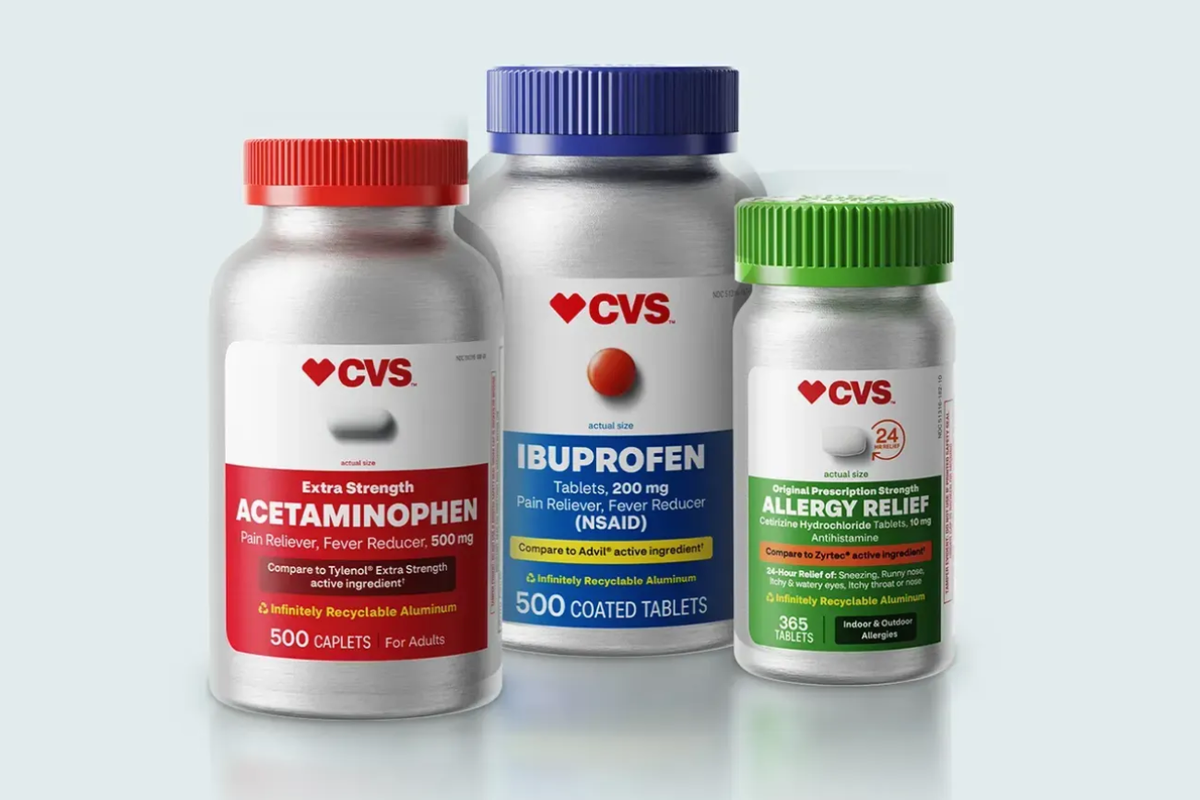
CVS Pharmacy is overhauling how it packages its private-label over-the-counter medications, swapping traditional white plastic pill bottles for aluminum containers. The initiative begins with value-sized store brands for pain relief and allergy relief, matching the active ingredients of household names like Tylenol, Advil, and Claritin. While the company frames the shift around environmental sustainability and curbside recycling, the true mechanics of the decision point to a broader, aggressive retail play. CVS is fighting to protect its highest-margin products against digital disruption, shifting consumer preferences, and a brutal squeeze on national brand profitability.
A quiet war is playing out on the lower shelves of corporate drugstores. For decades, the retail pharmacy business model relied on a predictable dance. National brands spent billions on television commercials to build consumer trust, and retailers like CVS provided the shelf space, taking a modest cut of the premium price tag. Private labels, usually relegated to bland packaging with a simple "compare to the active ingredient" sticker, served as a cheap alternative for bargain hunters.
That model is broken. E-commerce platforms have chipped away at front-of-store retail sales, turning everyday essentials into subscription commodities delivered straight to porches. Simultaneously, inflation has altered consumer spending habits. Shoppers who once reflexively reached for name-brand allergy pills are now actively looking for ways to trim their healthcare spending.
The Margin Mirage of National Brands
To understand why a massive corporation would re-engineer its entire supply chain for over-the-counter medications, one must look directly at the balance sheet. Selling a bottle of a national brand pain reliever yields razor-thin margins for the retailer. The manufacturer dictates the wholesale cost, leaving the drugstore chain with little pricing flexibility.
Store brands tell an entirely different story. Private-label over-the-counter medications generate significantly higher profit margins for pharmacy chains compared to their name-brand counterparts. When a customer chooses a store-brand bottle of ibuprofen over a name brand, CVS retains a much larger percentage of that transaction. The financial health of the front of the store depends almost entirely on driving consumers toward these house brands.
Getting shoppers to make that switch requires overcoming a steep psychological hurdle. Healthcare products are deeply tied to trust. When consumers are sick or dealing with chronic pain, they seek the psychological safety of a familiar logo. Plastic bottle designs have not changed materially since the mid-twentieth century, meaning store brands and national brands have looked identical in form for generations. Aluminum changes the sensory experience entirely.
Elevating the Private Label Narrative
Aluminum packaging conveys an immediate sense of premium quality that plastic simply cannot replicate. Think of high-end cosmetics, artisanal beverages, or specialty skincare products. By using aluminum containers for its store-brand over-the-counter medications, CVS is attempting a classic retail misdirection. They are altering the physical perception of the product to match, or even exceed, the aesthetic value of the more expensive national brands.
The physical design serves as a psychological cue. A heavy, cool-to-the-touch metal container signals value and durability to a consumer. It makes the store brand feel less like a cheap compromise and more like a deliberate, premium choice.
This design strategy aims directly at younger demographics. Millennial and Gen Z consumers have shown a documented willingness to abandon historic brand loyalty in favor of private-label products, provided the products align with their aesthetic preferences and ethical values. CVS is betting that the sleek look of aluminum will capture these younger shoppers who view traditional pharmacy aisles as dated and uninspiring.
The Sustainability Marketing Paradox
The corporate narrative surrounding this rollout focuses heavily on environmental stewardship. Aluminum is infinitely recyclable, and unlike plastic, it can be processed efficiently by standard municipal recycling programs across the United States. CVS correctly identifies that consumer guilt over single-use plastic is at an all-time high.
The reality of corporate recycling initiatives is rarely clear-cut. While the body of the new pill bottle is made of aluminum, the safety caps remain entirely plastic. Consumers cannot simply toss the empty container into a bin. They must manually remove the label, unscrew the plastic cap, and sort the components according to local municipal guidelines.
This creates an operational friction point. History shows that when recycling requires multi-step consumer intervention, compliance rates drop precipitously. If the majority of these premium metal bottles end up in standard landfills because users fail to separate the plastic components, the environmental benefit evaporates. The initiative risks becoming a high-profile exercise in cosmetic sustainability rather than a structural fix for plastic waste.
Defending the Brick and Mortar Footprint
The timing of this packaging shift coincides with an aggressive restructuring of the pharmacy real estate market. Major chains are shrinking their physical footprints, testing smaller, pharmacy-only store models that eliminate traditional front-of-store retail aisles entirely. In dense urban markets, giant drugstores filled with snacks, greeting cards, and cosmetics are becoming financial liabilities due to high lease costs and retail shrink.
In these smaller formats, every square inch of shelf space must perform at peak efficiency. There is no room for redundant inventory. By making its store-brand over-the-counter medications visually distinct and highly attractive, CVS can maximize the revenue generated per linear foot of shelving.
Online pharmacy startups and direct-to-consumer healthcare brands have spent years weaponizing minimalist, modern design to lure consumers away from traditional retail. They ship vitamins and supplements in chic, reusable containers that look good on a bathroom counter. CVS is realizing that it cannot fight this digital competition using the design language of 1982. The aluminum bottle is a direct defensive response to the visual sophistication of online retail.
Supply Chain Realities and Aluminum Volatility
Shifting from plastic to aluminum is not as simple as changing a manufacturing mold. The global aluminum market is notoriously volatile, subject to geopolitical tensions, mining disruptions, and fluctuating energy costs. Plastic, while environmentally problematic, offers highly predictable, low-cost manufacturing logistics.
By tying its core private-label health products to aluminum, CVS is exposing a critical piece of its supply chain to macro-commodity risks. A sudden spike in global aluminum prices could quickly eat into the very profit margins this initiative is designed to protect. The company has stated that retail prices for these over-the-counter medications will remain unchanged during the initial rollout, meaning CVS is absorbing the baseline financial risk of the material transition.
The manufacturing process for pharmaceutical-grade aluminum containers also requires strict quality controls to prevent any chemical interaction between the raw metal and the active medicinal compounds. Internal coatings must be flawless to ensure product stability and shelf life over years of storage. The long-term durability of these coatings under varying temperature conditions remains a metric that independent analysts will watch closely.
The Broader Corporate Trend
This packaging shift is an indicator of a permanent change in how mass-market retailers view their house brands. Private labels are no longer just the budget option for cost-conscious shoppers. They are the primary engine of retail survival.
We are seeing similar shifts across the entire consumer goods spectrum. Supermarkets are upgrading the ingredients and aesthetics of their store-brand organic lines. Department stores are leaning heavily into exclusive apparel brands. For national pharmacy chains, the pressure is even higher because their pharmacy counters face constant reimbursement pressures from insurance companies and pharmacy benefit managers. They desperately need the front of the store to deliver reliable, high-margin cash flow.
Success will not be measured by the praise CVS receives in corporate sustainability reports. It will be measured by a cold, hard metric: the percentage of shoppers who walk down the aisle, look at a bottle of national-brand pain medicine, and decide to buy the store brand instead because the metal container looks better on their nightstand.
The pharmacy aisle is shedding its sterile, utilitarian past out of sheer economic necessity. Retailers can no longer afford to let their most profitable products look second-rate. The future of corporate retail belongs to whoever can make the generic alternative feel like the ultimate luxury.