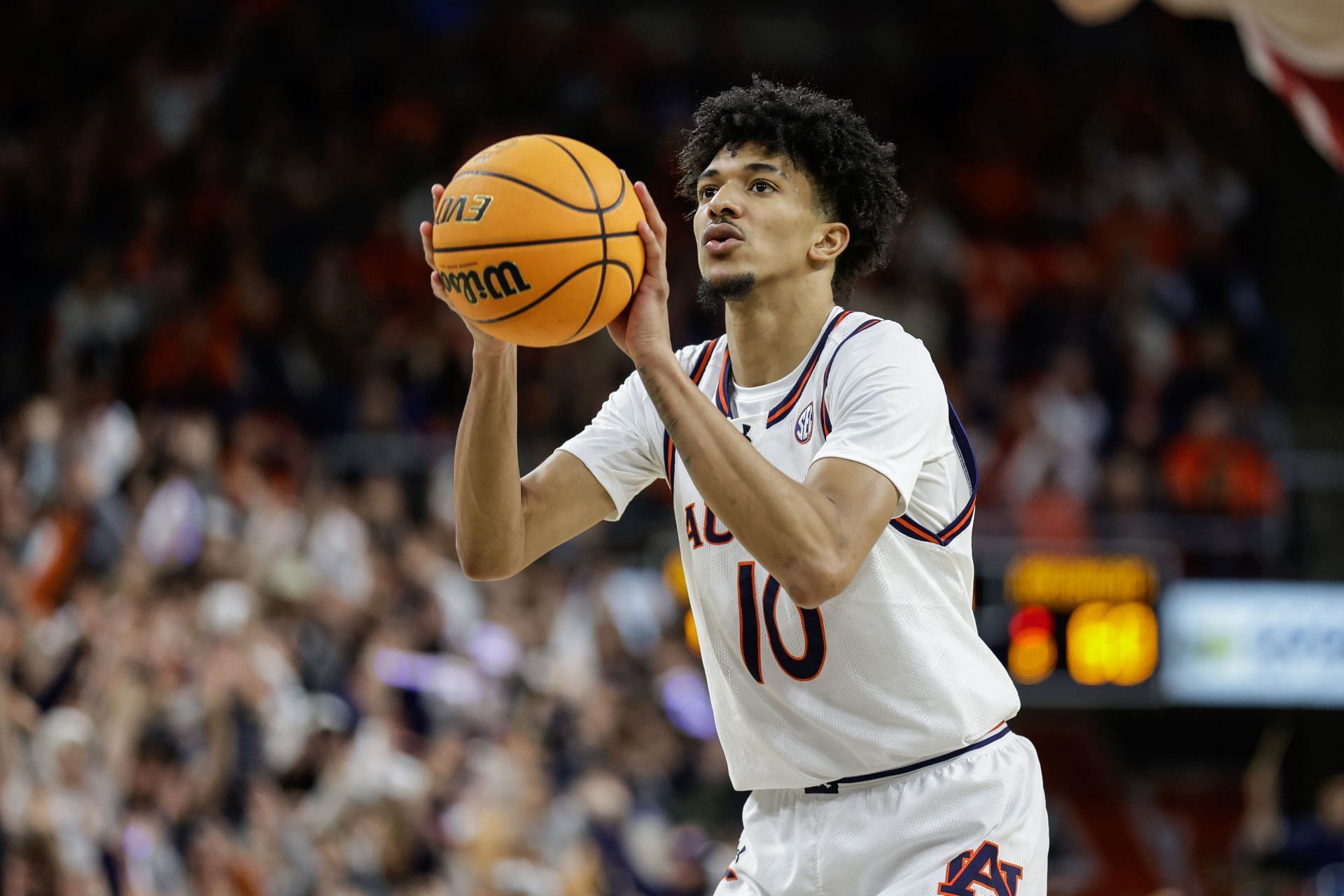
The sudden departure of Chad Baker-Mazara from the USC Trojans basketball program was not a momentary lapse in judgment or a single heated exchange. It was the culmination of a deteriorating relationship between a high-ceiling talent and a coaching staff that eventually decided the internal friction outweighed the on-court production. While many programs in the modern era of the transfer portal are willing to overlook personality clashes to keep elite scoring threats, Andy Enfield and his staff reached a breaking point where the culture of the locker room became the priority.
Baker-Mazara did not leave USC because of one technical foul or a missed assignment. He left because the gap between his individual playing style and the team’s collective requirements became unbridgeable. In the high-stakes environment of Power Five basketball, the margin for error regarding "program fit" has narrowed significantly. When a player’s presence starts to distract from the tactical objectives of the coaching staff, the exit is usually swift and permanent.
The Myth of the Single Incident
Public narratives love a "smoking gun." Fans often look for a specific blowout on the sidelines or a singular disciplinary infraction to explain why a talented player is suddenly scrubbed from a roster. In the case of Baker-Mazara, the reality is far more mundane and yet more difficult to manage. It was a slow burn.
Reliability in a collegiate system is measured in more than points per game. It is measured in defensive rotations, film room engagement, and the ability to take hard coaching without retreating into a shell. Sources close to the program indicate that the friction was centered on a lack of alignment regarding these "invisible" metrics. It wasn’t that Baker-Mazara couldn’t play; it was that he struggled to play the specific brand of disciplined, two-way basketball that Enfield demanded.
When a player frequently tests the boundaries of team expectations, it creates a ripple effect. Teammates notice when a starter gets away with a missed box-out or a late arrival. If the coaching staff doesn’t act, they lose the room. By the time the decision was made to part ways, it was less about a specific "incident" and more about the staff’s realization that the trajectory of the player’s integration was trending downward.
The Transfer Portal Trap
The modern college basketball landscape has changed the leverage dynamics between players and coaches. With the transfer portal, a player who feels undervalued or over-criticized can find a new home in 48 hours. However, this sword cuts both ways. Coaches no longer feel the need to spend three years "fixing" a difficult personality if they can simply recruit a replacement from the portal who fits their culture immediately.
Baker-Mazara entered a system at USC that was trying to build a specific defensive identity. The Trojans have historically leaned on length and versatility, but that versatility requires a high degree of basketball IQ and unselfishness. When a player operates as a "free electron"—talented but unpredictable—it breaks the defensive shell.
The Defensive Breakdown
Basketball at this level is a game of interconnected parts. If the small forward misses a rotation, the center has to help, leaving the rim unprotected.
- Rotational Lapses: Consistently being a step late on help-side defense.
- Communication Gaps: Failing to call out screens or switches.
- Discipline: Taking gambles for steals that lead to easy opponent layups.
These aren't just mistakes; they are choices. Over the course of a season, a coaching staff tracks these choices. If the "choice" is consistently to prioritize individual stats over team stops, a veteran coach like Enfield will eventually look elsewhere. The dismissal was an exercise in risk management.
The Culture vs. Talent Calculation
Every coach has a different threshold for what they will tolerate in exchange for talent. Some programs operate as talent refineries where the personality is irrelevant as long as the ball goes through the hoop. USC, particularly under the previous administration, attempted to balance this by recruiting high-upside transfers. But Baker-Mazara represented a specific challenge.
His scoring ability was never in question. He provided a spark and a swagger that the Trojans often lacked. But "swagger" is a double-edged sword. When the team is winning, it looks like confidence. When the team is struggling or the player is out of sync with the game plan, it looks like defiance. The decision to cut ties was a signal to the rest of the roster that the "Trojan Way" was not negotiable, regardless of how many buckets a player could get.
The optics of a mid-season or post-season dismissal are always harsh. It sends a message to boosters and recruits that there is trouble in the house. However, for a head coach, the greater risk is keeping a disgruntled or non-compliant player and allowing that energy to sour the freshman class. USC chose the short-term PR hit over the long-term systemic rot.
The Reality of the "Mutual" Departure
In the world of big-time sports, "parting ways" is the polite fiction used to mask a firing. Whether the paperwork says he was dismissed or he chose to leave, the result is the same: the program stopped being a home for him. This happens when the communication channels between the lead assistant coaches and the player’s inner circle break down completely.
If a player believes he is a future NBA lottery pick and the coaches believe he is a bench piece who needs to work on his footwork, that gap is impossible to bridge. Baker-Mazara’s camp likely saw his role one way, while the USC staff saw it another. When those visions don't align, the friction manifests in practice, in the locker room, and eventually on the court.
The exit was likely a relief for both parties. For Baker-Mazara, it offered a fresh start at a program that might give him more offensive freedom. For USC, it cleared a spot for a player who would buy into the grit-and-grind defensive philosophy without pushback.
Lessons for the Portal Era
What happened at USC is a blueprint for the "New Normal" in college athletics. We are seeing a shift away from the "developmental" model toward a "mercenary" model. In this environment, the leash is shorter than ever.
- Talent is no longer a shield: Being the best scorer on the floor won't save you if you're a liability in the locker room.
- Compatibility is King: Coaches are scouting for "low-maintenance" talent more than "high-ceiling" projects.
- The Paper Trail Matters: Every missed meeting and every ignored defensive assignment is logged.
Baker-Mazara will likely find success elsewhere. He has the physical tools and the scoring instinct to thrive in a system that prioritizes transition play and individual isolation. But his tenure at USC will be remembered as a cautionary tale about what happens when a player's individual brand outgrows the team's structure.
The "more than one incident" phrase used by insiders isn't a reference to a series of crimes or scandals. It is a reference to the daily, grinding friction of a player who wasn't willing to be a gear in the machine. In a team sport, the machine always wins. You either fit the cogs, or you get replaced by a part that does.
Would you like me to analyze the specific statistics from Baker-Mazara's final games at USC to see where his defensive efficiency began to drop off?