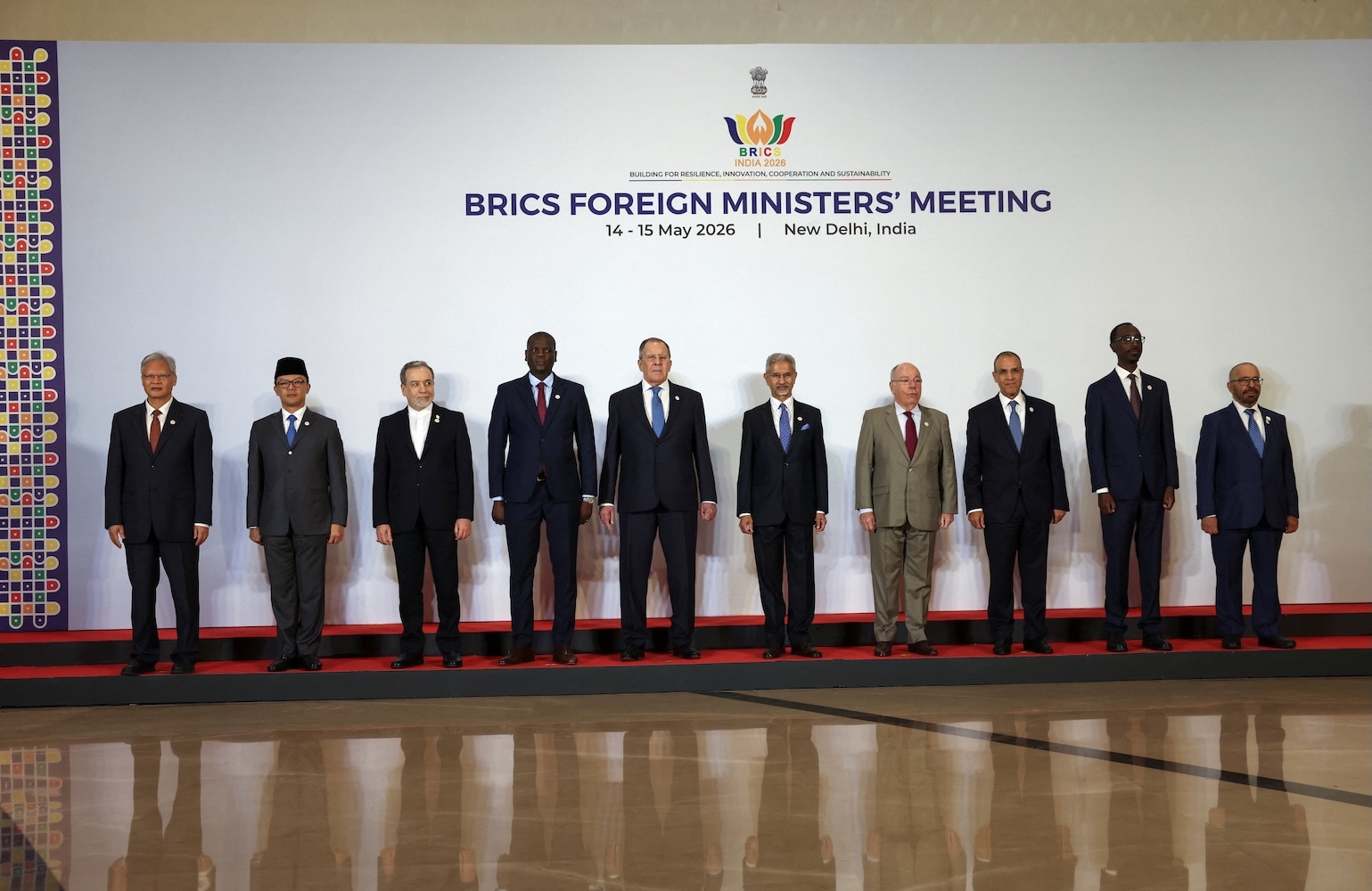
The failure of the BRICS foreign ministers to issue a joint statement at their high-stakes summit in New Delhi reveals a fundamental, systemic flaw within the bloc. By aggressively expanding its membership to challenge Western hegemony, the coalition has imported the very geopolitical rivalries it hoped to transcend. The mid-May diplomatic gridlock was not a temporary bump in the road. It was an institutional reality check proving that an alliance built purely on being "not the West" cannot survive when its internal actors are actively engaged in proxy warfare against one another.
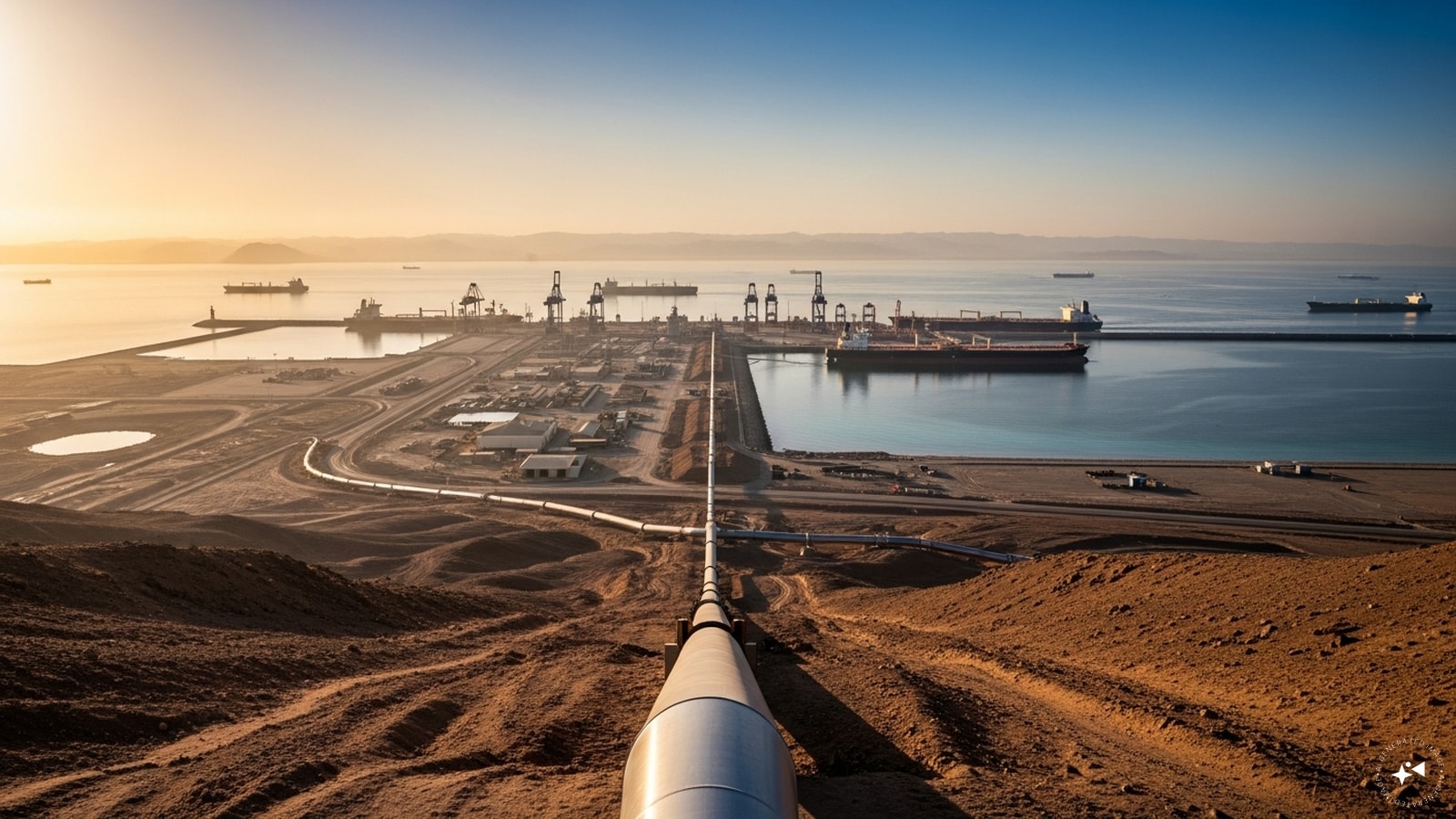
When the original coalition of Brazil, Russia, India, China, and South Africa invited Iran and the United Arab Emirates to join, the move was celebrated by multipolar enthusiasts as a masterstroke. The current escalation of the Middle East conflict has shattered that illusion. You cannot build a coherent alternative global order when one member state is firing missiles and another is hosting the foreign military assets launching the counter-strikes. Also making waves in related news: The Blueprint to Bypass a Chokepoint.
The Illusion of Uniform Resistance
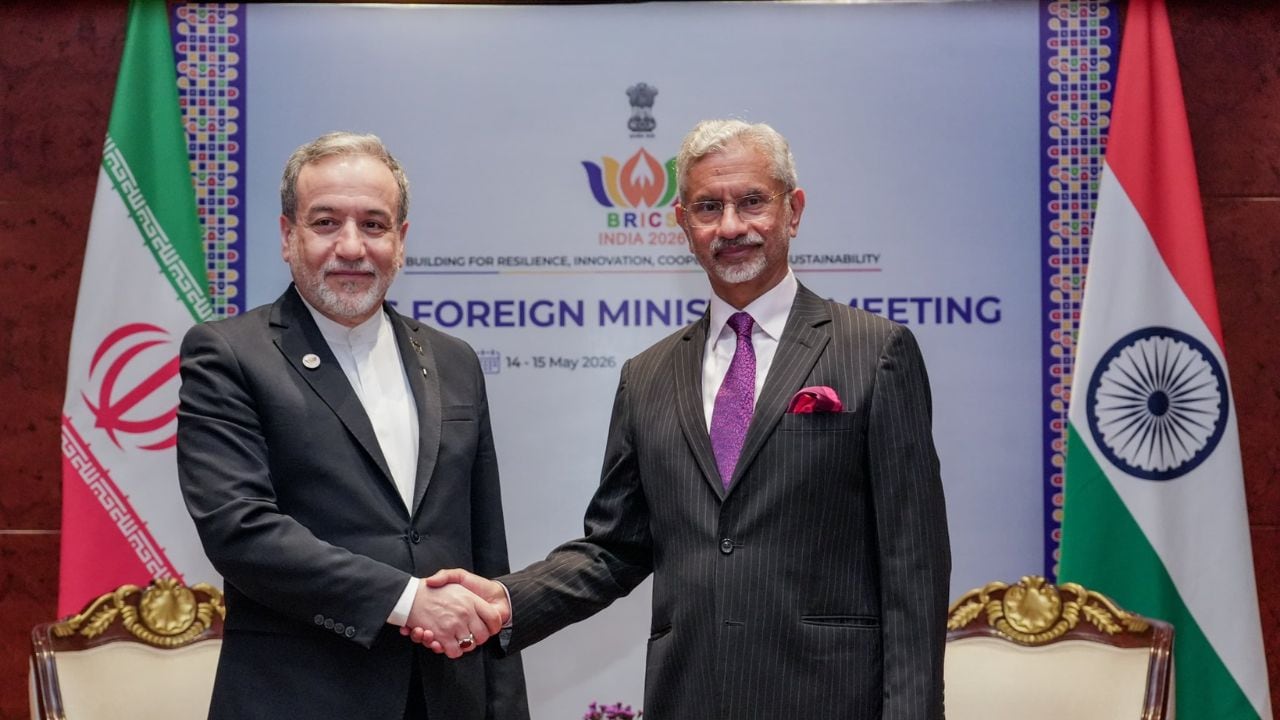
The breakdown in New Delhi was driven by an unvarnished geopolitical clash between Tehran and Abu Dhabi. Iranian Foreign Minister Abbas Araghchi used the summit floor to openly accuse the United Arab Emirates of enabling U.S. and Israeli military operations against Iranian territory. This was not abstract posturing. The ongoing conflict, triggered by intense U.S.-Israeli strikes on Iran and subsequent retaliatory blockades in the Strait of Hormuz, has forced the internal contradictions of BRICS out into the open.
Tehran arrived at the summit demanding a harsh, collective condemnation of Western aggression. The UAE flatly refused, instead pushing for language that would censure Iranian military activities and regional destabilization. The host nation, India, was left trying to salvage a consensus that simply did not exist. The resulting "Chair's Statement"—a weak, non-binding summary filled with footnotes detailing "member reservations"—is the diplomatic equivalent of throwing up one's hands in defeat. Further insights into this topic are covered by Associated Press.
This outcome exposes the primary structural weakness of the expanded bloc. The original five members shared a vague but functional desire to reform global financial institutions and reduce reliance on the U.S. dollar. The expanded eleven-member group, however, possesses no such ideological baseline. By bringing both sides of the Persian Gulf divide into the same tent, the organization has neutralized its own ability to act as a unified political force.
India caught in the crossfire
For New Delhi, the collapse of the joint statement is an embarrassing blow to its current chairmanship and its broader foreign policy strategy. India has spent years executing a delicate balancing act, positioning itself as the voice of the Global South while simultaneously deepening its defense and intelligence ties with Washington through the Quad. That strategy is rapidly running out of room to maneuver.
During late-night drafting sessions, Indian diplomats tried to strip out specific references to Israel and modify long-standing language regarding East Jerusalem as the capital of a future Palestinian state. They attempted to substitute direct criticisms of Israeli military actions with the sanitized phrase "occupying power." The effort backfired completely. Brazil, Russia, South Africa, and Egypt rejected the edits, leaving India isolated on its own turf.
BRICS Fractured Positions (May 2026 Summit)
┌─────────────────────────┬─────────────────────────┐
│     Iran / Russia       │          UAE            │
├─────────────────────────┼─────────────────────────┤
│ Demanded condemnation   │ Insisted on censuring   │
│ of Western/Israeli      │ Iranian regional        │
│ aggression.             │ actions.                │
└─────────────────────────┴─────────────────────────┘
                    ▲                 ▲
                    │                 │
           ┌───────────────────────────┐
           │      India (Chair)        │
           ├───────────────────────────┤
           │ Attempted to soften       │
           │ language; left isolated   │
           │ by broader bloc.          │
           └───────────────────────────┘
The underlying economic stakes for India are immense. New Delhi is deeply invested in Iran’s Chabahar Port, a vital trade corridor designed to bypass Pakistan and open access to Central Asia. Iranian officials have quietly used the port as leverage, offering to facilitate the passage of Indian merchant vessels through the heavily restricted Strait of Hormuz, but only if India helps secure relief from crippling American sanctions. India cannot appease Tehran without triggering a severe backlash from Washington, yet it cannot fully alienate Iran without abandoning its strategic infrastructure investments.
The Weaponization of Consensus
The New Delhi failure proves that the bloc’s insistence on a strict consensus model has been transformed from a tool of solidarity into a veto mechanism for regional adversaries. When any single country can tank a joint declaration, the group's output is reduced to the lowest common denominator or, as we saw this week, total silence.
China’s absence from the foreign ministers' meeting added another layer of dysfunction. Foreign Minister Wang Yi skipped the event to attend a parallel bilateral summit in Beijing, leaving lower-level diplomats to manage the fallout. Without Beijing’s heavy-handed mediation, the remaining members quickly fell into factional bickering.
The immediate casualty of this paralysis is the much-vaunted de-dollarization roadmap. The group cannot build a serious alternative cross-border payment mechanism or a unified financial infrastructure when its members are accusing each other of direct military complicity in an ongoing war. Major commercial banks within the UAE and India are already pulling back from transactions involving Iranian or Russian entities out of fear of secondary Western sanctions. The political gridlock at the top merely mirrors the commercial fragmentation happening on the ground.
Devising an Identity Past Anti-Western Sentiment
The fundamental mistake was believing that shared resentment toward Western unilateralism could serve as a substitute for actual strategic alignment. It cannot. A shared grievance is an incredibly fragile foundation for an international alliance.
If the group is to avoid becoming a completely irrelevant talking shop, it must fundamentally alter how it handles internal security disputes. The current strategy of ignoring deep-seated bilateral animosities in favor of vague economic communiqués has reached its absolute limit. The organization must either establish an explicit internal conflict-resolution mechanism or accept that its political statements will remain permanently toothless.
The leaders' summit scheduled for September will test whether the bloc can survive its own expansion. If the heads of state cannot find a way to patch over the chasm between Iran and the UAE, the group’s claims of representing a coherent, multipolar alternative to the West will be permanently finished. The breakdown in New Delhi was a clear warning that an alliance that expands too fast, with too little internal cohesion, will eventually collapse under its own weight.