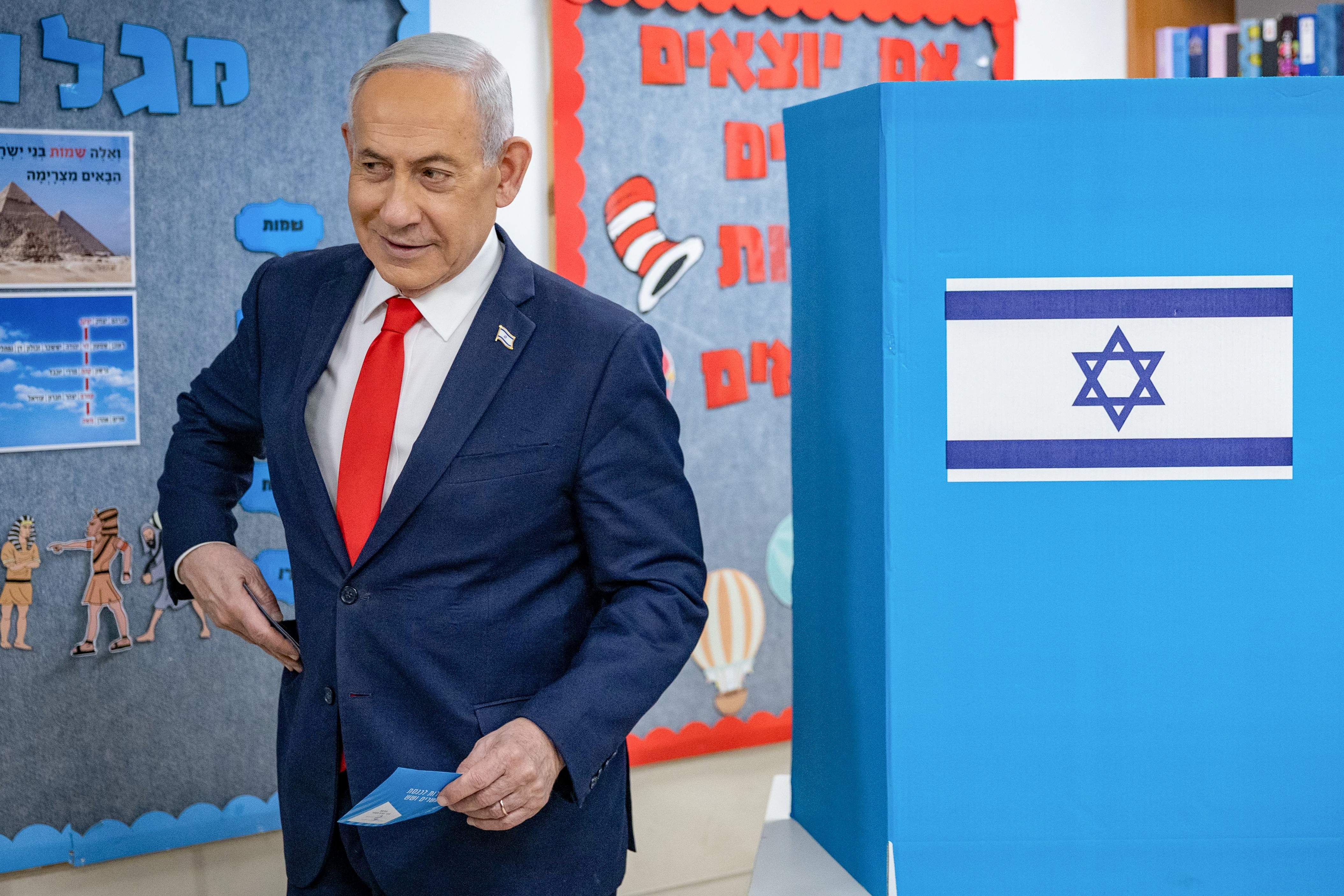
When Israeli voters step behind the curtain in the upcoming parliamentary elections, they will not merely be choosing a prime minister. They are conducting a high-stakes referendum on whether Benjamin Netanyahu’s decades-long political doctrine can survive the catastrophic security and constitutional shocks of the past three years. While surface-level coverage frames this race as a standard personality clash between Israel’s longest-serving leader and a fractured opposition, the structural reality runs much deeper. The electoral math, demographic shifts, and institutional fractures created since 2023 have permanently altered the mechanics of coalition building in Jerusalem.
The core premise of Netanyahu’s political survival has always rested on an illusion of indispensable competence. For years, he sold the Israeli electorate a simple, transactional bargain. He promised economic stability, diplomatic normalization with Arab neighbors, and quiet containment on the country's borders in exchange for the public tolerating his ongoing legal battles and increasingly illiberal coalition partners.
That bargain shattered on October 7, 2023. The multi-front wars that followed in Gaza and Lebanon did not just expose intelligence failures; they dismantled the foundational myth of "Mr. Security." Now, as the campaign machinery grinds into motion, Netanyahu faces an electorate that has moved past ideological slogans and into a grim assessment of national survival.
The Structural Collapse of the Old Right-Wing Bloc
To understand why this election differs fundamentally from the five tumultuous voting cycles between 2019 and 2022, one must examine the internal mechanics of the Israeli parliamentary system. Israel uses a pure proportional representation system with a 3.25 percent electoral threshold. A party needs roughly four seats in the 120-member Knesset just to exist.
During his peak years, Netanyahu acted as a master conductor of this fragmented orchestra. He positioned his Likud party as the gravitational center of a reliable 64-seat bloc, effortlessly playing ultra-Orthodox Haredi parties against nationalist-religious factions while keeping secular right-wingers in line.
That architecture is crumbling from the inside.
The stress fractures are most visible in the relationship between Likud and its traditional Haredi allies, Shas and United Torah Judaism. For decades, the alliance was transactional. Netanyahu protected yeshiva students from mandatory military service and funneled state budgets to religious institutions, while Haredi leaders delivered disciplined bloc voting.
Prolonged, multi-front warfare broke that arrangement. With hundreds of thousands of secular and national-religious reservists serving hundreds of days in uniform, the social contract surrounding Haredi military conscription became politically toxic. Moderate Likud lawmakers, staring down furious constituents at town halls and funerals, can no longer rubber-stamp blanket exemptions without risking political suicide.
If Netanyahu bends to the Haredim to keep his coalition alive, he alienates the soft-right security voters he desperately needs to win back from centrist rivals. If he enforces genuine conscription quotas, the ultra-Orthodox parties have made it clear they will walk out, collapsing his parliamentary floor before the votes are even fully counted.
The Myth of the Unified Opposition
Western analysts frequently make the mistake of assuming that Netanyahu’s unpopularity automatically translates into a landslide for his opponents. It does not. The anti-Netanyahu camp remains a loose confederation of ideological strangers united almost entirely by their desire to see the prime minister leave Balfour Street.
Consider the sheer friction inside this rival bloc. On one side sits Yair Lapid, championing a secular, liberal-democratic vision that appeals to Tel Aviv professionals and the suburban middle class. Beside him stands Benny Gantz, whose appeal rests on a cautious, centrist appeal to national unity and institutional stability. Further to the right sits Avigdor Lieberman, a secular nationalist hawk who despises the ultra-Orthodox establishment, alongside Naftali Bennett or emerging right-wing alternatives vying for disillusioned Likudniks.
This ideological sprawl creates a massive vulnerability during campaign season. Netanyahu does not need to convince a majority of Israelis that he is right. He only needs to convince enough swing voters that the alternative is an unworkable, paralyzed coalition incapable of making decisive security choices.
The Arab Vote Wildcard
A critical, often overlooked factor in this electoral equation is turnout among Israel’s Arab citizens, who make up roughly 20 percent of the population. In 2021, Mansour Abbas broke decades of political taboo by bringing his Islamist Ra'am party into a governing coalition, proving that Arab lawmakers could wield decisive kingmaker power.
Since the outbreak of the Gaza war, political alienation within Arab communities has deepened dramatically. Many Arab voters view both the current right-wing government and the Zionist opposition parties as indifferent to Palestinian suffering and domestic crime rates inside Arab municipalities.
When Arab voter turnout drops below 45 percent, the math shifts heavily in Netanyahu’s favor. Lower turnout artificially inflates the seat count of right-wing and religious parties, allowing them to reach the magic number of 61 seats with fewer raw votes. Conversely, if Arab parties mobilize effectively and clear the electoral threshold comfortably, Netanyahu’s path to a majority virtually vanishes.
Judicial Overhaul and the Institutional Scar Tissue
Long before the war dominated the headlines, Israel was tearing itself apart over the 2023 judicial overhaul. Netanyahu’s push to strip the Supreme Court of its oversight powers sparked the largest sustained protest movement in the nation's history, bringing hundreds of thousands of citizens into the streets every Saturday night.
The war paused the street protests, but it did not heal the institutional damage. In fact, it hardened the battle lines.
Critics argue that the administration's relentless attacks on the judiciary, the attorney general, and the civil service hollowed out state capacity precisely when the country needed functional ministries most. Supporters counter that an unelected judicial elite had overreached for decades, paralyzing elected officials from executing security and settlement policies.
This constitutional divide has transformed how Israelis vote. Party loyalty has hardened into tribal identity. Voters are no longer debating tax policy or healthcare funding; they are voting on the fundamental definition of the state—whether Israel will remain a liberal democracy with strong institutional checks, or evolve into a majoritarian, religious-nationalist state where executive power faces few constraints.
Because the stakes are framed as existential by both camps, traditional campaigning methods have lost their punch. Television ads and policy white papers rarely move the needle. Campaigns are now fought through hyper-targeted digital ecosystems, WhatsApp networks, and aggressive mobilization of base voters on election day.
The Shadow of the Corruption Trial and State Commissions
Hovering over every strategic calculation Netanyahu makes is his ongoing criminal corruption trial on charges of bribery, fraud, and breach of trust. For years, opposition figures have argued that the prime minister’s personal legal survival dictates his policy decisions—from prolonging military operations to resisting hostage deals that might trigger the collapse of his far-right flank.
Netanyahu vehemently denies these accusations, dismissing the charges as an orchestrated witch hunt by a biased media and legal establishment. Yet the legal reality remains a concrete constraint on his political maneuvering.
Compounding his legal exposure is the inevitable demand for a State Commission of Inquiry into the failures of October 7. Under Israeli law, a formal state commission is appointed by the President of the Supreme Court and wields sweeping powers to subpoena witnesses, examine classified documents, and recommend the removal of officials from public office.
Netanyahu has repeatedly resisted establishing such a commission while active military operations continue, arguing that generals and politicians cannot fight a war while preparing testimonies for lawyers. Opponents view this delay as a calculated effort to control the narrative and avoid accountability until after the ballots are cast.
For the Israeli public, the demand for accountability is visceral. Families of hostages, bereaved parents, and displaced residents from the northern and southern borders refuse to let the question of responsibility fade into campaign rhetoric. How Netanyahu handles the pressure for an independent investigation will define the credibility of his entire campaign.
Economic Gravity Finally Catches Up
For over a decade, Netanyahu’s greatest shield against political criticism was Israel’s booming high-tech economy. Even voters who disliked his rhetoric or questioned his ethics often held their noses and voted Likud because their pension funds were growing, the shekel was strong, and unemployment remained low.
That economic armor has rusted.
Financing a multi-year war has blown a massive hole in the national budget. Sovereign credit rating downgrades from major international agencies—including Moody's, S&P, and Fitch—have raised borrowing costs for the state. The government has been forced to implement value-added tax hikes, freeze public sector wages, and slash funding for education, welfare, and infrastructure to cover spiraling defense expenditures.
At the same time, the prolonged mobilization of reserve soldiers has drained productivity from the private sector, particularly within the crucial technology and startup ecosystem that generates the lion's share of Israel's tax revenue.
Voters feel this squeeze every time they walk into a supermarket in Tel Aviv, Haifa, or Beersheba. The cost of living, already among the highest in the developed world, has climbed relentlessly. When middle-class families realize they are paying higher taxes while watching billions of shekels flow toward non-productive coalition pet projects and sectoral subsidies, economic resentment turns directly into electoral punishment.
The generational Revolt Inside the Right
Perhaps the most dangerous trend for Netanyahu is not coming from the left, but from the next generation of right-wing voters and politicians.
A demographic wave of young Israelis—particularly those from the national-religious camp who bore a disproportionate share of the casualties in Gaza and Lebanon—is demanding a new kind of leadership. These voters hold fiercely hawkish views on security and settlement expansion, yet many have grown deeply disillusioned with Netanyahu’s perceived hesitancy, transactional politics, and reliance on ultra-Orthodox partners who do not share the military burden.
Figures like Bezalel Smotrich and Itamar Ben-Gvir capitalized on this energy in 2022, pulling radical right-wing ideology from the fringes directly into the senior cabinet. However, governing has exposed their limitations. Ben-Gvir’s tenure as National Security Minister coincided with surging violent crime rates and intense international friction, while Smotrich’s handling of the Finance Ministry drew sharp criticism from business leaders and economists alike.
This leaves a massive vacuum on the ideological right. Voters who reject left-wing territorial concessions, yet despise the dysfunction of the current coalition, are actively searching for a credible alternative. Whether a new right-wing contender can consolidate this frustrated demographic without splintering the vote below the electoral threshold remains one of the decisive questions of the race.
Foreign Policy as a Domestic Weapon
Netanyahu has always excelled at turning international diplomacy into domestic political capital. Photos with world leaders, speeches before the United States Congress, and backchannel deals with Gulf states were carefully curated to project the image of a statesman operating in a league of his own.
Today, Israel’s diplomatic standing is severely strained. Relations with traditional European allies have frayed over the humanitarian crisis in Gaza and legal battles at the International Court of Justice and the International Criminal Court. Even within the United States, bipartisan consensus on Israel has fractured along generational and partisan lines, forcing Jerusalem to navigate an increasingly volatile political environment in Washington.
During the campaign, Netanyahu will inevitably frame himself as the only Israeli leader capable of standing up to international pressure and preventing the imposition of a Palestinian state. His rivals will counter that his confrontational approach has isolated Israel globally, jeopardized vital munitions supplies, and squandered opportunities to build a regional security architecture with moderate Arab states against Iran.
Voters must decide which risk they fear more: diplomatic isolation under a defiant nationalist government, or security concessions under a centrist administration eager to repair ties with Western capitals.
The Mechanics of Election Day
Strip away the cable news punditry and the ideological manifestos, and Israeli elections come down to raw ground game and mathematical discipline.
In a system where a swing of 30,000 votes can determine whether a small party survives or vanishes—taking four seats worth of votes into the political abyss—campaign managers obsess over vote-sharing agreements and turnout margins.
Likud possesses the most battle-tested field operation in the country. Its network of local branch leaders, municipal mayors, and data analysts knows how to identify sympathetic voters in peripheral towns and physically drive them to the polls in the final three hours before ballot boxes close.
The opposition has historically struggled to match this organizational ruthlessness, often losing critical momentum in the final stretch due to internal bickering over who will sit in the prime minister's chair first in a rotation agreement.
Yet no amount of logistical brilliance can mask a fundamental shift in the national mood. The trauma of the past three years has stripped away the illusions that sustained Israeli politics for a generation. Voters are exhausted by permanent crisis, cynical toward political promises, and acutely aware of the personal cost of leadership failures.
Benjamin Netanyahu has survived political obituaries for thirty years by mastering the art of division and tactical delay, but when millions of citizens finally cast their ballots, he will discover whether a legacy built on permanence can survive a nation that has irrevocably changed.