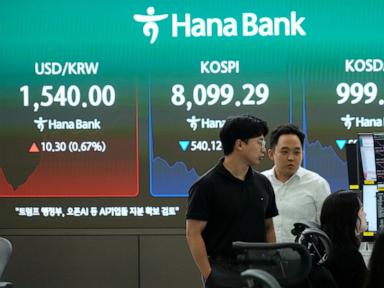
The global technology trade just experienced a severe structural dislocation. A massive sell-off in Asian equity markets, led by a dramatic 5.5% plunge in South Korea's Kospi index to 8,160.59, has revealed the extreme vulnerability of the international semiconductor supply chain to shifting corporate guidance in Washington and New York. This is not a standard cyclical correction. It is an aggressive, localized liquidation triggered by a sudden realization that the financial projections undergirding the artificial intelligence boom have run far ahead of physical reality.
While Western indices have structural padding, Asian markets are highly concentrated, making them highly sensitive to changes in sector sentiment. On Thursday, Broadcom issued a forward revenue forecast that failed to satisfy the highly inflated expectations of institutional desks. The immediate result was a 12.6% collapse in its stock price, dragging down peers like Micron Technology and CrowdStrike. Building on this idea, you can also read: The Anatomy of Geopolitical Premium Friction: Why Localized Infrastructure Resilience Outweighs Macro Headlines.
Because South Korea and Japan function as the heavy industrial foundry for these Western design firms, the reaction in Seoul and Tokyo was magnified.
The Disconnect Between Design and Manufacturing
When Wall Street sneezes, Asian tech centers routinely catch pneumonia, but the mechanics of this specific drop show a deeper structural flaw. The Kospi index had roughly doubled over the previous twelve months. That entire parabolic run was built on an insatiable global demand for high-bandwidth memory (HBM) chips and advanced foundry capabilities. Experts at CNBC have shared their thoughts on this trend.
When Broadcom hinted at a minor deceleration or normalization in demand, it created an immediate valuation vacuum.
- SK Hynix, a primary supplier of next-generation HBM architecture, saw its shares plunge 9.9%.
- Samsung Electronics dropped 6.4%, losing tens of billions of dollars in market capitalization in a single trading session.
- Tokyo Electron, the Japanese semiconductor manufacturing equipment giant, shed 6.6%, pulling the Nikkei 225 down 1.3%.
This asymmetric decline highlights a fundamental reality of the modern global market. Western tech giants hold the intellectual property and command the premium valuations, but the capital-intensive infrastructure sits squarely in East Asia. When software and chip-design firms adjust their guidance downward by a fraction of a percent, the foreign institutional capital that flooded into Asian manufacturing hubs to chase the momentum exits through a incredibly narrow door. The South Korean won plummeted to a level not seen since 2009 as foreign funds aggressively pulled cash out of the domestic equity market.
Geopolitical Friction and Capital Flight
The tech liquidation is occurring against a highly volatile macroeconomic backdrop that mainstream market commentary has largely ignored or compartmentalized. The ongoing war in Iran has kept energy markets in a state of high tension for months. Although Brent crude stabilized around $95 per barrel following fragile rumors of diplomatic negotiations and ceasefire talks, the structural shutdown of the Strait of Hormuz continues to act as a tax on Asian industrial economies.
South Korea imports nearly all of its energy needs. A prolonged energy shock compressed manufacturing margins precisely when hardware valuations were being pushed to historical extremes.
Institutional investors are dealing with multiple complex challenges simultaneously. They are forced to manage high-risk positions in advanced electronics while navigating a physical supply chain threatened by geopolitical blockades. When Broadcom’s earnings report acted as a catalyst for a reality check, asset managers chose to protect profits by selling their most liquid, highly exposed international assets. This means selling South Korean memory giants and Taiwanese component suppliers.
The Asymmetry of the Global Rotation
A remarkable divergence occurred during this rout. While the tech-heavy Nasdaq composite edged lower and Asian markets experienced a severe decline, the Dow Jones Industrial Average actually gained 1.7% to hit a record high.
This reveals a sharp capital rotation rather than a comprehensive global depression. Capital is leaving high-multiple tech names and moving into defensive, domestic American assets.
The parabolic run from the early spring lows left semiconductor stocks highly vulnerable. A correction driven by realistic revenue forecasts is a necessary normalization, but the speed of the Asian exit shows how quickly regional liquidity can dry up.
The upcoming U.S. non-farm payrolls data represents the next major test for this capital reallocation. If the labor market numbers show unexpected weakness, it will complicate the Federal Reserve's policy path and likely accelerate the withdrawal of Western capital from emerging and manufacturing-heavy Asian economies. Investors are realizing that the physical infrastructure of the AI trade requires massive capital expenditure, long lead times, and stable geopolitical environments. None of those factors can be taken for granted in the current global climate.
The immediate outlook for these manufacturing hubs depends entirely on whether Western enterprise software spending can justify the massive capital investments made in East Asian factories. Until corporate earnings reports match the aggressive valuations assigned to hardware manufacturers, the Asian equity markets will remain highly vulnerable to sudden shifts in Western sentiment. The plunge in the Kospi is a clear warning that when the momentum of speculative technology investment slows down, the economic damage will be felt most severely by the factories that build the components.