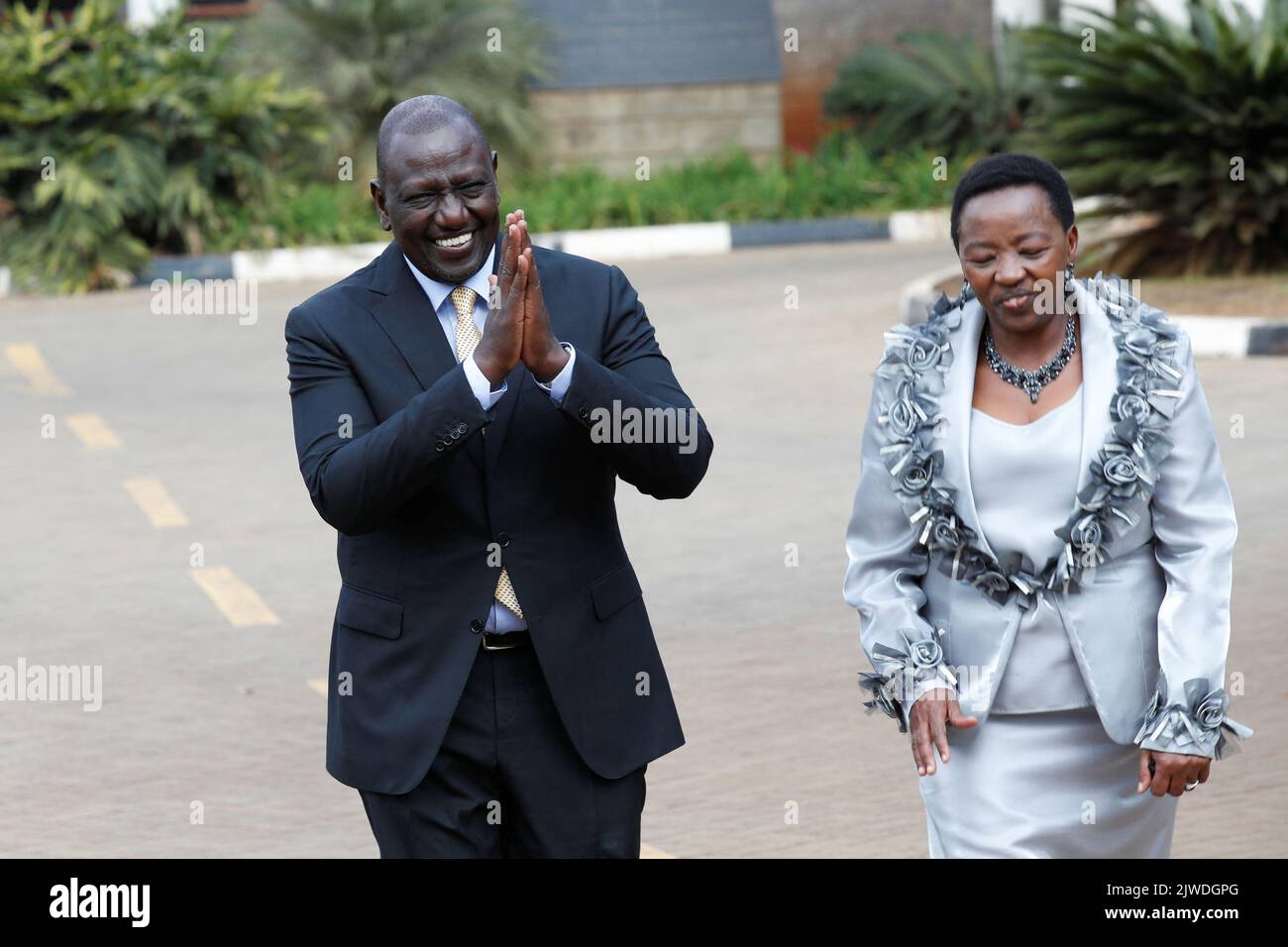
When Rachel Ruto walked into the White House this spring, she wasn't just there for a photo op or a stiff diplomatic tea. Kenya’s First Lady carries a specific kind of reputation—she’s a prayer warrior who literally brought a national prayer altar to the Kenyan State House. So, when she sat down with Melania Trump during the "Fostering the Future Together" summit, the conversation quickly shifted from technology and AI to something much more old-school: faith.
The headline coming out of that meeting wasn't about policy papers or bilateral trade. It was a blunt, spiritual observation. Ruto’s message was simple: America needs to stay in Jesus.
It’s a bold thing to say in the middle of a high-stakes diplomatic mission, but Rachel Ruto doesn't do "quiet" faith. She’s spent years building "Mama Doing Good," a foundation that mixes economic empowerment like table banking with a heavy dose of spiritual intercession. Seeing her find common ground with Melania Trump—who has been increasingly vocal about her own Catholic faith and the need for a moral "return" in America—signals a shift in how these global leaders are using their platforms.
The Unlikely Spiritual Connection in the East Wing
On the surface, you couldn't find two more different women. You’ve got Rachel Ruto, a former teacher from rural Kenya who grew up without shoes, and Melania Trump, the Slovenian-born former model who defines Manhattan and Palm Beach high society. But faith is the great equalizer here.
During the March 2026 summit, which brought together 45 nations to talk about children and technology, the two found a shared language in religion. Melania Trump has been quietly signaling her spiritual side for years—carrying a rosary in her 2005 wedding bouquet and having it blessed by the Pope in 2017. Recently, though, that's become more overt. Whether it's attending Mass at St. Patrick’s Cathedral or hosting Easter events that emphasize "bringing religion back," Melania is leaning into a role as a protector of traditional values.
Ruto, for her part, basically told the room that technology like AI is a tool, but it’s not a foundation. She’s convinced that the stability of a nation—even one as powerful as the U.S.—depends on its spiritual health. She’s not just talking; she’s doing. In Kenya, she’s famous for organizing national prayer days to combat everything from drought to political unrest. Seeing her bring that same energy to Washington shows she views herself as a spiritual ambassador as much as a political spouse.
Beyond the Slogan of Staying in Jesus
When Ruto says America needs to "stay in Jesus," she’s tapping into a massive debate currently tearing through the U.S. political fabric. For many, it’s a rallying cry for a return to the "city on a hill" ideals. For others, it’s a blurring of the lines between church and state that makes them nervous.
But for Ruto, this isn't about American culture wars. It’s about her personal testimony. She gave her life to Christ at 13 and credits that decision for her journey from a village girl to the First Lady. In her view, if faith can transform a life, it can transform a country. She’s seen it work in Kenya through her "Mama Doing Good" programs, where women don't just get loans; they get community support and spiritual guidance.
What the Competitors Missed
Most news outlets are focusing on the "controversy" of a foreign leader’s spouse giving spiritual advice to America. They’re missing the actual work happening behind the scenes.
- Table Banking: This isn't a handout. Ruto’s model involves women saving their own money, borrowing from the collective, and starting businesses. It’s radical self-reliance with a spiritual backbone.
- AI in Schools: Ruto and Trump spent significant time discussing how to protect children from the "darker" sides of the digital world. They aren't Luddites; they’re just skeptical of tech that lacks a moral compass.
- The "Mama Cycling" Movement: Ruto used the pandemic to start a physical fitness movement. She realizes that mental health, physical health, and spiritual health are all connected.
Why This Meeting Actually Matters for 2026
Diplomacy is usually a game of cold interests—oil, security, "leverage," and trade routes. But this meeting suggests a new kind of "faith-based diplomacy." By aligning with Melania Trump on religious grounds, Rachel Ruto is securing Kenya’s spot as a key American ally in a way that goes beyond military cooperation in Haiti or tech deals in Nairobi.
She’s building a bridge through shared values.
For Melania, hosting Ruto provides a counter-narrative to the idea that her "Fostering the Future" initiative is just about gadgets. It’s about "the soul of the child," a phrase she’s been using more frequently. When Ruto speaks, people listen because she’s authentic. There’s no corporate polish on her story about growing up poor and finding hope in the Gospel.
The Real Takeaway for You
Don't look at this as just a religious headline. It’s a masterclass in soft power. Rachel Ruto knows that if you want to influence a nation, you don't just talk to the bureaucrats—you talk to the heart of its culture.
If you're watching how global alliances are shifting, keep an eye on these two. They’re moving past the standard talking points of "synergy" and "robust partnerships" (words they thankfully didn't use) and moving toward a much more personal, conviction-driven form of leadership.
The next step for Kenya-U.S. relations isn't just another trade forum. It’s the implementation of these "Fostering the Future" programs in East African schools, likely with a heavy emphasis on parental control and traditional education. If you want to understand where the Ruto administration is heading, watch how she prays. She’s told us exactly who she is, and now, she’s telling the White House who they should be.
Check the official "Mama Doing Good" portal for the latest on her table banking stats. The numbers don't lie—economic empowerment is happening, and she’s doing it her way.