Cold. That is the first thing you notice when a deadbolt refuses to turn in late autumn, even when your hand is steady and your key is right.
In the quiet hours before dawn, a person stands outside a door they have walked through five hundred times. The hallway light hums. Somewhere above, a radiator ticks as water cools inside iron pipes. Inside that apartment sit winter coats, a passport in a desk drawer, a kettle waiting to be filled. Yet the lock will not click. A screen on the wall—or a small reader near the frame—blinks with a polite refusal. Access denied.
Downstairs, in the glow of a phone screen, another door is already shut. A banking app spins. A balance that read like solid ground ten minutes earlier now looks like a mirage behind a loading wheel. You try a card at a corner kiosk. Declined. You try a transfer to pay for a cab or a carton of milk. Unavailable.
To make these invisible chains visible, let us trace a hypothetical scenario grounded in how modern urban infrastructure actually operates. Imagine a composite character—let us call her Nadia, an archivist living in a mid-sized Russian city. Nadia is not a soldier, a minister, or an oligarch. She buys groceries on Tuesdays, calls her mother on Sundays, and pays her rent through an app linked to her bank account and her building’s management portal. One morning, a server farm miles away—or across a border in a conflict zone—takes a strike, loses power, or is severed from its upstream routing tables. Nothing in Nadia’s living room explodes. No glass shatters on her street. Still, her world narrows to the radius of whatever still works without a live handshake to a distant database.
That is the strange, unsettling reality of modern warfare when it targets data centers. Physical shells have always broken bridges, substations, and rail yards. We know what a crater looks like. We know how to picture a downed power line. Digital infrastructure is harder to see until the moment it stops answering. Then the abstraction turns into locked doors and frozen rubles.
I have stood in rooms where the lights worked, the heat worked, and the Wi-Fi light blinked steadily—yet every piece of software that ran the building had gone mute. You feel a peculiar hollowness in your stomach when a physical object obeys a remote server that no longer replies. It is not anger at first. It is confusion. You jiggle the handle again, as if muscle memory could persuade an algorithm to change its mind.
Why Servers Hold Your Front Door Hostage
Most people still think of a house as bricks, mortar, and brass, and money as coins in a pocket or numbers etched into a ledger at a neighborhood branch. That mental model belongs to another era.
Modern apartments—especially newer complexes or renovated blocks equipped with smart intercoms, electronic access fobs, QR entry systems, or cloud-connected building management—rely on continuous network communication. When an entry system checks credentials against a remote cloud database rather than storing an offline cryptographic pass locally, a severed link can turn a convenient feature into a barrier. Even when a physical key exists, tenants who have relied on app-based entry or digital concierge passes can find themselves stranded in a lobby or stairwell while staff scramble to locate master keys or reset local controllers.
Banking works on the same principle, only with higher stakes and deeper reach. A bank account is rarely a vault of bills stacked with your name on a slip of paper. It is a set of synchronized entries across core ledgers, clearing switches, payment gateways, and authentication servers. When strikes or cyber-physical disruptions hit data centers hosting financial services, payment processors, or telecom routing nodes, cascading failures can follow. A transaction might time out. A mobile app might fail to authenticate. A branch terminal might lose connection to the central core.
Think of a modern data center as the nervous system of a city, rather than a filing cabinet. A filing cabinet holds paper; if the room locks, the paper is still inside, waiting for you to pick the lock or wait for morning. A nervous system carries live signals. Cut or scramble the pathways, and muscles do not fire even when the limb is intact.
Skeptics often ask whether strikes on data centers can really lock people out of homes and accounts on a wide scale, or whether such reports exaggerate isolated glitches. The honest answer requires separating verified mechanics from sensationalism. Hardware and software are built with redundancy—backup generators, failover clusters, geographically distributed nodes. Many disruptions are temporary, regional, or limited to specific providers rather than wiping out an entire country’s banking or housing grid overnight. Yet redundancy has limits. When strikes target power infrastructure alongside compute facilities, when cooling systems fail, or when an organization’s primary and secondary clusters sit within the same vulnerable corridor, outages can last hours or days. For a family trying to pay a pharmacy bill or get inside after a late shift, twelve hours of outage feels like a lifetime.
The Invisible Stakes Behind Every Outage
What happens when digital access falters is not merely an inconvenience for tech-savvy consumers. It exposes how deeply everyday survival has been outsourced to fragile networks.
Consider what happens next: once a household cannot reliably move money or verify identity online, small frictions multiply fast. Suppose Nadia tries to buy prescription medication. If her banking app is down and she carries little cash, a routine errand turns into a chain of phone calls, ATM runs to machines that may themselves be offline or out of notes, and awkward conversations at the counter. If her building’s smart lock or gate system depends on a cloud service hosted in a hit facility, getting back inside with groceries in hand becomes a test of patience—and sometimes a safety concern if someone is locked out in freezing weather without spare keys or neighbors nearby.
Vulnerable residents feel this shock most sharply. Elderly neighbors who depend on automated deliveries or digital banking helpers, people recovering from illness, shift workers returning after midnight, and families living paycheck to paycheck have the least margin for a frozen balance or a stalled transfer. A delay of twenty-four hours in clearing a payment is a nuisance if you have savings and a spare card. It is a crisis if rent, utilities, or food depend on that exact transfer going through today.
There is also a psychological toll that rarely shows up in technical post-mortems. Security used to feel tangible. You held a key. You counted cash. You knew the teller behind the glass. Today, security is mediated by screens, tokens, and unseen servers humming behind unmarked walls. When those servers are struck or knocked offline in a conflict, ordinary citizens experience a quiet loss of agency. You are reminded that your daily routine sits atop geopolitical friction and physical infrastructure you cannot see, inspect, or protect yourself.
Let us be candid about uncertainty here. In active wartime reporting, claims surrounding strikes on data centers, the exact facilities hit, and the direct downstream causes of specific outages are often contested, delayed, or fogged by information operations. Sometimes a banking outage stems from a targeted strike or network disruption; other times it stems from routine maintenance, DDoS pressure, power fluctuations, or software bugs occurring around the same time. Admitting where the fog sits does not weaken the story. It makes it honest. Even when attribution is messy, the lived impact on people facing locked doors and frozen balances remains real.
How Digital Fragility Changes Everyday Life
Why did we build cities and financial habits this way in the first place? Because convenience is seductive, and peace often makes fragility look like efficiency.
Cloud-connected locks let property managers issue temporary codes, revoke access when tenants move out, and log entry events without cutting metal keys. Digital banking lets people pay bills in seconds, split dinner tabs, and manage salaries from a phone. During calm periods, those systems save time and reduce friction. Everything runs smoothly until an external shock tests the assumptions baked into the design.
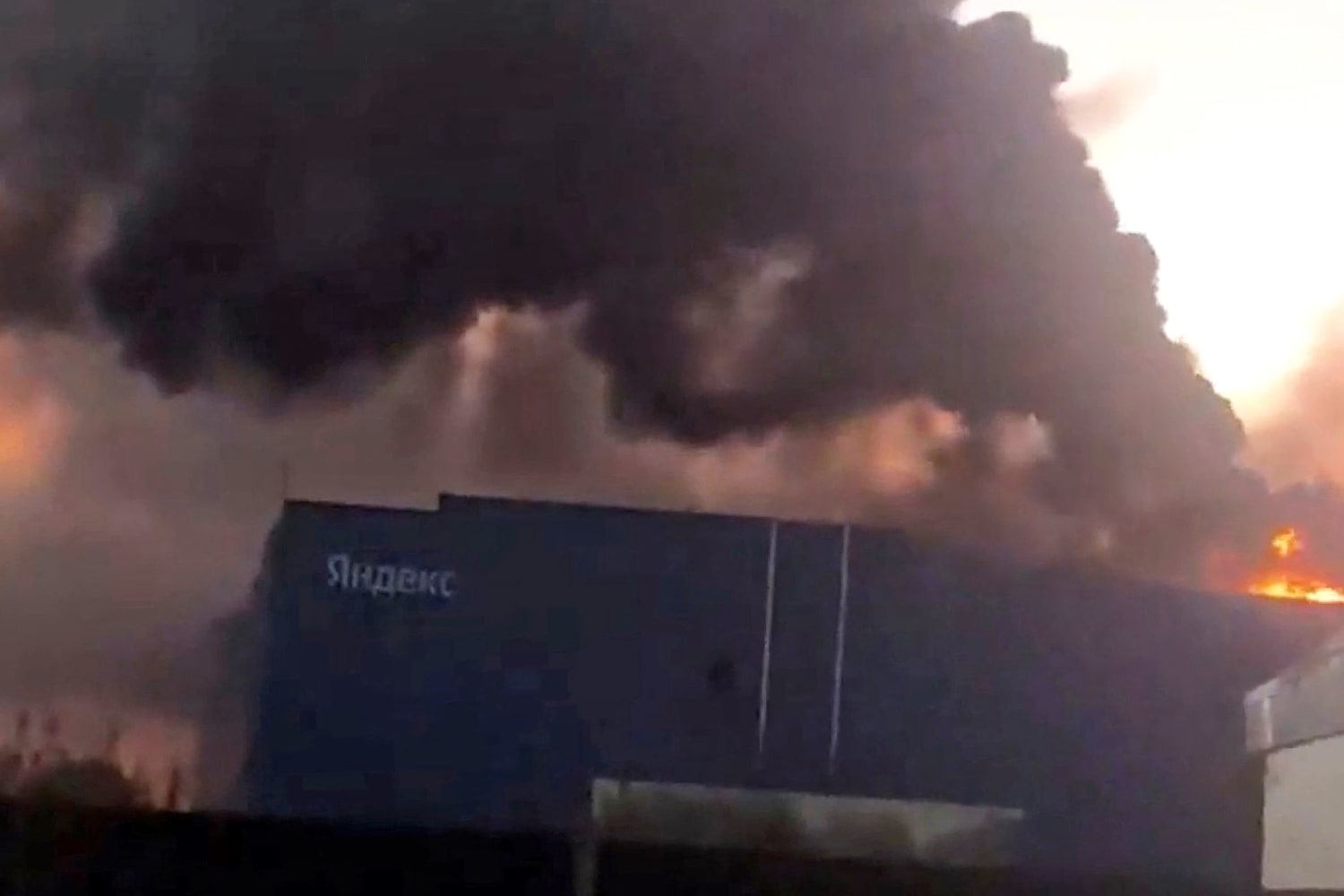
One common assumption is that the network will always be there. Engineers know better in theory, yet real-world deployments frequently cut corners—putting critical authentication steps online without reliable offline fallback, concentrating servers in predictable hubs, or tying physical convenience too tightly to external connectivity. When Ukraine hits data centers or targets infrastructure tied to military, logistics, or state-adjacent digital operations—or when broader escalations spill into commercial and municipal systems—ordinary residents sit squarely in the blast radius of side effects.
Look at how quickly a technical event becomes a personal drama. A server rack overheats or loses power. Packets drop. An API times out. Hundreds of miles away, a lock actuator never receives the open command, or a banking ledger refuses to clear a debit. The engineer sees a spike in error rates on a dashboard. The resident sees a red icon on a phone screen and hears a latch refuse to give.
What People Do When the System Stalls
When digital rails wobble, people adapt in ways that reveal both human resilience and practical wisdom. None of this requires grand heroism; most of it is quiet, practical preparation.
- Keep physical fallback where possible: Having a real metal key for a smart lock—and knowing where it is kept—turns a potential lockout into a minor annoyance. Carrying a modest reserve of physical cash covers basic groceries, transit, and emergencies when card networks or banking apps stutter.
- Separate essentials from single points of failure: Relying on one bank, one payment app, or one phone number for two-factor authentication creates a single choke point. Spreading critical access across backup methods reduces the odds that one outage locks you out of everything at once.
- Check local reality before panicking: When an app fails or a door will not open, step back and observe what else is affected. Is the issue isolated to one app, one building controller, or one carrier? Often building staff, neighbors, or local branches already have workarounds in motion once word spreads down the block.
- Stay grounded amid rumors: During high-tension periods, false claims about total bank freezes or permanent lockouts spread almost as fast as real outages. Waiting for verified confirmation—and focusing on immediate practical needs like cash, food, warmth, and communication—helps keep a stressful moment manageable.
Notice how unglamorous those steps are. There is no silver bullet against modern hybrid warfare or large-scale infrastructure strikes. Systems will continue to be tested, patched, rebuilt, and contested. Yet individuals are not entirely helpless inside large systems. Small habits of redundancy—a spare key in a safe spot, a few bills tucked away, a calm head when a screen spins—restore a measure of control when large machines falter.
The Human Cost Beneath the Code
We often talk about infrastructure strikes in strategic terms: degrading command-and-control, disrupting logistics, imposing economic pressure, testing defenses. All of those terms belong to analysts and generals. They are accurate within their frame, yet they leave out the texture of a Tuesday evening when nothing works.
Think back to Nadia standing by her door. Suppose the latch finally yields after a building technician resets a local controller, or suppose her banking app comes back online an hour later with a cheerful notification that everything is back to normal. The crisis passes. Life resumes.
Still, something subtle shifts inside a person who has stood outside a locked door or stared at a frozen balance while distant servers took a hit. You look at your phone differently. You notice how much trust you place in invisible cables, cooling towers, and lines of code every single hour of the day. You realize that modern comfort is sturdy in many ways, yet thinner at the edges than we like to admit.
A lock is a simple thing—just metal, springs, and a bolt sliding into a frame—until the signal telling it to move disappears into thin air.