Silence.
Not the peaceful kind that settles over a quiet Sunday morning, nor the heavy hush of a library, but the hollow, ringing stillness of a stripped work van at six in the morning when the locks have been pried open and the shelves are wiped entirely clean.
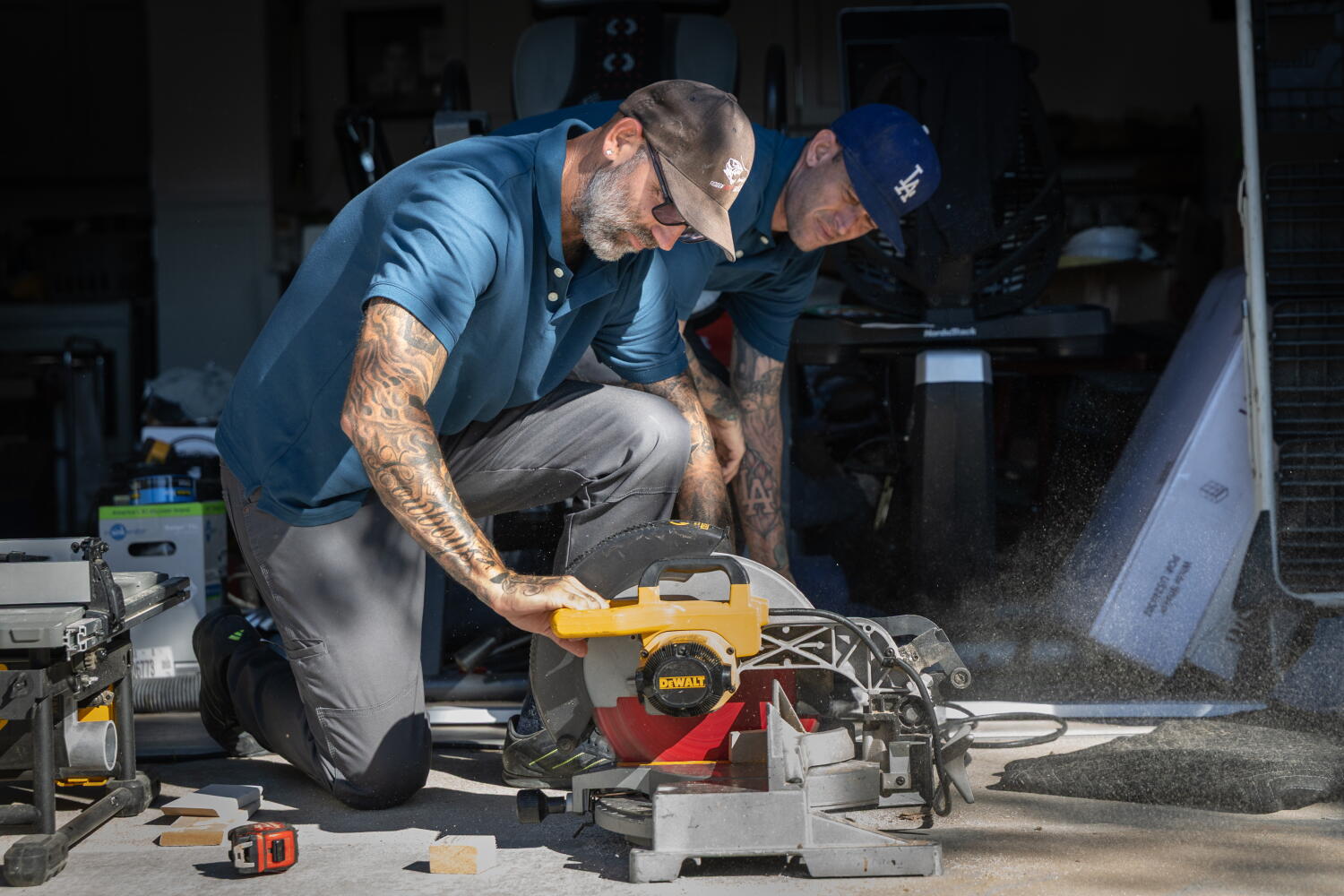
Consider what happens next. Imagine—strictly as a hypothetical composite drawn from the documented realities of blue-collar contractors across the country—a crew of four Deaf carpenters arriving at a residential job site just as the sun clears the roofline. Let us call the crew lead Marcus. Marcus steps out of the cab, coffee thermos in hand, expecting the familiar morning routine of sliding open the rear doors, pulling out the miter saw, checking the battery packs on the impact drivers, and signaling the day’s framing measurements in crisp, rapid American Sign Language. Instead, he sees a sheared padlock lying on the asphalt. He pulls the handle. The metal shelves inside, which yesterday held roughly eight thousand dollars in brushless drills, circular saws, laser levels, and copper-wound routers, are bare sheet metal.
There is no shouted curse. There is no frantic yelling across the driveway to alert the crew. There is only a sharp intake of breath, a sudden freeze in posture, and the heavy, sinking realization that every single instrument required to earn a paycheck that week has vanished into the back of a thief’s pickup truck.
When news broke of a real-life Deaf construction crew losing thousands of dollars in power tools to thieves—and responding not with despair, but with a group hug and a vow to keep going—most readers scrolled past a heartwarming headline. They saw a feel-good human-interest snippet. They saw resilience. They missed the staggering economic and logistical weight sitting right underneath that embrace.
The Invisible Economy of the Toolbox
To understand why stealing from a tradesperson is fundamentally different from stealing a television or a bicycle, you have to understand how the modern construction economy actually operates. In almost every skilled trade—carpentry, electrical work, plumbing, HVAC—workers are expected to supply their own hand and power tools. A company might provide the heavy scaffolding or the commercial truck, but the daily instruments of precision belong to the individual worker.
Those tools are not bought in a single shopping trip. They are accumulated over years, piece by piece, paycheck by paycheck. A reliable cordless framing nailer runs four hundred dollars. A commercial-grade rotary hammer costs six hundred. Add in specialized lithium-ion battery ecosystems, laser transits, torque wrenches, and custom-fitted tool belts, and a single tradesperson easily carries between three thousand and ten thousand dollars of personal capital in the back of a vehicle.
Now layer onto that financial reality the systemic barriers facing Deaf professionals in the skilled trades. According to data from the National Deaf Center on Postsecondary Outcomes, the employment gap between Deaf and hearing adults remains stubbornly wide, hovering around twenty-five percentage points in many sectors. Even when Deaf workers secure positions in construction and manufacturing, they frequently encounter hiring managers who falsely assume that a lack of hearing equates to a lack of spatial awareness or job-site safety.
In truth, the opposite is often documented on active sites. Without auditory distraction, Deaf tradespeople rely on heightened peripheral vision, synchronized visual sightlines, and strict spatial protocols. Many Deaf contractors eventually form their own independent crews precisely because doing so eliminates communication bottlenecks and proves their craft on equal footing. Yet independent crews operate on razor-thin margins. When thieves hit a Deaf-owned contracting outfit, they are not merely stealing hardware; they are attacking a hard-won foothold of economic independence.
Why Tool Theft Is Exploding Across Job Sites
If you have spent any time around commercial job sites or residential renovations over the past several years, you know that tool theft has evolved from opportunistic petty crime into an organized, low-risk shadow industry. Law enforcement agencies and construction industry analysts estimate that job-site and work-vehicle theft costs the United States construction sector roughly one billion dollars annually, with recovery rates lingering below twenty percent.
Why do thieves target power tools with such relentless precision? Follow the economics.
First, modern lithium-ion power tools are compact, lightweight, and carry high resale value. A thief with a battery-powered angle grinder can cut through a standard steel van hasp in less than fifteen seconds, sweep five thousand dollars of high-demand brand-name equipment into a duffel bag, and vanish before a motion sensor even registers on a homeowner’s phone.
Second, unlike smartphones or vehicles, power tools rarely feature built-in GPS tracking or centralized kill switches. Once a cordless saw is separated from its original molded plastic case and stripped of any handwritten initials, it becomes virtually indistinguishable from ten thousand other identical units on the secondhand market.
Third, the digital resale ecosystem has removed every historical friction point for fencing stolen goods. Twenty years ago, a thief had to walk into a physical pawn shop, present a government-issued identification card, sign a ledger, and wait out a mandatory police hold period. Today, stolen drills and saws appear within hours on peer-to-peer online marketplaces, flea markets, and informal swap meets, sold at forty percent below retail to buyers who either do not know or choose not to ask where the serial numbers went.
Insurance, too, often fails the working contractor. Standard commercial auto policies frequently cover the vehicle itself while excluding loose contents inside the cargo area unless the business owner carries a separate inland marine policy—a specialized rider that carries steep deductibles and punishing premiums for small outfits. Even when coverage applies, a one-thousand-dollar deductible on a six-thousand-dollar loss still leaves a small crew absorbing an immediate, unbudgeted financial blow while waiting weeks for a claim adjuster to process receipts they may no longer have.
The Anatomy of a Group Hug
Return for a moment to that driveway at six in the morning. Look closely at what actually happens when a crew loses everything they need to work, and instead of fracturing, they pull together.
I remember the first time I walked onto a job site the morning after a break-in. It was a chilly autumn Tuesday, the kind where your breath hangs in the air and cold steel stings your bare knuckles. Our crew had left a locked gang box chained to a concrete pier overnight. By sunrise, the heavy-duty chain lay severed in the mud like a dead snake, and the lid hung open at a crooked angle. We stood around that empty steel box for nearly ten minutes without saying a word. The anger comes first—a hot, useless surge in your chest that wants someone to blame. Right behind the anger comes the math. You start calculating rent, truck payments, grocery bills, and the cost of replacing a single circular saw before noon just so you can finish framing a stairwell and keep the client from canceling the contract.
In that moment, panic is contagious. One person complains, another blames the neighborhood, a third starts calculating how many weeks it will take to dig out of the hole, and suddenly the momentum of the entire team collapses.
That is why the image of those Deaf workers gathering in a circle and embracing each other carries so much weight. It was not sentimentality. It was a deliberate reset of the nervous system.
When you communicate through sight and touch—when your language lives in the movement of hands, the posture of shoulders, and direct eye contact—turning away from each other means cutting off the conversation entirely. You cannot mutter under your breath while staring at your boots and expect to be understood. To speak, you have to face one another. You have to step into the circle.
By choosing an embrace before reaching for a phone or walking off the site, those workers accomplished something strategic. They refused to let the thieves dictate the emotional temperature of their business. They acknowledged the loss in full view of one another, absorbed the shock collectively, and immediately pivoted to the only question that matters in any craft when disaster strikes: What do we have left, and how do we move forward?
How Tradespeople Actually Rebuild After a Loss
When a crew vows to keep going after losing thousands of dollars in equipment, grit alone does not cut plywood or drive fasteners. Recovery requires immediate, tactical improvisation.
First comes triage. A crew strips back every job on the weekly schedule to determine what can be accomplished with hand tools, borrowed gear, or basic rentals while replacements are sourced. A carpenter without a cordless miter saw can still snap chalk lines, measure layouts, set framing squares, and cut lumber with a sharp handsaw if the timeline demands it. Progress slows, muscles ache twice as hard by dusk, and profit margins shrink to zero for the week, but the job keeps moving. Clients see reliability instead of excuses.
Second comes the strength of the trade network. Across Deaf business communities and local construction circles alike, word of a tool theft travels fast. Retired tradespeople open their garages to lend spare drills. Neighboring contractors drop off extra battery chargers and saw blades. Local supply houses, recognizing the reputation of a hardworking crew, occasionally extend net-thirty credit lines so workers can walk out with essential replacements without draining their personal checking accounts on day one.
Third comes a hard-earned overhaul of physical security. Once you have stared into an empty work van, you never trust a factory door latch again. Experienced contractors bolt heavy-gauge steel puck locks directly through the vehicle frame, install interior steel bulkheads that seal off the cargo bay from the cab, engrave every battery pack and tool housing with deep metallic etching, register serial numbers in cloud databases, and hide miniature tracking beacons inside tool cases and battery compartments. None of these measures makes a vehicle invincible, because determined thieves with enough time and heavy grinders can breach almost any barrier. What they do is buy time—turning a fifteen-second smash-and-grab into a noisy, five-minute struggle that sends thieves looking for an easier target down the block.
What We Owe the People Who Build Our World
It is easy to applaud resilience from a distance. It costs nothing to read a headline about workers hugging in a parking lot, feel a brief flicker of warmth, and move on to the next story in the feed.
Harder—and far more honest—is recognizing what that resilience actually costs the people displaying it. Every dollar those workers spend replacing stolen saws is a dollar taken away from expanding their business, buying safer equipment, or taking a well-earned weekend off with their families. Every hour they spend filing police reports, hunting down secondhand replacements, and rebuilding their kits is uncompensated labor forced upon them by an economy that still treats tool theft as a minor property nuisance rather than an assault on working livelihoods.
Think about the buildings you walk through every single day. Think about the framing behind your drywall, the trim around your windows, the roof trusses overhead holding back wind and rain. None of it exists without someone waking up before dawn, loading heavy steel and copper into the back of a truck, and bringing years of practiced skill to raw lumber and concrete.
When thieves broke into that crew’s vehicles, they took the steel, the batteries, and the motors. They took thousands of dollars of hard-earned capital in a matter of minutes.
What they could not touch stood together in a quiet circle in the morning light—hands steady, eyes locked, already measuring the work ahead.