Silence.
In a city built on concrete, steel, and the quiet assumption of absolute control, silence is supposed to mean safety, yet for anyone walking past a parked sedan on a gray morning in Moscow, that stillness has become an unbearable weight.
Consider a hypothetical commuter—let us call him Alexei, a mid-level logistics clerk who takes the same route past an unmarked residential courtyard every Tuesday. He carries a lukewarm coffee. He checks his phone. He does not know the man unlocking the silver hatchback ten paces ahead of him, nor does he know the political allegiances of the woman stepping onto the curb two blocks away. Yet, in the span of a heartbeat, the illusion of distance between a distant front line and a quiet residential street evaporates into smoke, shattered glass, and the acrid tang of burning metal.
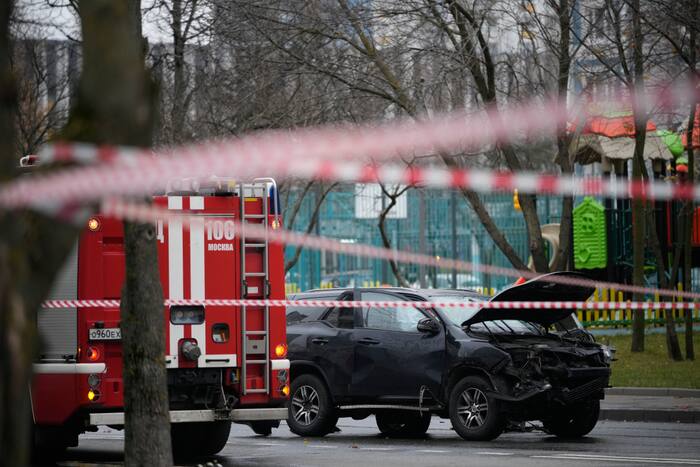
This is no longer a theoretical nightmare. Recent bombings inside Russia have claimed the life of a military officer and left an adviser to Ukraine’s former prime minister severely injured. On paper, these events read like cold dispatches from a shadow war—brief, clinical, and stripped of the human tremor that follows an explosion.
The Architecture of Sudden Vulnerability
To understand why these targeted strikes carry such psychological voltage, we have to look past the blast radius. A conventional battlefield has borders. You can draw a line on a map, point to trenches, and say with reasonable certainty where the danger begins and ends.
Targeted bombings erase that map.
Think of a modern security state like a medieval fortress with walls forty feet thick. For years, the architects of that fortress focus entirely on the gates, reinforcing the iron, stationing guards on the battlements, and assuring the townspeople inside that the siege can never breach the perimeter. They forget that the most devastating damage happens when the threat is already inside the courtyard, disguised as an ordinary piece of furniture.
When a Russian military officer is killed by an explosive device far from the active front, the physical loss of a single commander is only half the story. The deeper shockwave travels through the nervous system of the entire apparatus. Every door handle becomes suspect. Every routine morning walk turns into a calculation of risk.
And then there is the second half of that stark headline—the injury of an adviser to Ukraine’s former prime minister. That detail complicates any neat, black-and-white reading of who is safe and who is in the crosshairs. Political exiles, former officials, and figures who once walked the corridors of power in Kyiv now find themselves navigating a treacherous terrain on Russian soil, caught between shifting loyalties, state surveillance, and invisible enemies.
Living in the Aftermath of the Unthinkable
I have spent years covering regions where sudden, localized violence becomes part of the daily weather report, and there is a specific sound that stays with you long after the sirens fade. It is not the bang itself. It is the eerie, breathless quiet that lasts for about four seconds immediately after—before the car alarms start wailing, before the shouting begins, before people realize their ears are ringing.
In that four-second vacuum, your brain tries to reconcile two impossible realities. One second ago, you were thinking about groceries or a dentist appointment. Now, the air tastes like sulfur.
When you speak to residents who live near the sites of such blasts, they rarely talk about geopolitics first. They talk about their windows. They talk about how a child was standing three feet from the glass when the shockwave hit, or how an elderly neighbor refused to leave her apartment for three days afterward.
This is the invisible tax of covert warfare. Officials release terse statements. Investigators cordon off the asphalt with yellow tape, sweep up the debris, and repave the scorched patch of street within forty-eight hours. On the surface, the city heals instantly. Beneath the surface, trust fractures. Neighbors eye unfamiliar delivery vans with sudden suspicion. Conversations in elevators drop to whispers.
Why These Targets Matter Now
If you are trying to make sense of why a military officer and a former political adviser would be struck in this manner, you have to look at the mechanics of modern asymmetric conflict.
When armies grind against each other in prolonged attrition, progress is measured in meters and paid for in staggering sums of equipment and lives. Neither side can easily achieve a sudden, sweeping breakthrough on the ground. So, the conflict mutates. It moves into the shadows, seeking leverage not through massed artillery, but through precision, fear, and disruption.
Historically, whenever conventional fronts harden into stalemates, intelligence services and clandestine networks expand their reach into the rear. We saw it in Europe during the mid-twentieth century, and we have seen it in countless modern insurgencies. The logic is brutally simple—if you cannot break the shield at the front, you strike the hand holding it from behind.
Targeting a military officer sends an unmistakable message to the chain of command: Rank will not insulate you from the war you prosecute. Every officer who signs an order, coordinates logistics, or plans operations must now look under their vehicle before turning the key. That constant, low-grade paranoia degrades decision-making. It forces a state to divert vast resources away from the front lines just to guard its own hallways, parking lots, and apartment lobbies.
Meanwhile, the wounding of a figure tied to Ukraine’s former political establishment highlights the tangled web of exiles, defectors, and intermediaries operating inside Russia. Following the political upheavals in Kyiv over the past decade, several former officials and their aides relocated to Russia, occupying a gray zone—useful as political symbols, yet permanently exposed to the shifting winds of intelligence operations and internal rivalries.
The Questions Nobody Wants to Ask Out Loud
Whenever news of such bombings breaks, a predictable wave of confusion follows. State media often minimizes the incident, framing it as an isolated criminal act or a foiled plot, while independent observers scramble to verify identities and motives. It is completely normal to feel disoriented by the competing narratives, because opacity is the entire point of covert operations.
Who actually plants these devices? In some cases, operatives infiltrate across borders, spending weeks blending into local communities, renting apartments under assumed names, and tracking a target's daily habits down to the minute they walk their dog. In other instances, intelligence agencies recruit disillusioned locals—people motivated by ideology, financial desperation, or personal grievance—who assemble components sourced from ordinary commercial markets.
Can a state actually stop this kind of threat? Honestly, no security apparatus on earth can guarantee total protection against a patient, determined actor willing to use small, concealed explosives in a sprawling metropolis of millions. You can install facial recognition cameras on every street corner—and Moscow has tens of thousands of them—yet a camera only records the tragedy; it cannot physically intercept a signal sent from a burner phone three miles away.
And what does this mean for ordinary people who have nothing to do with military command or political intrigue? They become unwilling extras in someone else’s theater of deterrence. Even when explosives are designed to be directional—engineered to minimize collateral damage and focus kinetic force on a single vehicle or doorway—shrapnel does not read security clearances.
The Fragility of the Illusion
Look closely at the pattern emerging from these incidents, and a larger truth comes into focus. Modern states spend trillions of dollars projecting an image of invulnerability. They build hypersonic missiles, cyber divisions, and vast surveillance networks designed to convince both adversaries and their own citizens that every inch of territory is accounted for.
Yet a few kilograms of explosive hidden near a parked car can puncture that entire narrative in an instant.
Consider what happens next in the corridors of power after an officer is killed and a political adviser is rushed to intensive care. Emergency meetings are convened behind closed doors. Security protocols are rewritten overnight. Armored vehicles are requisitioned for officials who previously drove themselves to work. Routes are randomized. Bodyguards are doubled.
Every one of those defensive measures is an admission of vulnerability. Every extra checkpoint and plainclothes guard quietly broadcasts the same unsettling reality to the public: The wall is not holding.
For the everyday citizen—for our hypothetical clerk Alexei, walking to the metro with his collar turned up against the wind—life must go on. People still have to buy bread, take their kids to school, and commute to offices that feel suddenly exposed. Human beings possess an astonishing capacity to adapt to fear, tucking it away into the corners of their minds so they can function through the workday.
Still, adaptation is not the same thing as peace.
Where the Smoke Settles
A week after an explosion, the scorched asphalt is patched with fresh, dark tar. The broken glass is swept away, the police tape is rolled up, and pedestrians once again cross the street without breaking stride. If you did not know where to look, you would never guess that lives were shattered on that exact spot just days before.
Yet the silence that hangs over that freshly paved patch of street is different now, heavier and sharper than before, waiting for the next key to turn in an ignition.