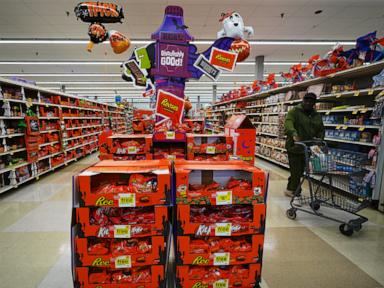
Standing in the seasonal aisle of a suburban grocery store in late September, you can smell the artificial cinnamon and cheap paraffin wax before you even turn the corner. Normally, this is a place of pure, unfiltered excess. It is an orange-and-black wall of sugar designed to trigger childhood nostalgia and adult impulse buying in equal measure.
Look closer at the price tags this year, though, and the nostalgia curdles.
A standard variety bag of miniature chocolate bars—the kind you used to toss into a cart without glancing at the bottom right corner of the shelf label—now commands upward of fifteen or twenty dollars. Pick up the bag, and your muscle memory immediately registers that something is wrong. It feels lighter. The plastic wrapper has more air in it, and the individual fun-size squares inside look suspiciously like they went through a shrink ray.
Retail analysts call this "sluggish early-season velocity" driven by cocoa inflation and broader affordability concerns. On a spreadsheet in a corporate boardroom, it looks like a neat little downward slope on a Q3 projection chart.
In the real world, standing under flickering fluorescent lights with a ten-year-old tugging on your sleeve, it feels like a quiet, creeping theft of a childhood ritual.
The Math at the End of the Aisle
To understand why the seasonal aisle feels so tense right now, consider a hypothetical shopper—let’s call her Elena. Elena is a mother of two living in a mid-sized American town where the neighborhood takes October 31st seriously. Last year, she bought four large bags of mixed chocolates to hand out to the hundred-odd kids who ring her doorbell, spending roughly forty-five dollars.
This year, Elena stands in front of the display, doing mental arithmetic that has nothing to do with festive spirit.
If she buys the same four bags of chocolate, her total will cross seventy dollars. That is seventy dollars for sugar she is literally going to give away to strangers in the dark. Her grocery bill for actual food—eggs, milk, chicken, produce—is already stretching her monthly budget thin. So Elena stands there, holding a bag of miniature peanut butter cups in one hand and a massive, brightly colored sack of sour fruit chews in the other. The fruit chews cost half as much per ounce.
Elena isn't alone. Across the country, millions of shoppers are performing this exact same quiet triage. Early Halloween candy sales have hit a noticeable wall because households are hitting their absolute limit on discretionary spending. When the cost of keeping the lights on and the fridge stocked climbs steadily over several years, a twenty-dollar bag of mini chocolate bars stops being a harmless seasonal treat and starts looking like a luxury item you can no longer justify.
I remember the first time I felt that specific sting of grocery-store sticker shock over something meant to be joyful. It wasn't a major appliance or a car repair; it was standing in a checkout line realizing that a few bags of holiday treats cost as much as a tank of gas. You feel a strange mix of frustration and embarrassment—frustration at the relentless climb of prices, and a quiet, nagging guilt that you are suddenly having to ration generosity.
Why Chocolate Became a Luxury Good
Why is a tiny square of milk chocolate suddenly priced like artisanal truffles? The answer starts thousands of miles away from the grocery store, in the humid, sun-drenched farms of West Africa.
Roughly two-thirds of the world’s cocoa comes from just two countries: Côte d'Ivoire and Ghana. Over the past few growing seasons, extreme weather patterns—torrential rains followed by punishing, dry Harmattan winds—battered those crops. Fungal diseases like black pod rot spread through the damp orchards, devastating yields.
Think of the global cocoa supply like a massive bathtub being filled by a single main pipe. For decades, that pipe flowed steadily, keeping chocolate cheap, abundant, and ubiquitous. When climate shocks and crop diseases choked that pipe, the water level in the bathtub plummeted. Cocoa futures on global commodities markets didn't just tick upward; they exploded, more than doubling and at times tripling their historical averages.
When raw ingredients spike like that, confectionery giants face a brutal choice. They can absorb the loss and watch their profit margins evaporate, or they can pass the bill to you.
They chose the latter, and they did it in two ways. First came direct price hikes—pushing those big party bags past the psychological barrier of fifteen and twenty dollars. Second came the quieter, more insidious tactic of shrinkflation. Companies shaved fractions of an ounce off individual bars, swapped solid milk chocolate shapes for hollow ones, and quietly altered the ratios in mixed variety bags so you get fewer expensive chocolate pieces and more cheap hard candies or wafers.
When you buy a bag of Halloween candy today, you are paying more money for less cocoa. It is an economic squeeze engineered to be just subtle enough that you don't put the bag back on the shelf, yet obvious enough that you feel slightly cheated when you tear it open at home.
The Great Candy Pivot
Faced with this chocolate tax, consumers are doing what they always do when pushed too far: they are adapting, and they are trading down.
If you look closely at retail data and grocery store end-caps right now, a clear pattern emerges. While chocolate sales are dragging their feet, non-chocolate confections—gummies, lollipops, sour belts, caramels, and chewy fruit candies—are having a moment. Sugar, corn syrup, and citric acid haven't suffered the same catastrophic supply shocks as cocoa beans. As a result, manufacturers can still produce massive bags of fruity candy at price points that don't make shoppers wince.
Wait. Stop and think about what that means for the average porch light this October.
For decades, chocolate was the undisputed king of the pillowcase haul. A house handing out full-size Snickers or Reese’s was neighborhood royalty; a house handing out generic lollipops or off-brand hard candies was tolerated at best. Now, economic necessity is forcing a cultural shift. Parents who used to pride themselves on being the "good candy house" are quietly pivoting to bulk bags of gummies, pretzels, or fruit snacks just to keep their total spend under thirty dollars.
There is another behavioral shift happening, too: procrastination.
In past years, retail analysts noted that consumers started buying Halloween candy in late August and early September, spreading the cost out over several paychecks—and, let's be honest, eating a bag or two themselves before October even arrived. Today, budget-conscious shoppers are holding off. They are waiting until the final week of October, gambling that anxious retailers stuck with mountains of unsold seasonal inventory will slash prices at the eleventh hour.
It is a high-stakes game of chicken between cash-strapped households and major retail chains. Retailers need to move millions of pounds of perishable, holiday-branded merchandise before November 1st turns it into dead weight. Shoppers, exhausted by years of inflation, are refusing to blink first.
The Invisible Stakes of the Porch Light
It is easy to dismiss all of this as trivial. After all, nobody needs miniature chocolate bars to survive. We are talking about candy, not insulin or rent. If people buy fewer bags of peanut butter cups, or hand out lollipops instead, the world will keep spinning.
Yet, when you look at the emotional architecture of a neighborhood, the Halloween candy bowl carries far more weight than its nutritional value suggests.
Halloween is one of the last remaining rituals in modern life that requires genuine, unscripted community participation. It doesn't happen behind a screen. It doesn't require a ticket or a reservation. You turn on your porch light, open your front door, and give something away to your neighbors' children simply because they knocked and said two magic words. It is a small, joyful transaction of pure generosity.
When inflation creeps into that transaction, it alters the atmosphere.
I talked to a neighbor recently—a retired teacher who has lived on the same cul-de-sac for thirty years. Every Halloween, she sits on her front steps wrapped in a wool blanket with a massive ceramic cauldron of chocolate bars. Last week, she told me she was thinking about turning off her porch light this year. Not because she dislikes the kids, and not because she’s tired of the noise, but because she lives on a fixed pension and the cost of filling that cauldron had quietly doubled since she retired. She didn't want to hand out cheap candy she wouldn't eat herself, and she couldn't afford the good stuff. So, rather than feel embarrassed by a skimpy bowl, she was considering opting out altogether.
That is the invisible cost of cocoa inflation and affordability fatigue. It doesn't just show up in quarterly earnings reports for confectionery conglomerates. It shows up in darkened front porches. It shows up in the quiet calculation of a retiree deciding she can no longer afford to participate in the one night a year the whole neighborhood comes to her door.
Navigating the New Candy Economy
If you are staring down the barrel of October wanting to keep the magic alive without wrecking your grocery budget, you don't have to surrender to twenty-dollar bags of air and cocoa butter. You just have to shop with a strategy rather than nostalgia.
First, abandon the convenience of the pre-mixed "variety pack." Those big bags are where manufacturers hide their highest markups, relying on the fact that busy parents want a one-and-done solution. You are almost always paying a steep premium for the convenience of the mix, and you inevitably end up with a pile of unpopular filler candies at the bottom of the bowl anyway. Instead, check the unit price—the cost per ounce printed in tiny font on the shelf tag—and buy single-brand bulk bags at warehouse clubs or discount grocers.
Second, embrace the non-chocolate pivot without guilt. Kids do not carry commodities market charts in their plastic pumpkins. While adults have a deep, nostalgic attachment to classic chocolate bars, kids routinely trade away miniature chocolates for sour gummies, chewy fruit candies, and novelty lollipops. Mixing a high-volume bag of affordable fruit chews with one smaller bag of chocolate gives you volume without sacrificing the classics.
Third, play the timing game, if your nerves can handle it. Retailers ordered their Halloween stock months ago, banking on steady demand. If early sales continue to lag, big-box stores and grocery chains will be forced to run aggressive promotional discounts in the final ten days of October to clear floor space for Thanksgiving and winter holiday displays. Waiting until the last week—and pairing store sales with digital loyalty coupons—can easily shave thirty to forty percent off those early-season sticker prices.
Finally, rethink what goes into the bowl. In recent years, non-candy treats—glow sticks, temporary tattoos, sticker sheets, or small packs of pretzels and popcorn—have surged in popularity, partly because they are allergy-friendly and partly because you can buy them in bulk for pennies per piece. Toss a handful of glow bracelets into a bowl alongside regular candy, and watch which one the kids reach for first in the dark.
The Light on the Porch
Ultimately, the slow start to Halloween candy sales isn't a story about people losing their love for October. It is a story about a breaking point. Consumers have spent years absorbing higher prices on every front, quietly adjusting their expectations and trimming the fat from their lives. Now, the squeeze has reached the front porch.
Corporate executives will spend the next few months dissecting spreadsheets, trying to figure out the exact price threshold where a shopper puts a bag of chocolate back on the shelf. They will tweak package sizes, adjust cocoa percentages, and run focus groups on consumer sentiment.
Meanwhile, on a Tuesday night at the end of October, the streetlights will flicker on. Kids in slightly too-big superhero costumes and handmade cardboard masks will start running down the sidewalks, breath fogging in the cool autumn air, plastic buckets swinging wildly at their sides.
They won't know anything about West African crop yields or global cocoa futures. They won't care whether the bag on your kitchen counter cost twelve dollars or twenty, or whether you bought it in September or on clearance at four o'clock that afternoon. They will only see whether the porch light is on, and whether the door swings open.