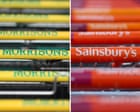
Walk down any suburban high street on a Tuesday morning, and you will notice the rhythm. The metallic squeak of a wire basket. The rustle of crinkled plastic. The heavy thud of a two-liter carton of milk hitting the bottom of a trolley. For millions, this is not just a chore. It is muscle memory. We walk the same aisles we walked ten years ago, searching for the yellow markdown stickers, trusting the familiar red or green signs overhead.
We assume these massive retail empires are permanent fixtures of the physical world. Mountains of baked beans and endless walls of chilled chicken breasts feel as enduring as the weather. But behind the automatic sliding doors, boardrooms are shaking.
Earlier this year, two giants of the British high street, Sainsbury’s and Morrisons, reportedly held secret talks about a multibillion-pound merger.
Think about that for a second. Two heavyweights, usually locked in a brutal race to shave pennies off the price of a loaf of bread, sitting across a walnut table to discuss becoming one.
To understand why this matters, you have to step away from the corporate press releases and look at what is happening to the ground beneath our feet. Grocery retail in the United Kingdom is a war of attrition. For decades, the battle lines were drawn between the traditional big four supermarkets. Then, German discounters like Aldi and Lidl tore through the battlefield like wildfire, offering the same or better products for a fraction of the cost.
Margins in the supermarket business are razor-thin. Sometimes, they are measured in fractions of a penny per item sold. When you sell millions of items, those fractions add up, but they also leave you dangerously vulnerable to inflation, soaring energy bills for massive refrigerated warehouses, and demanding supply chains.
Rumors of a merger do not pop up because companies are feeling confident. They pop up because the weather is turning rough.
Imagine Arthur, a hypothetical store manager who has spent thirty years keeping a Morrisons branch running. He knows every regular customer by name. He knows which aisle gets drafty in December and which shelf displays the Easter eggs first. To Arthur, the supermarket is a community hub. But to a Wall Street analyst or a corporate strategist in a glass tower, Arthur’s store is simply a dot on a spreadsheet, an asset that needs to generate higher returns against relentless economic headwinds.
When giants talk about merging, they are talking about scale. They are talking about combining buying power, squeezing suppliers harder, and closing overlapping stores to save money.
Yet, any massive retail consolidation faces a giant roadblock: regulators.
The Competition and Markets Authority exists precisely to prevent monopolies or near-monopolies from choking the marketplace. When Sainsbury’s tried to merge with Asda a few years ago, the regulatory watchdog ultimately blocked the deal, fearing it would lead to higher prices and fewer choices for shoppers. A potential pairing of Sainsbury’s and Morrisons would face the exact same fierce scrutiny. The overlap in towns and cities across the country would mean antitrust alarms ringing loudly in London.
So why even have the conversation?
Because standing still is a terrifying prospect. The retail landscape is shifting toward online delivery apps, automated warehouses, and artificial intelligence-driven inventory management. The costs of keeping up are astronomical. To survive tomorrow, companies sometimes feel compelled to swallow their fiercest rivals today.
Consider what happens next time you push your trolley down aisle four. You pick up a box of cereal, scan the price, and toss it into the cart. You are not thinking about boardroom strategy or multibillion-pound valuations. You just want breakfast to be affordable.
Yet, every choice we make at the checkout counter feeds back into this massive, nervous system of corporate survival. Mergers happen because the ground is moving. The familiar red and green signs may look permanent, but behind the sliding doors, the race for survival never stops.
The checkout belt keeps moving. The register keeps ringing. And somewhere out there, behind closed doors, the next big chess move is already being planned.