A Morning That Felt Too Warm
The coffee was already cold when the inflation print hit the screens.
For months, people had been trying to convince themselves that the worst of price pressures had finally packed a bag and left town. Maybe not quietly, and maybe not without leaving a few scuffs on the walls, yet still on its way out. Then came Wednesday, October 14, 2026, and the numbers arrived like an uninvited guest kicking the front door open. You might also find this related story useful: Executive Exits at Republic and Def Jam Are Not a Crisis They Are an Admission.
Headline inflation had climbed to 3.7% in September. Even stripping out food and energy—the usual suspects that jump around whenever shipping lanes tighten or a storm hits a refinery—core inflation rose 0.3% on the month and 2.6% over the year, hotter than economists had expected. Brent crude sat near $108 a barrel, carrying a heavy risk premium that turned every trip to the gas pump into a small reminder of how fragile global supply chains remain.
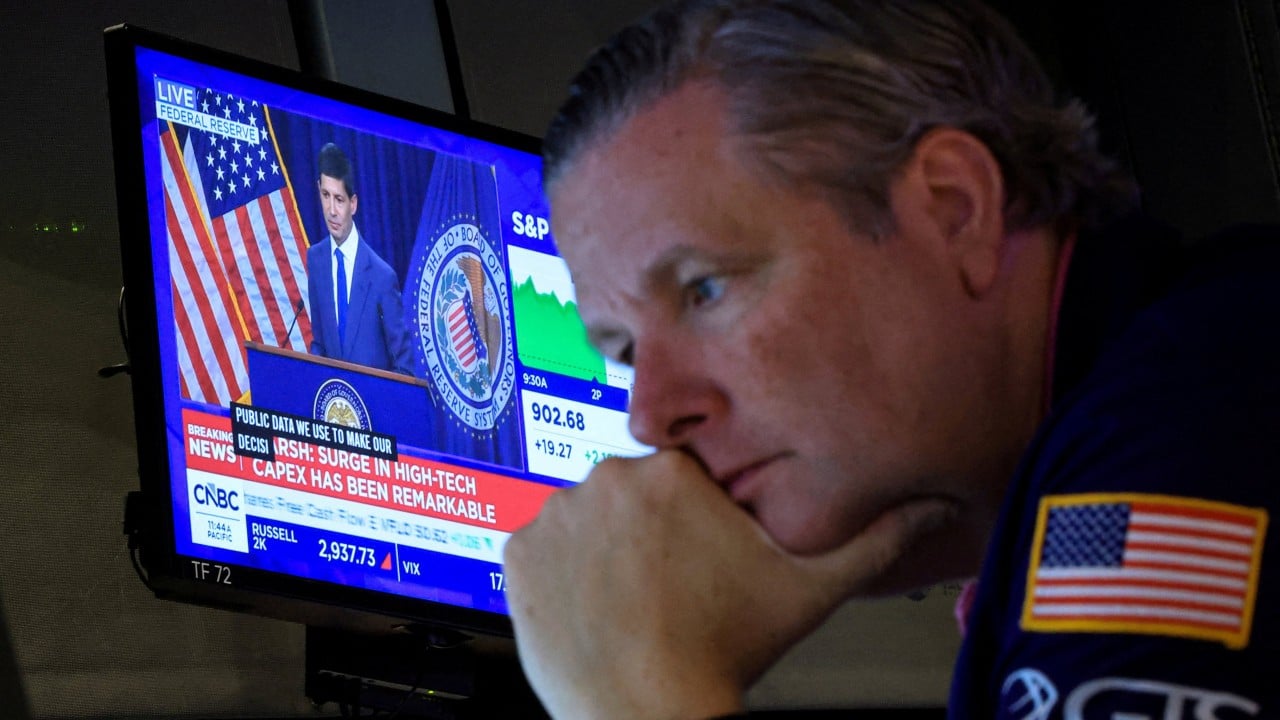
On paper, a Wednesday session on Wall Street is just a collection of percentages, index levels, and closing bells. The S&P 500 fell 1.11% to 7,718.94. The Nasdaq Composite slid 1.88% to 26,692.87. The Russell 2000 dropped 1.93% to 2,729.53. The Dow Jones Industrial Average held up better than the rest, dipping just 0.09%—48.62 points—to 51,621.48. As discussed in latest coverage by Investopedia, the effects are worth noting.
Red. Mostly red.
Yet those numbers do not live inside glass towers in Lower Manhattan. They live inside kitchens, small workshops, retirement accounts, and anxious conversations between people trying to plan the next five years of their lives. When markets wobble on a hot inflation reading, what is really shaking is certainty. People start asking whether the borrowing costs on a business loan will stay punishingly high, whether their paychecks will stretch as far next spring, and whether the quiet progress they thought they had made is about to get pulled backward.
Inside the Numbers (and Behind Them)
To understand why Wednesday felt so heavy, it helps to look past the headline averages and see who got hit hardest—and who quietly found shelter.
Technology bore the brunt of the selling. Information technology fell 3.00% on the day, with communication services down 1.32% and industrials slipping 0.96%. High-growth stocks and data center or AI-linked names felt the squeeze as traders priced in the risk that interest rates might stay higher for longer or even tick up again. When borrowing gets more expensive and inflation refuses to cool cleanly, distant promises of future profit lose some of their shine.
Small-cap companies in the Russell 2000 took a similar beating, with only a small fraction of holdings finishing in positive territory during the afternoon slide. Smaller businesses rarely have the giant cash cushions or bond-market clout of megacap giants. When credit tightens or stays expensive, a smaller firm feels it in its bones.
Not every corner of the market bled, though. Health care rose 2.44% and consumer staples gained 2.21%, while energy edged up 0.65%. People still need medicine. They still buy soap, groceries, and household basics even when the economic weather turns sour. And when crude oil is hovering above $100 a barrel, energy producers sit right in the path of the very pressure hurting everyone else.
Company-specific news added sharp, local bruises to an already tense tape. Bank of America shares fell after third-quarter results disappointed and federal regulators hit the bank with a penalty exceeding $1.2 billion over failures in safeguards against money laundering and illicit financial activity. Insurer Progressive tumbled 8.01% after missing third-quarter expectations on both earnings and revenue. Industrial distributor Fastenal dropped 5.29% after posting a higher-than-expected capital expenditure outlook for 2026. Meanwhile, reports of abandoned merger talks between Perella Weinberg and Piper Sandler, alongside banker moves like consumer retail M&A banker Peacock heading toward JPMorgan, underscored how dealmaking and corporate strategy were shifting under pressure.
A stock index is a mirror, not a thermostat. It reflects what millions of buyers and sellers expect in the next breath—it does not set the temperature of real life by itself.
That distinction matters. A 1.88% drop in the Nasdaq or a 1.93% slide in the Russell 2000 looks dramatic on a ticker, yet daily swings are part of how public markets digest surprise data. The real story on October 14 wasn't a crash. It was a repricing of patience.
Two Lives on a Red Day
(Note: The following two characters are hypothetical scenarios created to illustrate how market shifts and inflation data are experienced outside Wall Street.)
Twenty miles outside Columbus, Ohio, Hannah, who runs a 14-person precision-machining shop that supplies components for industrial equipment and medical devices, spent Wednesday morning staring at a steel quote that had crept up again. Her shop isn't a household name, and she doesn't watch every tick of the Dow. Still, she knows what hot inflation means when you buy raw materials and finance equipment upgrades. Every time inflation ticks up and rate-hike fears return, borrowing money to modernize a lathe or hire another machinist feels riskier. Watching broad indexes slip and industrial distributors like Fastenal wrestle with capital spending plans didn't surprise her. It confirmed a feeling she had carried for weeks: planning ahead is harder when the ground keeps shifting.
Four hundred miles south, near Charlotte, Devon, a 38-year-old physical therapist and new homeowner, checked his retirement app on his lunch break after a coworker mentioned the market was down on inflation news. He had put money into broad index funds every month for a decade, mostly on autopilot. Seeing the S&P 500 drop 1.11% and the Cboe Volatility Index jump 10% to 16.82 gave his stomach a brief, familiar tug. Nobody likes seeing red numbers next to money meant for their kid's college fund or their own eventual rest. Yet as he sat in his car eating a turkey wrap, Devon reminded himself of something he had learned the hard way during earlier market squalls: reacting in panic to a single noisy day usually locks in fear rather than wealth.
Neither Hannah nor Devon controls the Federal Reserve, global oil markets, or boardroom decisions. Both of them, in their own quiet ways, were negotiating the same invisible stakes—trust, timing, and whether the future will be kinder than the headlines.
Why Hot Inflation Rattles Everything So Fast
Anyone who has lived through the past few years knows why a single inflation report can pull the rug out from under a calm morning.
Inflation is like a slow leak in a tire. At first, you barely notice it. The car still drives. You still get where you're going. Then one morning you walk out to the driveway, look closely, and realize the rim is sitting lower than it should. If you ignore the leak on a long highway trip, every bump hits harder.
When September's CPI came in hot at 3.7% with sticky core readings and elevated oil prices, investors didn't just react to October 14. They recalculated the road ahead. Higher inflation threatens purchasing power, squeezes profit margins when companies can't pass along every penny of higher costs, and puts fresh pressure on policymakers to keep interest rates restrictive—or push them higher.
Growth stocks and smaller companies feel that calculus acutely because their value depends heavily on future cash flows and access to affordable capital. When discount rates threaten to stay elevated, money rotates toward steadier ground—places like health care and consumer staples—or simply steps back to wait.
And if I am being completely honest with you, this is the part where even seasoned market watchers can feel a knot in their chest. I have spent years studying market cycles and living through stretches where data seemed to contradict itself from one month to the next—where good news on jobs or spending suddenly looked like bad news because it kept inflation warm, and where a single geopolitical shock in oil could undo weeks of fragile calm. It is confusing. It can feel unfair when you do everything "right" by saving, budgeting, and building, only to watch headlines turn messy overnight.
Uncertainty is part of the price of participating in a living economy. You don't get the upside of growth without occasionally sitting through the squalls.
Questions People Ask When the Tape Turns Red
When a day like Wednesday hits, the same practical questions tend to echo across group chats and kitchen tables.
Did the stock market crash on October 14, 2026?
No. A crash implies panic selling and severe, sweeping collapse across the entire financial system. Wednesday was a broad, meaningful pullback—especially in technology and small caps—with the S&P 500 down 1.11%, the Nasdaq down 1.88%, the Russell 2000 down 1.93%, and the Dow nearly flat at down 0.09%. Volatility rose, with the VIX up 10% to 16.82, which is a jump in nervousness rather than full-blown panic.
Why did tech and small caps fall harder than the Dow?
Tech stocks and smaller companies in the Russell 2000 are generally more sensitive to interest-rate expectations and financing costs. When inflation comes in hotter than hoped, traders worry about tighter financial conditions ahead. Meanwhile, the Dow's mix of large, established names—and defensive pockets like health care and consumer staples elsewhere in the market—helped cushion some of the blow.
What does a hot inflation print mean for everyday households?
In the short term, it is a reminder that living costs—from energy and insurance to everyday goods—are still pushing back against easy relief. Over longer stretches, steady wealth building usually depends less on guessing one day's market reaction and more on keeping emergency cash intact, avoiding high-interest debt traps, and staying aligned with a realistic time horizon.
Holding Steady When the Noise Rises
History has a way of humbling anyone who treats a single trading session as a verdict on the next decade. Markets have weathered inflation scares, rate shifts, regulatory fines, corporate misses, and energy shocks before—and they will again. What separates people who stay grounded from people who get whiplash isn't superhuman foresight. It is a habit of separating noise from signal.
Noise is every red arrow flashing on a screen at 2 p.m. Signal is whether your own household, business, and long-term plan can absorb a bump without forcing you into a bad decision.
At dusk on that October Wednesday, the screens in New York went quiet at the closing bell, leaving behind a ledger of fractional losses and cautious bets. Somewhere in Ohio, a shop owner locked up after checking tomorrow's steel delivery; somewhere in North Carolina, a father closed his laptop and walked out to play catch before dark. The market had spoken in numbers, sharp and restless, while real life kept doing what it always does—moving forward one honest hour at a time.