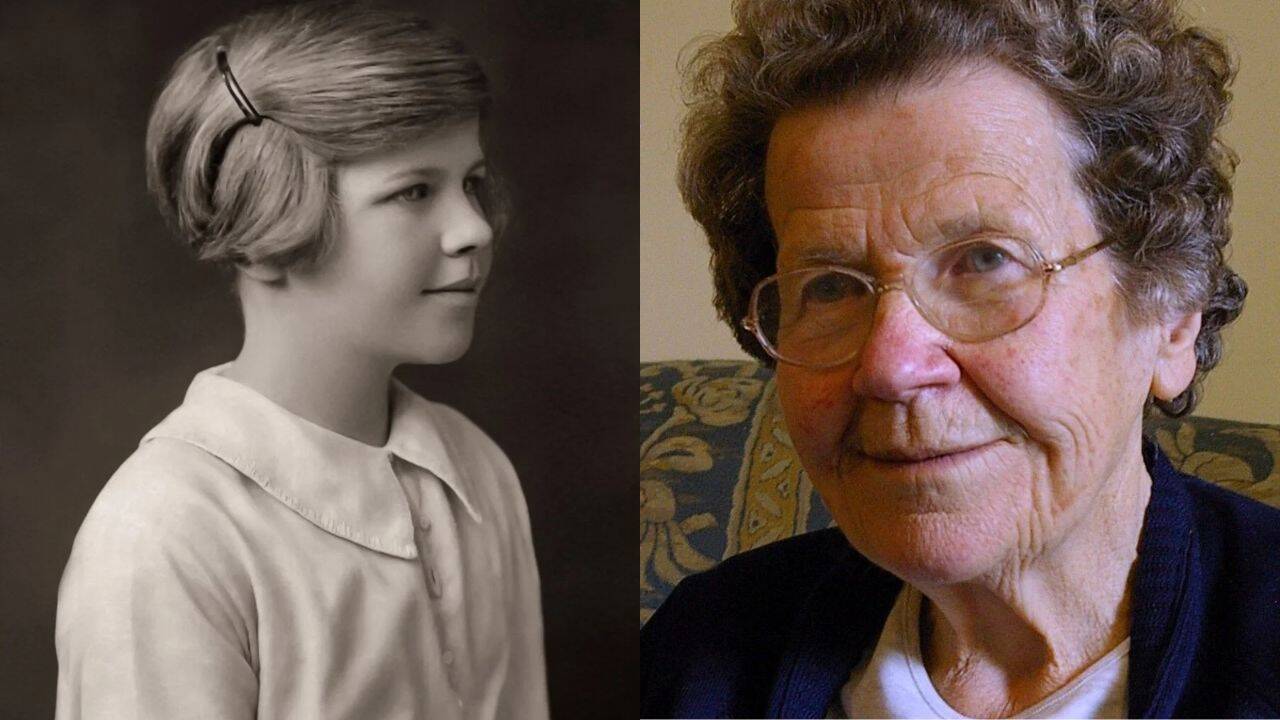
The marmalade was cold, the morning air in North Oxford carried the damp chill of an English March, and across the Atlantic Ocean, the greatest minds in modern astronomy were completely stuck.
It was March 14, 1930. Inside a quiet dining room at 94 Banbury Road, eleven-year-old Venetia Burney sat across from her mother and her grandfather, Falconer Madan. Rustling the stiff, ink-heavy pages of The Times, her grandfather cleared his throat and read aloud a dispatch that had shaken the scientific community the day before. Thousands of miles away, in the high desert of Flagstaff, Arizona, a twenty-four-year-old farm boy turned astronomer named Clyde Tombaugh had finally spotted what Percival Lowell had spent his fortune hunting for decades. A ninth planet. A dark, distant wanderer lurking in the freezing black beyond Neptune. Recently making waves recently: Twenty Thousand Dollars of Imaginary Souvlaki.
Falconer Madan lowered the paper, looking over his spectacles, and wondered aloud what on earth they were going to call it.
Venetia paused. She chewed her toast. She thought about the dark. More details on this are detailed by USA Today.
"Why not call it Pluto?" she asked.
Just like that. Five words spoken between sips of tea, uttered by a child who would never look through a research telescope in her life, altered the vocabulary of the human race forever.
The Invisible Weight of Naming
We tend to treat names as mere labels, like stickers slapped onto jars in a pantry. We get that completely backward. To name a thing is to claim it, to pull it out of the terrifying void of the unknown and tether it to human memory. Before a new world has a name, it is just a smudge on a glass photographic plate—a mathematical ghost blinking back and forth on a comparator screen in a dark Arizona dome.
In the spring of 1930, the Lowell Observatory was drowning in mail. Over a thousand letters poured in from every corner of the globe, carrying 171 distinct proposals. People wanted to name the cold, distant orb after politicians, war heroes, and grieving spouses. Lowell’s widow, Constance, aggressively lobbied the astronomers to name the planet Zeus, then Percival, and finally, with breathtaking audacity, Constance. The scientific establishment had its own favorites. Minerva was a frontrunner. Cronus had fierce defenders. Odin, Atlas, and Persephone all had their champions in the stuffy lecture halls of London and Washington.
Yet every single one of those learned suggestions missed the emotional reality of the discovery. The men in tweed suits were thinking about prestige, mythology, and academic lineage. They were looking at orbital mechanics and eccentricity calculations. They forgot what it actually felt like out there, four billion miles from the warmth of the sun.
Venetia didn't forget. She had walked it.
Months earlier, her primary school teacher, a remarkably creative woman named Miss K. Claxton, had taken Venetia’s class out into the Oxford University Parks for a lesson in scale. They drew a two-foot chalk sun on the classroom blackboard, tucked tiny objects into their pockets, and marched out onto the pavement to pace out the solar system. Forty-one steps brought them to Mercury, represented by a tiny canary seed. Seventy-seven paces got them to Venus, a small pea. Earth was another pea. Mars was a bead. By the time the children reached Saturn, represented by a golf ball, they had counted out 1,019 grueling paces across the grass, their legs aching and the blackboard sun long out of sight.
A child who has walked a thousand paces just to reach Saturn understands something that an astronomer staring at equations rarely feels in their bones. She understood the loneliness of that distance. She understood the crushing, perpetual twilight of the outer reaches. When her grandfather read that the new planet was dim, remote, and freezing, Venetia didn't picture the thunderbolts of Zeus or the wisdom of Minerva. She remembered the books of Greek and Roman legends she had devoured by the fire, and she thought of the god who ruled the dark, unseen underworld—the deity who possessed a helmet that rendered him invisible to mortal eyes.
Pluto.
A Grandfather’s Note and a Transatlantic Wire
History rarely hinges on grand speeches. More often, it turns on whether an adult bothers to take a child seriously.
Falconer Madan was no ordinary grandfather. He was the retired head librarian of Oxford’s famed Bodleian Library, a man who spent his life curating human knowledge and who understood the quiet gravity of a brilliant idea. More importantly, astronomical naming ran in the family blood. Half a century earlier, in 1877, Falconer’s older brother Henry—a science master at Eton—had been asked by the American astronomer Asaph Hall for help naming the two newly discovered moons of Mars. Henry had reached into the Iliad and pulled out Phobos and Deimos: Fear and Terror.
So when eleven-year-old Venetia tossed out the name of the Roman god of the underworld over her breakfast plate, Falconer didn't pat her on the head and return to the crossword. He recognized the sheer, undeniable rightness of it.
That very morning, March 14, 1930, he sat down at his desk and dipped his pen in ink. He wrote a brief, urgent note to his old friend Herbert Hall Turner, a renowned professor of astronomy at Oxford who happened to be in London that day attending a meeting of the Royal Astronomical Society.
"Dear Professor, This new planet! As my older brother suggested the names of Deimos and Phobos for the Martian moons, I was set wondering about a name for the big obscure new baby at breakfast today. It is of course most dim and dark and gloomy. Blest if my little granddaughter Venetia Burney didn't up and suggest a name which seems to me to be thoroughly suitable, PLUTO."
Turner was electrified. He realized immediately that none of the eminent fellows in the London meeting room had thought of it, even though Pluto was the brother of Jupiter and Neptune, completing the mythological triad of the outer solar system. Two days later, Turner walked to the telegraph office and cabled the suggestion across the Atlantic to the Lowell Observatory in Flagstaff: Naming new planet, please consider PLUTO, suggested by small girl Venetia Burney for dark and gloomy planet.
On May 1, 1930, the astronomers at Lowell held a formal vote. Every single member of the staff raised their hand for Pluto. Aside from its poetic perfection, the name carried a secret, poignant symmetry that sealed its fate: the first two letters, P and L, were the initials of Percival Lowell, the man who had died fourteen years earlier without ever seeing the world he knew was there.
Falconer Madan walked into Venetia’s room shortly after the official announcement and handed her a crisp five-pound note—a small fortune for a schoolgirl in 1930, roughly equivalent to several hundred dollars today. She had named a planet before she had even hit puberty.
The Demotion That Couldn't Touch the Name
I have spent years watching how people react when the rules of the universe suddenly shift beneath their feet, and few scientific events triggered more genuine, visceral grief than what happened in Prague in August 2006.
For seventy-six years, generations of schoolchildren memorized a nine-planet solar system. Pluto was the scrappy underdog at the edge of the map, the icy misfit that refused to follow the neat, circular orbits of its massive neighbors. Then, as telescopes grew sharper and human vision pierced deeper into the Kuiper Belt, astronomers began finding other icy worlds out there—objects like Eris, which was actually more massive than Pluto. Suddenly, the International Astronomical Union faced an existential crisis: either expand the textbooks to include dozens of new planets, or draw a hard, unforgiving line in the stardust.
They drew the line. Pluto was stripped of its planethood and reclassified as a dwarf planet.
People were furious. Bumper stickers mourned the loss. Children wrote angry letters to planetariums. Grown adults felt a strange, aching nostalgia, as if a childhood home had been rezoned into a strip mall.
Amid the uproar, journalists tracked down an eighty-seven-year-old woman living quietly in a modest house in Epsom, Surrey. Venetia Burney had grown up, studied mathematics at Cambridge, worked as an accountant, married a classics teacher named Maxwell Phair, and spent decades teaching economics and math to teenagers. She had never chased the spotlight. She had never leveraged her childhood fame into a career.
When reporters pressed her on the cosmic demotion of her planet, expecting outrage or heartbreak, she offered a gentle, characteristic shrug. At her age, she told them, she was largely indifferent to the technical debate, though she supposed she would prefer it to remain a planet.
She understood something the angry crowds didn't. Categories are human inventions. We draw boxes around nature to help our small brains organize the chaos of the cosmos, and every few centuries we have to redraw the lines. Whether astronomers call that distant sphere a major planet, a dwarf planet, or a trans-Neptunian object changes nothing about the rock and nitrogen ice spinning silently in the dark.
And it couldn't touch the name.
The Girl Who Became a Crater
If you want to understand the true weight of that March breakfast in 1930, you have to look at what happened nine years after the Prague demotion.
In January 2006, just months before Pluto lost its planetary status, NASA launched the New Horizons spacecraft on a three-billion-mile journey into the outer dark. Bolted to the belly of that piano-sized probe was a dust counter built by students at the University of Colorado. When the mission team realized Venetia Burney Phair was still alive, living quietly in southern England, they did something extraordinary. They named the instrument after her: the Venetia Burney Student Dust Counter.
Alan Stern, the mission's principal investigator, flew to England and sat in her living room to present her with a plaque and a model of the spacecraft. Venetia was eighty-eight, nearly blind, and frail, yet her mind remained razor-sharp. She held the model in her hands, tracing the contours of a machine that was hurtling toward the dark world she had named when she was just eleven years old.
She died in April 2009 at the age of ninety, six years before New Horizons finally reached its target.
When the spacecraft screamed past Pluto in July 2015, beaming back the first high-resolution images of that distant world, the photographs stunned humanity. Pluto was not a dead, featureless lump of gray rock. It was breathtakingly alive, painted in shades of rust and cream, sporting towering mountains of water ice and a vast, bright glacier shaped unmistakably like a heart.
And there, carved into the icy crust just south of that heart, was a twenty-two-mile-wide impact basin. In 2017, the International Astronomical Union made it official. They named it Burney Crater.
Think about the sheer, improbable arc of that trajectory. An eleven-year-old girl sits at an oak table in Oxford, eating toast and marmalade, drawing on the stories she read before bed and a walk she took through a local park. She speaks a single word into the morning air. That word travels from a grandfather’s fountain pen to a London telegraph wire, across an ocean to an Arizona mountaintop, out into the textbooks of billions of children, and finally, nearly a century later, becomes etched permanently into the frozen geography of a world four billion miles away.
We often tell young people to wait their turn. We tell them to study harder, gather more credentials, earn their seats at the table, and leave the grand decisions to the experts in the room. Yet every so often, the experts get trapped inside their own expertise, blinded by what they know, unable to see the obvious truth sitting right in front of them.
Sometimes, it takes a child who still remembers what the dark looks like to tell us what we are actually looking at.