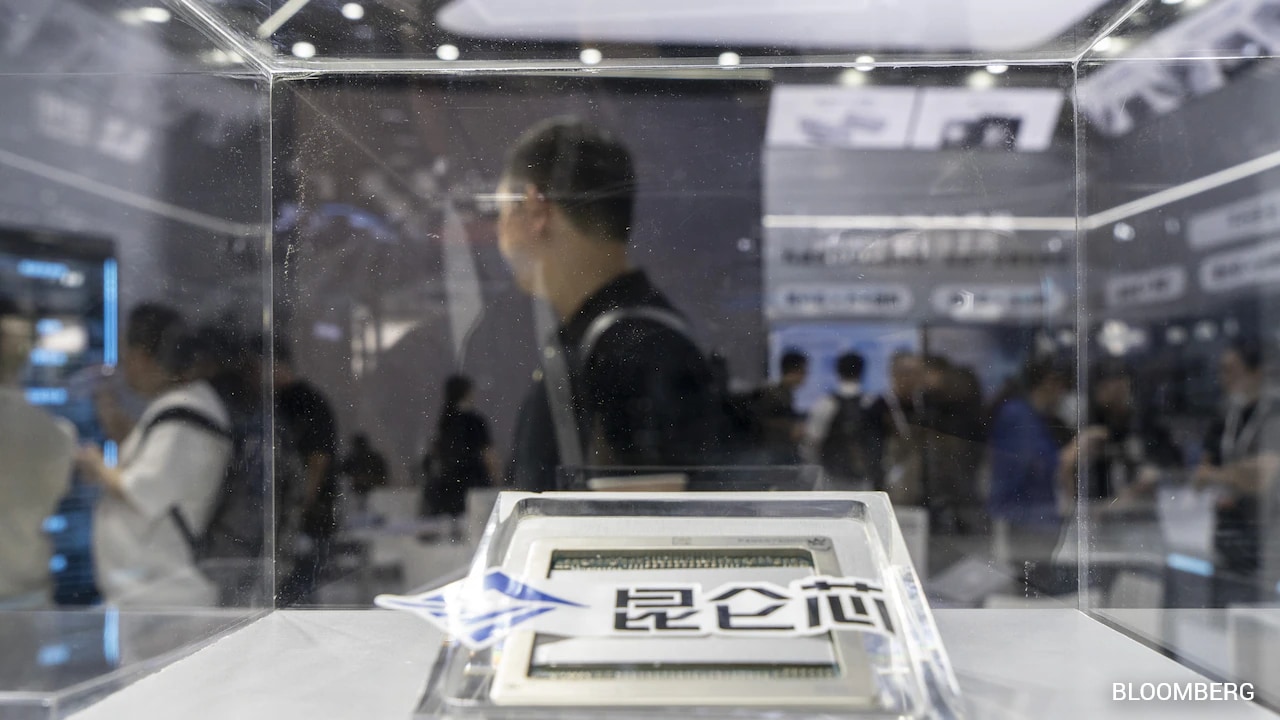
Humidity clings to a concrete wall at three in the morning. You can hear it before you see it—a low, vibrating hum behind windowless facades that do not belong to factories or hospitals, yet pull enough electricity to light a small city through the dark hours.
Listen. If you liked this article, you might want to look at: this related article.
Inside those humming rooms, thousands of silicon chips are running matrix multiplications until their casings push past seventy degrees Celsius, turning every second of human curiosity—a drafted email, a generated image, a legal contract summarized in three seconds—into real thermal energy that has to go somewhere.
I spent years walking between sun-baked agricultural basins and cold, fluorescent server halls, watching how easily we forget that "the cloud" is made of copper, steel, diesel backup generators, and water. When people call this surge of artificial intelligence compute an AI El Niño, they are reaching for a familiar weather metaphor to describe an unfamiliar climate shock: a sudden, repeating wave of heat, power strain, and drought stress that arrives without waiting for seasons to shift. For another angle on this development, refer to the latest coverage from Mashable.
Why Weather Metaphors Stick When Grids Buckle
A traditional El Niño happens when trade winds weaken across the Pacific Ocean, letting warm surface water spread east and rewriting rainfall, fishing harvests, and storm tracks across continents. Nobody argues whether El Niño is real when a river runs low or a monsoon arrives late. It feels physical. It has weight.
Artificial intelligence feels weightless on a screen. You type a question on a glass rectangle and get an answer back in the time it takes to blink. Because the interface is clean and quiet in your hands, it is easy to treat intelligence as free energy—something conjured out of thin air rather than pulled through high-voltage transmission lines and evaporative cooling towers.
Metaphor check: calling rapid AI growth an "AI El Niño" is a metaphor, not a meteorological phenomenon. Pacific sea surface temperatures do not rise because someone asked a chatbot to plan a weekend trip. Yet the comparison captures a genuine pattern in infrastructure economics: demand clusters in specific geographic corridors faster than local utilities, water boards, and grid operators can build new capacity.
Consider what happens next when a single hyperscale campus needs one hundred megawatts or more of continuous power. A typical household uses roughly ten to eleven megawatt-hours of electricity a year. One hundred megawatts running steadily around the clock equals roughly eight hundred seventy-six thousand megawatt-hours over twelve months—enough baseline power to supply tens of thousands of homes, depending on local climate and appliances.
When five or ten campuses cluster inside the same regional grid zone, reserve margins tighten. Peaker plants fire up. Older gas or coal units stay online longer than planners expected, or utilities scramble to sign long-term contracts for steady baseload generation. That is why economists and grid engineers reach for climate words: the strain is recurring, uneven, and felt hardest by communities that never signed up to host a computing boom.
A Hypothetical Town in the Path of the Surge
To see how abstract megawatts turn into everyday friction, consider a hypothetical town I will call Cedar Creek, built along a slow-moving river in a semi-arid valley. (This town and its residents are hypothetical composite characters created to illustrate real infrastructure trade-offs.)
Marta runs a small greenhouse nursery on the edge of Cedar Creek. For twenty years, her livelihood has depended on predictable spring water allocations and stable afternoon electricity to run ventilation fans and irrigation pumps. Two miles north, a regional water board manages the same watershed that supplies Cedar Creek's taps, farms, and industrial parks.
One dry July, a large cloud and AI data center campus enters its first full summer of operation north of town. Nothing dramatic breaks on day one. Marta's watering schedule still runs. Yet the town council starts reading technical memos about peak summer grid alerts and municipal water agreements.
Why does water enter a conversation about computer chips?
Two reasons. First, chips run hot, and air conditioning alone struggles when outside temperatures climb past thirty-five degrees Celsius. Many data centers use evaporative cooling—letting water absorb heat and evaporate into the atmosphere—or closed-loop chilled water systems backed by cooling towers. Evaporated water leaves the local loop; it does not magically return to the exact reservoir the next morning. Second, the power plants generating electricity for those servers often use water for steam and cooling as well.
In Cedar Creek, Marta does not care about floating-point operations per second. She cares whether the well level drops in August and whether commercial electricity rates nudge higher when the grid hits peak load. When a new industrial user arrives with deep capital and multi-year utility contracts, smaller local players feel squeezed even when everyone follows the rules on paper.
The Invisible Stakes Behind Every Token
I have stood beside evaporative cooling towers where warm mist drifted over gravel yards while farmers half an hour away watched irrigation canals run shallow. That contrast stays with you. It makes you ask uncomfortable questions that shiny product launches rarely mention.
Who pays when transmission lines need upgrading?
In many electricity markets, transmission costs are socialized across ratepayer classes or negotiated through special tariffs. If a utility builds new substations and high-voltage lines primarily to serve massive load growth, everyday households and small businesses can end up sharing part of the bill unless rules ring-fence those costs cleanly. Even where large buyers pay special rates, local communities still live with the land use, noise from chillers and backup generators, and competition for scarce water during dry years.
There is also a timing mismatch. Building a data center hall can take twelve to twenty-four months once land and permits line up. Building major high-voltage transmission lines or new nuclear, geothermal, or grid-scale storage projects often takes five to ten years.
When compute demand moves faster than grid construction, stress shows up in familiar ways: delayed industrial hookups, higher wholesale power prices during heat waves, and louder public pushback at zoning hearings.
Admittedly, I find some of the loudest debates around AI energy confusing and sometimes overheated. One camp talks as if every prompt is boiling a lake; another waves away physical limits because software algorithms keep getting more efficient. Both miss the messy middle where real engineering happens.
Efficiency is real. Newer chip architectures and better model quantization can dramatically cut the energy needed per query compared to earlier generations. Yet efficiency has a stubborn habit of lowering the cost per task so people use more of it—generating video, running background agents, analyzing massive files continuously. Engineers call that Jevons's paradox: making a resource cheaper to use per unit often drives total consumption higher.
What Happens When Heat Meets Real Engineering
If this wave behaves like a recurring weather cycle, waiting for the sky to clear is not a strategy. The interesting work is happening among engineers, utility planners, and operators who treat heat and power constraints as design problems rather than afterthoughts.
Look at how cooling is changing inside modern server racks. Traditional air-cooled halls blow cold air down aisles and push hot air back to chillers. High-density AI racks pack so much heat into a single cabinet that air cooling hits a wall. Direct-to-chip liquid cooling circulates coolant right over hot processors, capturing heat more efficiently and cutting fan power. Warm-water cooling and heat-reuse loops go a step further, piping captured thermal energy into greenhouses, district heating networks, or industrial processes instead of venting it all to the sky.
Power sourcing is shifting too. Rather than relying solely on intermittent wind or solar without firming, operators are signing clean-firm power agreements—geothermal, nuclear, hydro, and long-duration storage paired with renewables—so servers do not lean on fossil peaker plants every time clouds roll over or evening demand rises.
On the software side, smarter scheduling matters just as much as hardware. Not every AI task needs an answer in fifty milliseconds at two in the afternoon when the grid is straining. Batching non-urgent training runs, shifting flexible workloads to hours or regions with surplus renewable power, and matching model size to actual task difficulty can trim peak stress without slowing down what truly needs instant response.
In hypothetical Cedar Creek, the turning point does not come from a speech. It comes from a boring technical agreement: the data center commits to air-cooled or closed-loop dry operation during drought restrictions, funds local grid upgrades directly rather than shifting them onto residential bills, and runs heavy batch compute off-peak.
Marta's greenhouse still faces dry summers—climate change does not pause for software—but the town stops feeling like a bystander in its own watershed.
Living With the Trade-Offs
We do not have to abandon tools that help doctors read scans, researchers model proteins, or writers untangle complex ideas. Pretending we can freeze technology in amber ignores how deeply these tools are already woven into work and daily life.
At the same time, pretending physical limits do not apply is a fast way to break trust with the people who keep the lights on and the taps flowing. Every model weight lives on physical silicon. Every token travels over copper and fiber. Every degree of heat has to move somewhere.
The real test of this AI El Niño is not whether models get smarter next quarter. It is whether we build infrastructure with enough foresight, transparency, and restraint that progress does not dry out the ground beneath our feet.
Out on the gravel pad beside the hum, warm mist rises into cool night air and vanishes before it ever reaches the nearest field.