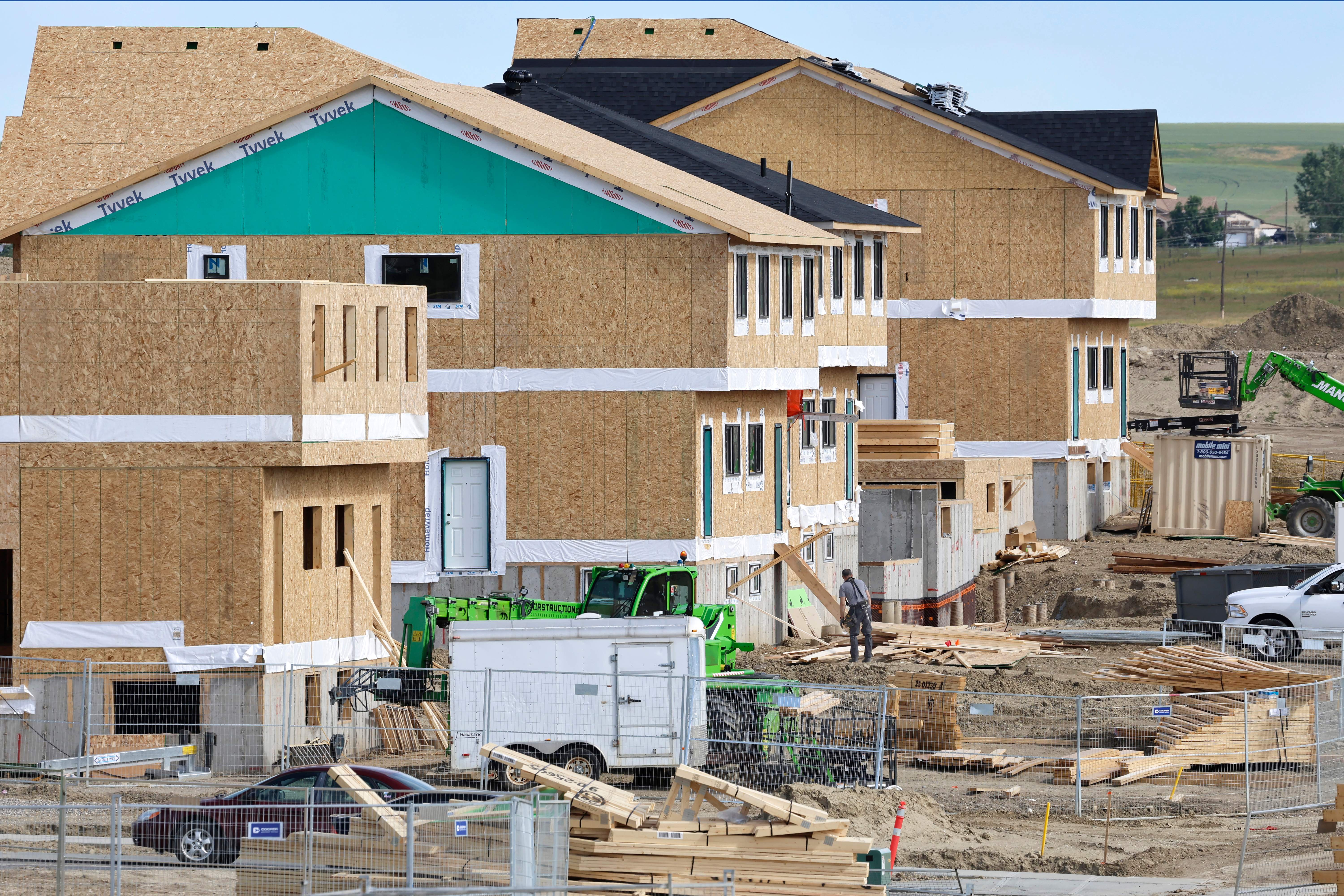
The kitchen table in Mahogany was covered in blue highlighter marks and cold coffee mugs by 9:00 PM on a Tuesday in late October.
Let us introduce a hypothetical couple, Elena and Marcus, to trace what a market shift actually looks like behind closed doors. Elena is a pediatric nurse; Marcus works in logistics near the airport. For two years, they had watched Calgary real estate move like a runaway freight train, powered by interprovincial migration and the relentless optimism of people fleeing Toronto and Vancouver prices. Every open house they attended felt like an audition. Every offer required waiving inspections, writing personal letters to strangers, and praying their mortgage pre-approval held together for forty-eight hours.
Then October 2026 arrived. And suddenly, the phone stopped ringing.
When the Calgary Real Estate Board reported that October home sales dropped 15.3% compared to the previous year, the headlines treated it like a weather report. A percentage. A decimal point. A sterile metric tucked between oil futures and municipal transit updates.
Numbers lie by omission. A 15.3% drop does not look like a spreadsheet on the ground; it looks like a "For Sale" sign collecting early frost on a front lawn in Tuscany for forty-five days instead of four. It looks like a seller lowering their asking price by twenty thousand dollars on a Friday afternoon, feeling a sudden, cold knot in their stomach as they realize the equity they had already mentally spent on a down payment in Kelowna might not exist.
Wait.
Why does a slowdown feel so violent when nothing has technically crashed?
To understand what happened in Calgary during the autumn of 2026, you have to understand the psychology of momentum. For years, Calgary was the pressure release valve for the entire Canadian housing crisis. While other major cities choked on borrowing costs, Alberta absorbed tens of thousands of newcomers drawn by relative affordability, high wages, and the promise of a backyard you didn't need a trust fund to buy. Inventory evaporated. Prices climbed even when interest rates stayed stubbornly elevated. Buyers operated under a single, terrifying premise: If I do not buy today, I will be priced out forever.
That panic was the engine. And in October 2026, the engine simply ran out of fuel.
The Anatomy of a Hesitation
I remember walking through a newly built infill in Altadore during a previous market stall years ago, listening to the furnace click on in an empty living room. There is a specific kind of silence that settles over a cooling housing market. You can hear the floorboards settle. You can smell the fresh paint drying with nobody scheduled to tour the bedrooms.
In October 2026, that silence returned to Calgary, driven by three converging realities that stripped away the urgency of the previous two years.
First, supply finally caught its breath. After months of starving for listings, buyers suddenly found choices sitting on the market. New construction across the city's sprawling outer edges—communities stretching north past Stoney Trail and south toward Seton—began delivering completed units just as existing homeowners decided to cash in on peak valuations. When buyers see twenty similar detached homes available in the same quadrant instead of two, the primal fear of missing out dissolves overnight.
Second, the migration wave normalized. People were still moving to Alberta, certainly, drawn by the energy sector's steady cash flows and a diversifying tech footprint, yet the frantic, post-pandemic stampede had settled into a predictable trot. The buyers arriving in late 2026 were no longer panicked refugees from Ontario bidding blind; they were methodical shoppers with spreadsheets, patience, and leverage.
Third, affordability hit its natural ceiling. Even in Calgary, years of steady price appreciation had pushed benchmark prices into territory where local incomes had to stretch uncomfortably thin to qualify under federal mortgage stress tests. Even as borrowing rates eased off their highest peaks, the sheer sticker price of a detached family home forced thousands of households to pause and ask a dangerous question: Is this actually worth it?
Once buyers ask that question, the spell breaks.
Consider what happens next in our hypothetical household in Mahogany. For Elena and Marcus, the 15.3% drop in sales was not bad news; it was oxygen. For the first time since they started looking, they walked into a two-storey home in Auburn Bay without bumping elbows with twelve other couples in the foyer. Their realtor did not tell them to prepare an unconditional offer in the driveway. Instead, they went home, slept on it, brought a home inspector through the basement two days later, and negotiated fifteen thousand dollars off the asking price because the roof shingles were nearing the end of their lifespan.
For them, a statistical decline was the restoration of basic human dignity.
The Invisible Stakes on the Other Side of the Table
Yet every coin in real estate has two sides, and the second side is currently sitting at a dining table in Signal Hill, staring at an unsold listing.
Let us invent another character to hold that perspective: David, a retired engineer who waited just a little too long to downsize. David watched his neighbor sell an identical bungalow in the spring of 2025 for a record figure after a four-day bidding war. Naturally, David anchored his expectations to that number. He planned his retirement budget around it. When he listed his home in September 2026, he priced it slightly above his neighbor's sale, assuming the upward march was a law of physics.
By late October, David had hosted three open houses and received zero offers.
This is the emotional trap of a shifting market, and I have watched smart, rational people fall into it over and over again. Sellers price their homes in the past, while buyers make offers in the future. When sales volume drops by 15.3%, it rarely means nobody wants to buy; it means buyers and sellers are standing on opposite sides of a canyon, refusing to build a bridge.
To explain how this gap works, think of a housing market like a frozen river in November. From the bank, the ice looks solid because it held your weight last week. So you step out with full confidence. Except the current underneath has warmed, thinning the ice from below without changing how the surface looks. The 15.3% drop in October sales is the sound of that ice cracking—not a catastrophic collapse into freezing water, just a sharp warning to stop running and check your footing.
David's realtor eventually had to have the hardest conversation in the profession: telling a homeowner that the market does not care what their neighbor got eighteen months ago, nor does it care what David needs for his retirement fund. A house is worth precisely what a qualified buyer is willing to pay on a Tuesday afternoon when there are plenty of other houses to choose from.
What the Numbers Hide About Calgary's Neighbourhoods
If you look closely at how a 15.3% contraction actually distributes itself across a city of nearly 1.7 million people, you realize that "the Calgary market" does not actually exist. Calgary is a collection of dozens of micro-economies behaving entirely differently under the same autumn sky.
In the inner city—places like Hillhurst, Bridgeland, and Mount Pleasant—mature trees and proximity to downtown keep a sturdy floor under demand. Families who want walkable commutes and established schools still compete fiercely for well-renovated properties, even when overall citywide sales dip. A good house on a quiet street in Kensington still moves quickly, though perhaps without the absurd six-way bidding wars of the recent past.
Move outward, however, and the temperature changes dramatically.
In the newer suburban rings, where rows of identical vinyl-sided homes and townhome complexes rose out of prairie grass at breakneck speed, inventory has piled up. Buyers shopping in these areas are acutely sensitive to monthly payments, condo fees, and property taxes. When sales volume drops by more than fifteen percent, these are the streets where price adjustments happen first and deepest. Builders begin offering free basement developments, upgraded appliances, or mortgage rate buy-downs just to keep crews working through the winter.
And then there is the apartment condo sector—long the most volatile barometer of Calgary's economic mood. Historically, whenever Calgary's housing market cools, apartment condos feel the chill earliest because investors pull back the moment appreciation slows. Yet even here, the story in late 2026 is nuanced. While investor speculation cooled significantly, entry-level buyers priced out of detached homes continued to absorb well-located units near LRT lines and the Bow Valley College corridor, preventing the kind of steep inventory glut that plagued the city a decade ago.
The Fear We Rarely Admit Out Loud
Here is the honest truth about real estate that almost nobody in the industry likes to confess: nobody truly knows where the bottom of a pullback sits until six months after we have walked past it.
When a headline announces a 15.3% drop in sales, fear spreads faster than facts. Buyers who were ready to purchase suddenly freeze, terrified that if they buy in November, prices will be five percent lower by March. Sellers panic and either pull their listings off the market until spring—which ironically tightens supply and stabilizes prices—or slash prices impulsively out of dread.
I have sat across from couples who paralyzed themselves waiting for the "perfect" dip, only to watch rates or competition shift again and lock them out for another three years. I have also watched people buy at the absolute peak of frenzy because they couldn't stand the anxiety of waiting, only to feel trapped in a mortgage that stole their weekends and their sleep.
Real estate is never purely a financial transaction. It is where your kids mark their height on the pantry doorframe. It is where you haul groceries in from the garage at twenty below zero in January while the wind howls off the foothills. Treating a home purely like a stock ticker is a guaranteed way to make yourself miserable.
Reading the Room Before Winter Hits
So what does an October drop of 15.3% actually mean for someone trying to make a sane decision in Calgary right now?
It means power has quietly changed hands.
For the first time in years, balance has returned to the negotiating table. If you are a buyer like our hypothetical couple Elena and Marcus, you no longer have to abandon basic consumer protections just to earn the privilege of writing a cheque. You can ask for conditions. You can inspect the furnace, check the grading around the foundation, review the reserve fund study on a townhome, and walk away if the numbers do not make sense. You have time to think, and in real estate, time is worth tens of thousands of dollars.
If you are a seller like David, the message is harsher but equally liberating once you accept it: the frenzy is over, so presentation and realistic pricing are everything again. You cannot put a cluttered house on the market with smartphone photos and expect multiple offers by Sunday evening. Homes that are clean, priced honestly against current autumn comparables rather than ghost prices from 2025, and move-in ready are still selling every single day. The buyers haven't vanished; they have simply woken up from a trance.
Calgary has always been a city defined by sharp turns. Its economy breathes in deep, dramatic cycles tied to global commodities, bold migration waves, and sudden pauses when everyone catches their breath. Those who survive and thrive here learn not to mistake a quiet autumn for a collapse, nor a boom for permanence.
Late November arrives quickly in southern Alberta. The leaves along Memorial Drive are already gone, blown into the gutters by dry chinook winds that can raise the temperature twenty degrees in an afternoon and drop it just as fast after sundown. Inside warm living rooms from Bowness to Cranston, families are still doing the math on scraps of paper, weighing square footage against commute times, school zones against monthly payments.
Outside, the snow begins to settle quietly over the "For Sale" signs, softening the sharp edges of the numbers, waiting for spring to see who blinks first.


