The fluorescent hum of a university physics building at six in the morning is a sound I know in my bones. Cool air rushes from ceiling vents. Pipettes click softly against glass racks. Coffee grows lukewarm beside half-finished notebooks filled with Greek letters and error bars. For years, walking those quiet corridors felt like stepping into a place where curiosity mattered more than a passport stamp.
Lately, the quiet feels heavier.
A knock on a lab door or a thick envelope from a compliance office can turn a lifetime of peer-reviewed papers, grant renewals, and mentorship into a legal labyrinth. Recent federal disclosures around investigations into Chinese-American scientists over ties to China have pulled back the curtain on how these cases are built, how agency priorities have shifted, and how ordinary academic habits—co-authoring a paper with a former classmate, accepting a visiting appointment, forgetting a disclosure box on a dense grant form—are weighed against national security.
Numbers alone flatten the human reality. A docket number does not show the sleeplessness of a tenured professor watching a grant freeze. A press release does not show a graduate student wondering whether to pack up a thesis and move across an ocean. To understand what is really unfolding, we have to look past the headlines and trace what happens when the border between open inquiry and geopolitical rivalry runs right through a university department.
When a Routine Form Becomes a Federal Case
Picture a hypothetical scenario to see how easily everyday science collides with federal scrutiny. Imagine Dr. Lin (a hypothetical composite character created to illustrate common legal and administrative dynamics), an atmospheric chemist at a public research university in the Midwest. For fifteen years, she has studied aerosol particles—the microscopic specks that shape clouds, monsoon rains, and urban air quality. Science, by nature, is a relay race. Nobody runs every leg alone. A dataset collected over a coastal city in East Asia can sharpen a climate model built in Ohio; a graduate student trained in Boston might take a faculty post in Shanghai or Singapore years later.
One Tuesday in autumn, Lin sits in her office staring at a federal grant disclosure form with dozens of sub-clauses. Grant compliance rules have expanded rapidly over the past decade, demanding granular accounting of foreign affiliations, visiting appointments, lab collaborations, and outside funding sources. Universities themselves have often struggled to keep pace, issuing shifting guidance from one grant cycle to the next.
Now suppose an investigator from a federal agency opens a review into Lin’s past filings. Perhaps an earlier grant application omitted a short-term honorary title she barely remembered accepting, or a travel reimbursement came through an institutional partner rather than her home university. In the cold geometry of a compliance audit, an omission can look like concealment. In the lived reality of a busy researcher juggling teaching, lab safety, student stipends, and grant deadlines, it can look like clerical exhaustion or confusing rules.
Here, a metaphor helps clarify the tension. Think of scientific research as a vast library built with open windows so fresh air circulates from every direction. Over the last several years, federal authorities have worried that some visitors were slipping blueprints out those windows while others walked straight through the front door under false pretenses. Closing a few windows when real theft is happening makes intuitive sense. Nailing every window shut—and suspecting everyone standing near the glass—starves the room of oxygen.
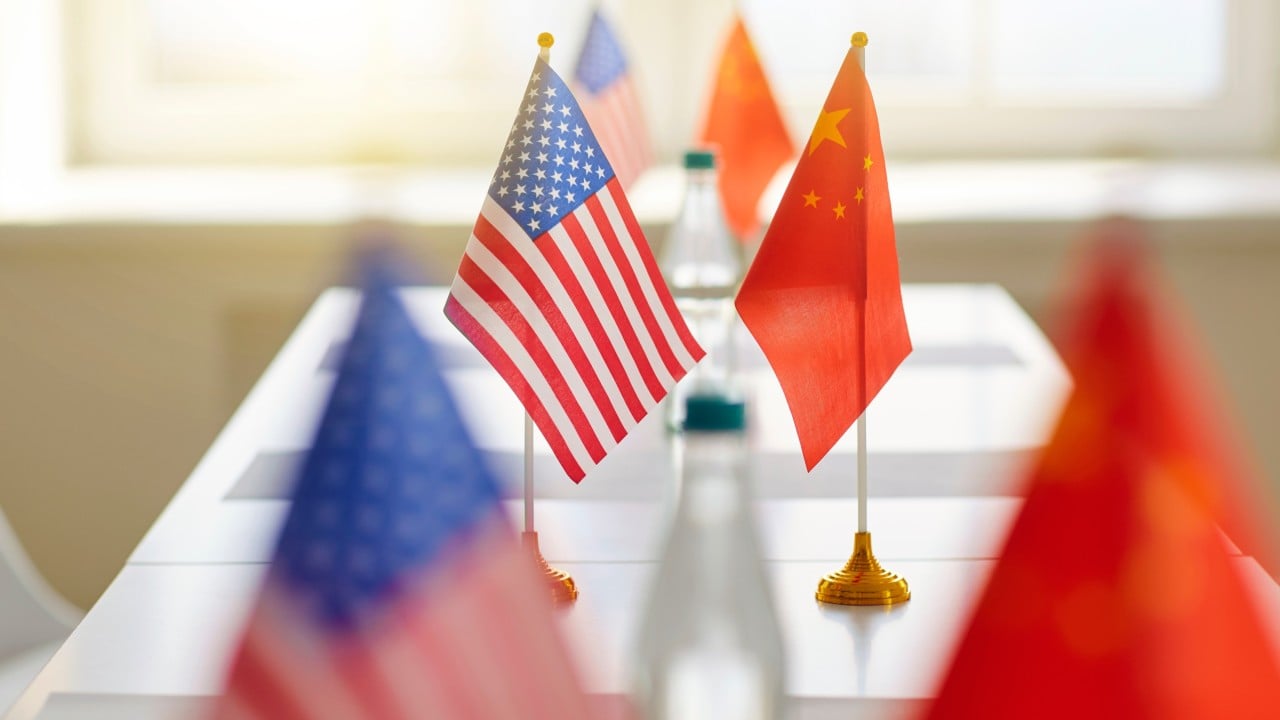
Federal investigations into researchers with ties to China have evolved in ways that complicate simple narratives. Early enforcement efforts under the Department of Justice’s China Initiative drew sharp pushback from civil liberties groups, university leaders, and lawmakers over concerns about racial profiling, overbroad prosecutions, and collateral damage to American competitiveness. Later adjustments shifted emphasis toward export controls, economic espionage, grant fraud, and research security compliance, while newer details from ongoing probes and oversight reviews continue to show how intensely agencies scrutinize foreign talent programs, undisclosed affiliations, and shared research infrastructure.
None of those policy shifts erase a basic truth: governments have a legitimate interest in protecting taxpayer-funded research, dual-use technologies, and sensitive intellectual property. Pretending espionage or technology transfer never occurs would be naive. Yet treating every cross-border tie as a threat confuses routine international collaboration with covert loyalty.
The Invisible Stakes Behind Every Investigation
Suspicion.
That single word captures what changes first inside a research lab long before a jury is ever seated.
I have sat across from researchers who described the strange sensation of re-reading old emails from five years ago as if they were spy novels. A congratulatory note to a former PhD advisor. A shared slide deck at an international conference. A family trip back to Sichuan or Guangdong to visit aging parents. When geopolitical tension rises, ordinary personal history starts feeling like evidence someone else might misinterpret.
Consider what happens next: fear spreads quietly through networks that took decades to build. Senior faculty hesitate to take on bright international students. Junior postdocs turn down promising fellowships because the visa and compliance paperwork feels like walking through wet cement. Even researchers born and raised in the United States, with zero ties to foreign governments, report feeling scrutinized simply because of their surname or heritage.
The stakes reach far beyond individual careers. American scientific leadership has long rested on a powerful bargain: attract talent from everywhere, fund ambitious basic science, publish openly, and let breakthroughs compound across labs and industries. If talented scientists decide the personal and professional risk is too high—or if they take their skills to labs in Europe, Canada, or Asia—the United States loses brainpower it cannot easily replace.
At the same time, taxpayers and policymakers ask fair questions. When billions of dollars flow into university laboratories, who is accountable if foreign entities gain an unfair advantage or if grant rules are ignored? Why should a researcher who carefully follows every disclosure rule watch another bypass oversight without penalty?
Both sides of that tension are real. Anyone who tells you the answer is simple is selling certainty where none exists.
Two Worlds Colliding in the Same Corridor
To understand why these investigations provoke such fierce debate, watch how two different mindsets collide inside the same institution.
| Dimension | National Security & Compliance Lens | Academic & Scientific Lens |
|---|---|---|
| Core Priority | Preventing theft, foreign influence, and unauthorized transfer of sensitive research | Advancing discovery, verifying results, and sharing knowledge openly |
| View of Foreign Ties | High-risk vector requiring strict vetting, transparency, and enforcement | Normal part of global scholarship, mentorship, and peer review |
| Error Most Feared | Missing a genuine security breach or grant fraud scheme | Ruining innocent careers or chilling vital scientific progress |
| Language of Action | Subpoenas, disclosures, compliance audits, export restrictions | Citations, replications, grants, lab collaborations |
Neither mindset comes from nowhere. Security officials look at documented cases of intellectual property theft, covert recruitment efforts, and dual-use research with strategic implications, and they see patterns that demand deterrence. Scientists look at decades of collaborative breakthroughs—in medicine, materials science, computing, and climate research—and see how openness accelerates discovery for everyone.
Friction is inevitable when those two worlds operate on different clocks and different definitions of risk. A compliance officer asks what could go wrong if a rule is bent. A principal investigator asks what goes wrong if a promising experiment stalls or a brilliant student is turned away.
And caught right in the middle are scientists whose lives are measured in years of patient work. A single clinical trial, materials synthesis, or field study can take five or ten years to mature. When an investigation drags on for months or years—sometimes without criminal charges ever being filed—the delay alone can scatter a research team, stall a career trajectory, or force a family to drain savings on legal defense.
What Clarity Looks Like When the Dust Settles
What does a fairer, steadier path look like? It starts with precision instead of blanket suspicion.
Clear, consistent disclosure rules matter enormously. Scientists are trained to be meticulous with data, reagents, and experimental controls; they are not trained to guess what an ever-changing administrative form means when wording is vague. Universities and funding agencies do everyone a favor when requirements are unambiguous, well-publicized, and proportional to the actual sensitivity of the work.
Distinguishing clearly between intentional deception and honest paperwork mistakes is equally vital. Deliberate fraud, theft of proprietary work, and covert foreign alignment deserve firm accountability under the law. Clerical oversights or misunderstandings of complex rules should not be treated with the same hammer as malicious espionage.
Above all, protecting national security should never slide into judging people by ancestry. A scientist’s loyalty and integrity are proven by actions, honesty, and adherence to the law—not by where their parents were born or which languages they speak at home.
There is something deeply human at stake here. Science is one of the few endeavors where people from different corners of the earth sit at the same bench, look through the same lens, and argue honestly over what the evidence actually shows. If we lose that spirit of fair play and clear-eyed judgment, the cost will show up years from now in cures delayed, technologies missed, and trust fractured beyond easy repair.
Dawn breaks over the campus again, pale and silver against the glass. Inside a quiet lab, a young researcher adjusts a lens until a faint, sharp ring comes into focus—waiting for the light to pass cleanly through.