At 3:14 a.m. on a Tuesday in November, the hum inside a regional water treatment facility in Ohio does not sound like national security. It sounds like a fluorescent ballast buzzing over a linoleum floor, a coffee maker dripping onto a hot plate, and the rhythmic, comforting thud of heavy pumps pushing four hundred thousand gallons of clean water every hour toward sleeping neighborhoods.
In a hypothetical scenario that keeps federal planners awake at night, a night-shift operator named Marcus watches a cursor move across his monitor without his hand on the mouse. He reaches for the desk phone. The line is dead. Outside, the streetlights along Route 42 flicker once, twice, and die. For an alternative view, check out: this related article.
Nothing exploded. No border was crossed. Yet before sunrise, three counties lose water pressure, a regional trauma center switches to backup diesel generators, and eighty thousand people wake up to cold faucets and dark screens.
That invisible frontier—where software code collides with physical concrete, copper wire, and human survival—is the exact territory inherited by Kirsten Davies. Similar analysis on this matter has been published by Engadget.
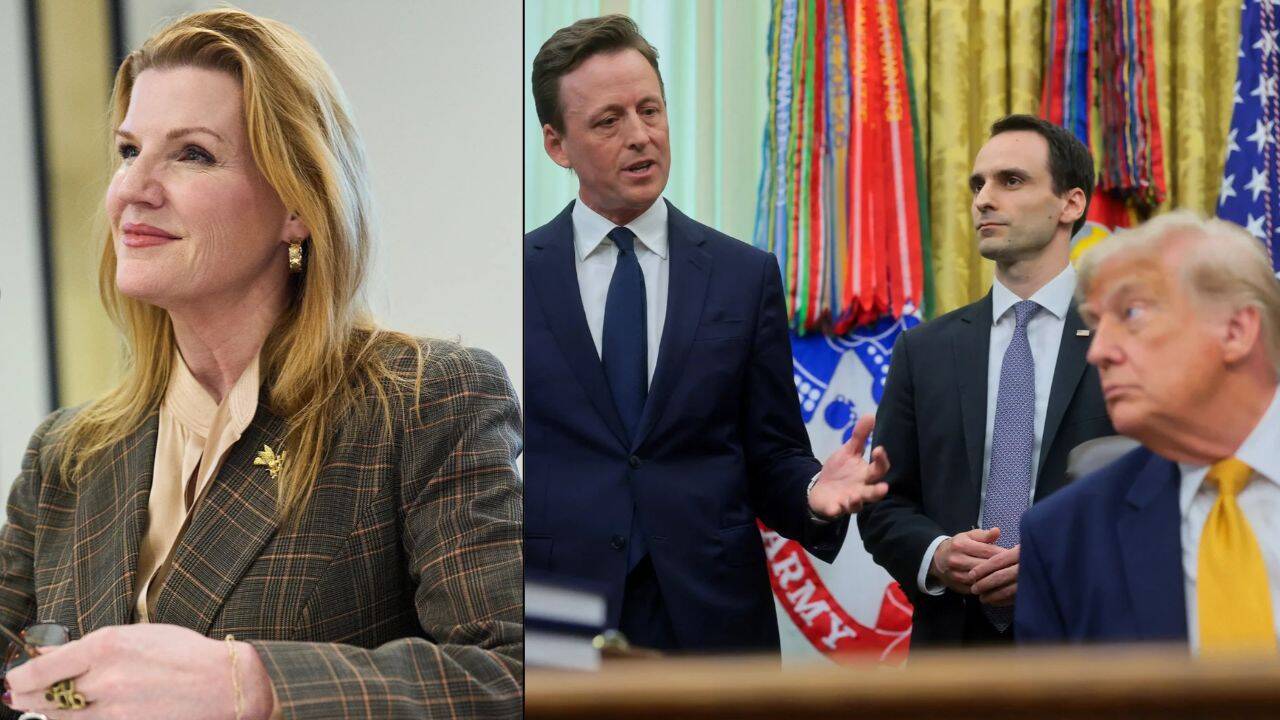
When the White House named Kirsten Davies as the new United States National Cyber Director following the departure of Sean Cairncross, most headlines treated the announcement like a routine Washington personnel shuffle. Another executive stepping into a complex bureaucratic chair. Another resume uploaded to a government portal.
Boring. Predictable. Completely missing the point.
Because the person sitting in the Office of the National Cyber Director does not merely manage government IT budgets or write polite memos about password hygiene. They sit at the nerve center of an undeclared, twenty-four-hour conflict fought inside the wiring of modern civilization. And to understand why Davies matters right now, you have to look past the marble hallways of Washington and examine the quiet, relentless war already underway inside your own home.
Why the Office of the National Cyber Director Actually Exists
For decades, the American government treated digital security like a janitorial problem. If a federal agency got hacked, you called in the technicians, wiped the hard drives, issued an apology, and moved on. Responsibility was fractured across dozens of agencies—the Pentagon handled military networks, the FBI chased criminals after the fact, and the Department of Homeland Security tried to herd private corporations toward basic safety standards.
Nobody owned the whole chessboard.
Then came the wake-up calls. In 2020, Russian intelligence operatives slipped malicious code into routine software updates from SolarWinds, silently compromising nine federal agencies and roughly a hundred major private companies for months before anyone noticed. Less than a year later, a ransomware gang locked up the billing systems of Colonial Pipeline, triggering panic-buying, empty gas stations, and long lines of idling cars up and down the East Coast.
Congress finally realized that fighting a unified adversary with a scattered bureaucracy was a recipe for disaster. In 2021, lawmakers created the Office of the National Cyber Director inside the Executive Office of the President. The mandate was clear, even if the execution was daunting: put one senior strategist directly beside the President to align federal cyber defenses, coordinate with private industry, and stop treating digital attacks like isolated technical glitches.
Chris Inglis, the inaugural director, laid the diplomatic foundation. Harry Coker Jr. pushed workforce expansion and national strategy execution. Sean Cairncross brought hard-nosed political and operational discipline to the role before his exit left a sudden vacuum at the top of the nation's cyber command structure.
Now, that chair belongs to Kirsten Davies.
The Corporate Trench Fighter Stepping Into Washington
If you are looking for a career politician or a lifelong intelligence insider who speaks exclusively in classified acronyms, Davies is not that person. And that is precisely why her appointment has turned heads across both Silicon Valley and the Pentagon.
Davies spent years inside the private sector, serving as a Chief Information Security Officer for massive global enterprises—organizations like Unilever, Barclays, and Estée Lauder—where a single breach does not just embarrass a politician; it halts global supply chains, exposes millions of customers, and vaporizes billions of dollars in market value before the opening bell rings on Wall Street.
Think about the difference between regulating a factory and running the floor at two in the morning when a boiler overheats.
In government, cyber policy often gets debated in the abstract. Committees argue over regulatory frameworks, compliance timelines, and interagency jurisdiction. Meanwhile, out in the private sector—which owns and operates roughly eighty-five percent of America's critical infrastructure, from electrical grids and banking networks to hospitals and telecommunications—defenders are dodging live ammunition every single second.
I have sat in war rooms during active network intrusions, and the first thing you learn is that panic smells like stale coffee and ozone. You watch automated scripts try ten thousand password combinations a minute against an exposed server while executives ask questions you cannot answer yet. In those moments, policy papers mean nothing. Speed, clarity, and ruthless prioritization mean everything.
Davies has lived inside those rooms. She knows what happens when a board of directors balks at the cost of upgrading legacy software because it hurts quarterly margins. She knows the exhaustion of security teams drowning in thousands of false alarms every day while a single genuine intruder quietly maps their network. Most importantly, she understands the deep suspicion that often divides corporate America from federal regulators.
When Washington demands that a utility company or a hospital chain hand over breach data within seventy-two hours, corporate lawyers immediately worry about lawsuits, stock drops, and regulatory punishment. Davies speaks their language. She knows where companies hide their vulnerabilities, why executives resist federal mandates, and how to persuade reluctant CEOs that sharing threat intelligence is not an act of self-incrimination, but an act of collective self-defense.
The Invisible Shift From Data Theft to Physical Disruption
To grasp the urgency facing Davies right now, you have to understand how the threat itself has mutated over the last five years.
Ten years ago, most cyberattacks were fundamentally digital burglaries. Criminals broke into a retailer's database, stole forty million credit card numbers, and sold them on underground forums. Annoying? Yes. Expensive? Certainly. You canceled your card, waited five days for a new piece of plastic in the mail, and went on with your life.
Today, the objective has changed from stealing your data to paralyzing your reality.
State-sponsored hacking groups—most notably Chinese campaigns like Volt Typhoon and Salt Typhoon—have spent years quietly burrowing deep inside American telecommunications networks, water utilities, power grids, and transportation hubs. Notice what they are not doing. They are not encrypting files for ransom. They are not dumping stolen emails onto the internet for clout.
They are waiting.
Imagine a burglar who breaks into your house, steals nothing, leaves no footprints, and simply wires a remote-controlled switch behind your circuit breaker box before slipping back out the window. They do not want your jewelry. They want the ability to turn off your heat, your water, and your phone the exact moment a geopolitical crisis erupts thousands of miles away.
If a conflict breaks out in the Taiwan Strait, adversaries do not need to launch missiles across the Pacific to slow down an American military response. They can trigger dormant access points inside domestic ports, rail networks, and power substations right here in the United States, creating enough domestic chaos to delay troop deployments and fracture public resolve.
That is the chessboard Kirsten Davies just inherited.
The Three Fronts Waiting on Her Desk
Walking into the White House after Sean Cairncross's exit means inheriting an inbox already overflowing with urgent, unresolved dilemmas. No honeymoon period exists in cyber defense.
First is the regulatory harmonization tangle. Right now, a major American bank or energy provider answers to a dizzying patchwork of federal and state regulators. Following a single cyber incident, a company might have to file separate reports with the Securities and Exchange Commission, the Cybersecurity and Infrastructure Security Agency, the FBI, state attorneys general, and sector-specific oversight boards—each demanding different formats on different clocks. Security engineers spend more time filling out compliance paperwork for lawyers than actually hunting intruders on their networks. Davies has a rare chance to use her private-sector credibility to untangle that bureaucratic knot, pushing for unified reporting rules that actually improve security instead of burying defenders in red tape.
Second is the artificial intelligence arms race. For years, launching a sophisticated phishing campaign or writing custom malware required skilled human programmers working for weeks. Generative AI has obliterated that barrier. Today, criminal syndicates and state intelligence agencies use autonomous models to scan millions of internet-facing devices for weaknesses in seconds, craft flawless, culturally tailored emails that fool even trained executives, and dynamically rewrite malicious code so traditional antivirus tools fail to recognize it.
Yet the same technology offers defenders their best chance to finally outpace attackers. AI-driven detection systems can spot subtle anomalies across billions of network packets faster than any human analyst ever could. Davies must steer federal strategy so American agencies and critical infrastructure operators adopt defensive AI rapidly—without falling into the trap of trusting black-box algorithms with life-or-death infrastructure controls.
Third—and perhaps hardest of all—is securing the unsecurable. Much of America's critical infrastructure runs on industrial control systems designed in the 1980s and 1990s. Those machines were built to last thirty years in harsh physical environments, never to be connected to the open internet. Then companies wired them online to monitor efficiency remotely, unintentionally exposing water valves, chemical mixers, and electrical transformers to anyone with an internet connection and malicious intent. Replacing that aging hardware across thousands of municipal utilities and rural cooperatives costs hundreds of billions of dollars that local towns simply do not have.
The Human Variable Nobody Can Patch
It is tempting to look at a new National Cyber Director and hope for a technological silver bullet—some quantum encryption breakthrough or impenetrable firewall that finally locks the doors for good.
Let's be honest about something that rarely makes it into official press releases: there is no permanent fix.
Cybersecurity is not a bridge you build once and admire forever. It is closer to public sanitation or epidemiology. You never eliminate every pathogen on earth; you build resilient systems, train people to wash their hands, isolate outbreaks early, and keep the water clean every single day.
Even the most sophisticated cryptographic architecture on the planet collapses the moment an exhausted hospital nurse clicks a convincing invoice attachment at the end of a twelve-hour shift, or a contractor reuses a personal password on a corporate remote-access portal. Technology protects the perimeter, but human judgment decides whether the gate stays locked.
That is why leadership in this role matters far beyond technical fluency. During her career leading global security organizations, Davies earned a reputation not just for understanding network architecture, but for translating terrifying technical risks into plain human terms that non-technical leaders could actually act upon. You cannot scare people into permanent vigilance—fear burns out within forty-eight hours. You have to build habits, incentives, and systems that forgive human mistakes without letting a single click take down an entire city block.
What Comes Down to the Wire
When Sean Cairncross stepped down, critics wondered whether momentum inside the White House cyber office would stall during a period of intense global instability. Naming a veteran corporate chief information security officer signals a deliberate bet: that the next phase of American cyber defense will not be won inside classified briefing rooms alone, but in the daily, grinding partnership between Washington and the private companies that keep the lights on.
We rarely notice the people who prevent disasters. When a bridge stands, nobody applauds the structural engineer. When a plane lands safely, nobody writes a profile of the air traffic controller. And when the coffee maker drips at 3:14 a.m., the hospital monitors keep beeping steadily, and the tap water runs clear in the morning, nobody thinks about the quiet architects working behind the screens to make sure the dark stays out.
Kirsten Davies now holds the heaviest keys in that invisible room—and the real test of her tenure will be measured entirely by the emergencies you never hear about.


