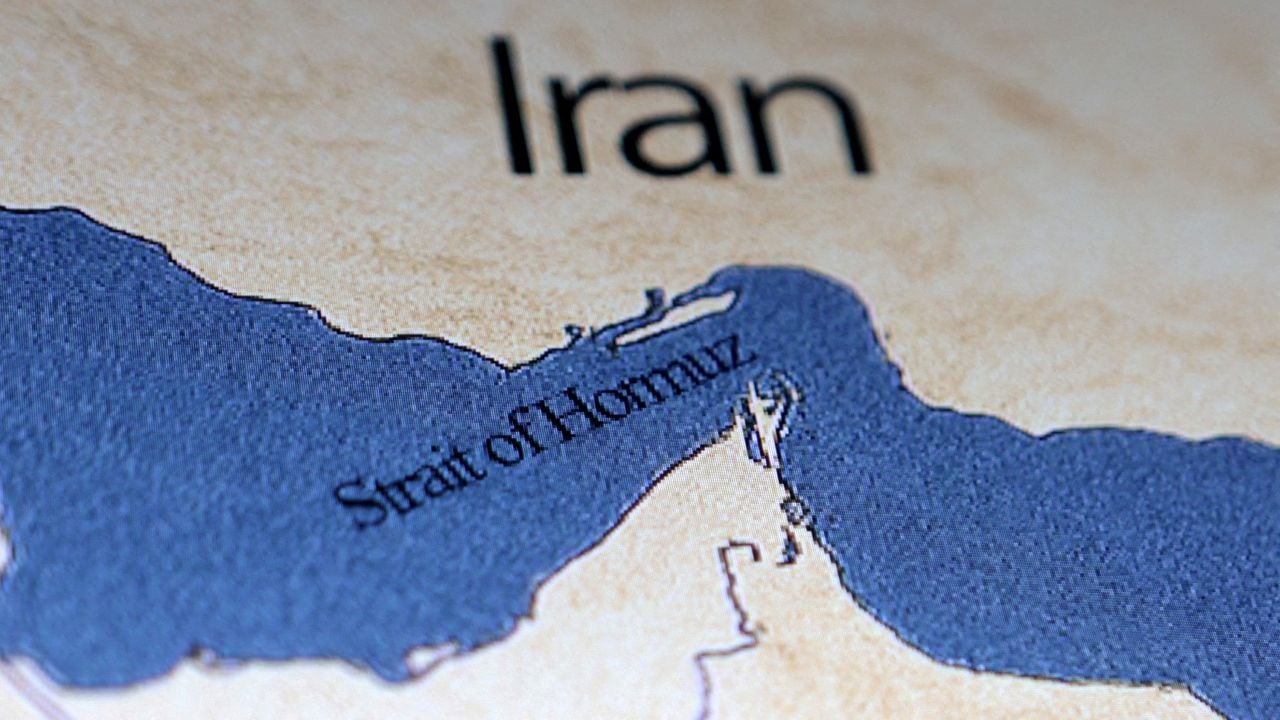
The Strait of Hormuz functions as the singular vascular system for global energy markets, facilitating the transit of approximately 21 million barrels of oil per day (bpd), or roughly 21% of global petroleum liquids consumption. When Saudi Aramco identifies a systemic risk capable of removing 100 million barrels from the global ledger weekly, the discussion shifts from simple price volatility to a fundamental breakdown in the global crude supply chain. This attrition rate does not merely represent a delay in delivery; it constitutes a structural deficit that exhausts global commercial inventories within weeks, forcing a transition from market-driven pricing to state-level resource rationing.
The Mechanics of Supply Chain Attrition
The 100 million-barrel weekly loss figure is derived from the physical constraints of the strait’s shipping lanes. The waterway’s navigable channels are only two miles wide in each direction, separated by a two-mile buffer zone. This physical bottleneck creates a binary state for global markets: either the flow is laminar, or it is zero. There is no middle ground or alternative route capable of absorbing the overflow.
Three primary variables dictate the severity of this attrition:
- Vessel Displacement and Turnaround: A total closure strands the Very Large Crude Carriers (VLCCs) and Suezmax tankers currently in transit. Given that a standard VLCC carries roughly 2 million barrels, the loss of 100 million barrels per week reflects the halting of approximately 50 such vessels.
- Infrastructure Elasticity: While Saudi Arabia and the UAE maintain pipelines (the East-West Pipeline and the ADCOP pipeline, respectively) that bypass the strait, their combined operational capacity remains under 6.5 million bpd. This leaves a minimum unmitigated deficit of 14.5 million bpd that cannot be rerouted under any circumstances.
- Inventory Burn Rate: Global OECD commercial stocks are generally maintained at levels sufficient to cover 60 to 90 days of net imports. A 100 million-barrel weekly deficit exceeds the total Strategic Petroleum Reserve (SPR) release capabilities of major economies, creating a terminal gap in refinery feedstock.
The Triad of Price Escalation
Market participants often miscalculate the impact of a Hormuz closure by focusing on linear supply-demand curves. In reality, the price discovery mechanism during such an event follows a non-linear trajectory driven by three distinct pillars of economic pressure.
The Scarcity Premium and Elasticity Collapse
Crude oil demand is notoriously price-inelastic in the short term. Industrial economies cannot immediately pivot to alternative energy sources when feedstock vanishes. When 20% of global supply disappears, the price does not rise by 20%; it rises to the point where the least essential consumers are physically forced out of the market. This "destruction of demand" price point is estimated to reside well above $200 per barrel in modern currency values.
The Insurance and Risk Transference Barrier
Even if the strait remains technically open, the mere threat of kinetic activity escalates War Risk Insurance premiums. During periods of heightened tension, these premiums can rise by 1,000% or more, effectively pricing out smaller independent operators. This creates a "shadow closure" where ships are physically able to pass, but the financial cost of doing so renders the cargo economically unviable for the refiner.
The Speculative Feedback Loop
Paper markets (futures and options) react faster than physical flows. For every physical barrel lost, the financial markets trade the equivalent of 30 to 40 "paper barrels." This leverage accelerates price spikes, triggering margin calls that force liquidations in other asset classes, potentially sparking a broader financial contagion.
Geographic Bottlenecks and Rerouting Realities
The logic that pipelines can solve a Hormuz closure is mathematically flawed. To understand the gravity of the 100 million-barrel loss, one must analyze the capacity of existing bypass infrastructure against the total volume of exit-bound crude.
- Petroline (East-West Pipeline, Saudi Arabia): It spans 745 miles from Abqaiq to the Red Sea. Its nameplate capacity is roughly 5 million bpd, but sustained throughput at this level is rarely tested and requires massive power for the pumping stations.
- ADCOP (Abu Dhabi Crude Oil Pipeline): This connects the Habshan fields to Fujairah, bypassing the strait with a capacity of 1.5 million bpd.
- The Abqaiq-Yanbu Natural Gas Liquids (NGL) Pipeline: Occasionally cited as a backup, its conversion to crude transport is a multi-month engineering project, making it irrelevant during an acute weekly loss scenario.
The aggregate bypass capacity sits at roughly 6.5 million bpd. Subtracting this from the 21 million bpd normally transiting the strait leaves 14.5 million bpd—or 101.5 million barrels per week—with zero physical exit path. This confirms the Aramco assessment as a hard physical reality rather than a rhetorical exaggeration.
Refinery Configuration and Grade Mismatch
A secondary, often overlooked effect of the 100 million-barrel loss is the chemical mismatch in global refineries. The crude transiting the Strait of Hormuz is primarily "medium sour"—rich in sulfur and requiring complex "cracking" units.
Refineries in Asia (specifically China, India, Japan, and South Korea) are architecturally optimized for this specific grade. If these refiners attempt to replace lost Persian Gulf barrels with "light sweet" crude from the United States or West Africa, they face two systemic failures:
- Yield Imbalance: The refinery may produce too much gasoline and not enough diesel or jet fuel, disrupting regional logistics and heating sectors.
- Economic Inefficiency: Running a complex refinery on light crude is like running a high-performance engine on the wrong octane; the unit operates at lower utilization rates, driving up the per-unit cost of every gallon of fuel produced.
This mismatch ensures that even if total global production could theoretically rise elsewhere, the utility of that oil is significantly lower for the world’s largest importers.
The Geopolitical Cost Function
The attrition of 100 million barrels weekly shifts the geopolitical landscape from diplomacy to survivalism. In this environment, the "Cost Function of Sovereign Security" takes precedence over market efficiency.
- Bilateral Hoarding: Producing nations with remaining export capacity (such as the US, Brazil, or Guyana) face immense domestic pressure to ban exports to stabilize local prices.
- The Breakdown of Petrodollar Recycling: The sudden cessation of revenue for Gulf nations halts the flow of capital into Western sovereign debt and real estate, causing a secondary shock to the global banking system.
- Escalation Dominance: The actor capable of closing the strait gains "escalation dominance," where the cost to reopen the waterway via military means may involve risks (such as the destruction of desalinization plants) that the international community is unwilling to bear.
Strategic Realignment Requirements
Given the math of a 100 million-barrel weekly loss, the strategic response for energy-dependent entities must move beyond simple hedging.
First, corporations must quantify their "Energy Attrition Exposure." This involves auditing the supply chain not for price sensitivity, but for physical availability. If a refinery in Ulsan or Jamnagar loses its feedstock, the downstream chemical and plastic industries fail regardless of their hedge positions.
Second, the reliance on "Just-in-Time" energy delivery must be replaced with "Just-in-Case" infrastructure. This includes investment in private storage and the diversification of feedstock to include synthetics or renewables that are not tied to maritime chokepoints.
Third, sovereign entities must reconsider the composition of their strategic reserves. The current model focuses on volume; the future model must focus on "Grade-Specific Resilience," ensuring that stored oil matches the technical requirements of the nation's specific refinery fleet.
The 100 million-barrel loss is a stress test that the current global energy architecture is mathematically guaranteed to fail. The only viable strategy is the aggressive decentralization of energy sources to reduce the "Hormuz Dependency Ratio" below the threshold of systemic collapse. Failure to achieve this diversification leaves the global economy tethered to a single, two-mile-wide geography with a failure cost that exceeds the capacity of the modern financial system to absorb.