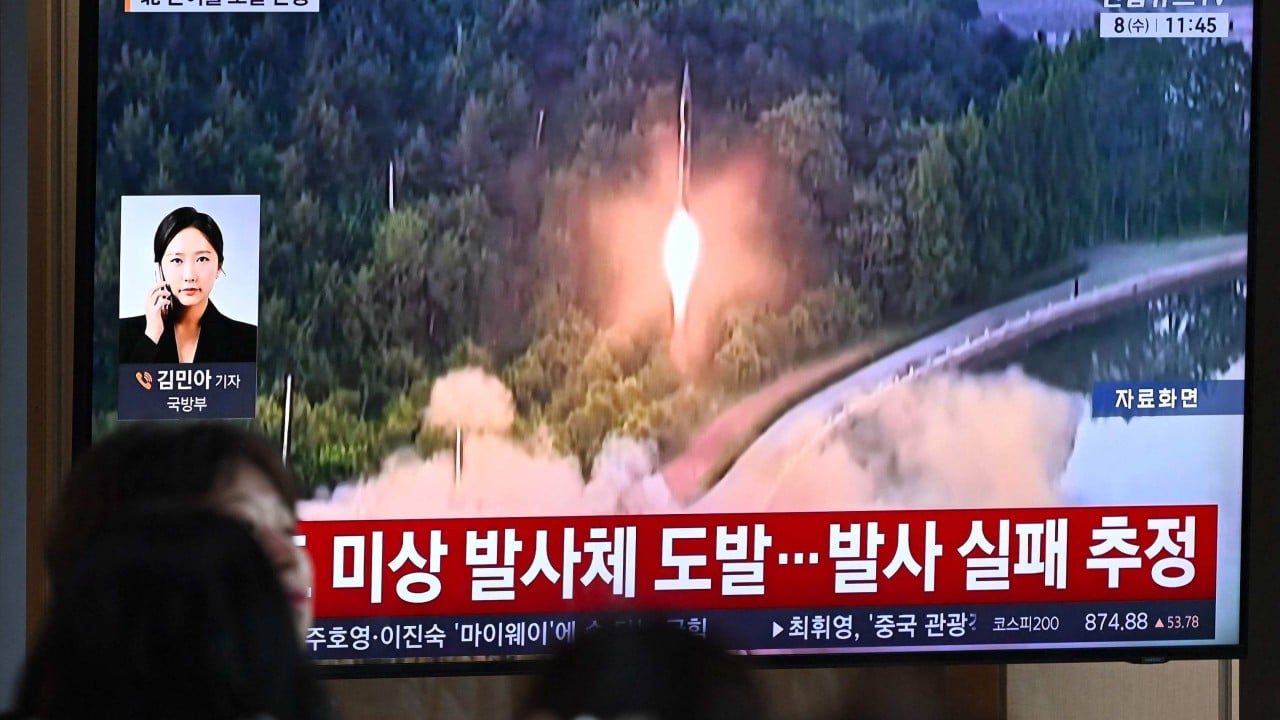
Kim Jong Un has once again traded the olive branch for the ignition switch. By conducting a fifth missile test in rapid succession, North Korea has effectively incinerated the fragile hopes for reconciliation that had begun to flicker across the DMZ. This isn't just another show of force; it is a calculated dismantling of the diplomatic theater that has defined the last several months. The debris from these tests serves as a blunt message to Seoul: the cost of engagement has just gone up, and the currency is no longer words.
The Calculated Timing of Chaos
To understand why these launches are happening now, you have to look past the smoke on the launchpad. Pyongyang does not operate on a whim. Every missile arc is synchronized with the political calendars of its enemies. The South Korean administration had been signaling a desperate desire to restart the "Sunshine" era of cooperation, offering economic incentives in exchange for a cooling of tensions. Kim’s response was to wait for the most optimistic moment in Seoul’s rhetoric and then pull the trigger.
This creates a specific type of psychological leverage. By crushing hopes for peace immediately after they are raised, the North forces South Korean policymakers into a corner. They must either double down on failing diplomacy—which makes them look weak to their own electorate—or pivot to a hardline stance that plays directly into Kim’s narrative of "Southern aggression." It is a classic pincer movement executed with solid-fuel rockets.
Beyond the Hardware
We often focus on the range and payload of these missiles, but the technical specs are secondary to the manufacturing of a crisis. This fifth test suggests a shift toward mass production and operational readiness rather than experimental research. The speed between tests indicates that the North is no longer just testing if the technology works; they are training their crews on how to use it under pressure.
- Mobility: The use of TELs (Transporter Erector Launchers) makes these assets difficult to track and destroy in a pre-emptive strike.
- Solid Fuel: These missiles can be fueled in secret and launched within minutes, unlike liquid-fuel variants that require a long, visible preparation window.
- Diversification: By mixing short-range ballistic missiles with cruise missiles, the North creates a saturated threat environment that can overwhelm existing missile defense batteries like THAAD.
The intelligence community has been tracking the refurbishment of the Sohae Satellite Launching Ground, but the real story is the decentralization of the launch sites. Kim is showing that he can strike from a forest, a train, or a nondescript highway. The "where" is becoming as unpredictable as the "when."
The Failed Logic of Economic Incentives
For decades, the prevailing theory in international relations was that North Korea could be bought. The idea was simple: if you provide enough food aid, fuel, and industrial investment, the regime will eventually see the benefit of joining the global community. This latest battery of tests should be the final nail in the coffin for that theory.
Kim Jong Un has watched the fate of leaders who gave up their nuclear programs. He saw what happened in Libya. He saw the shift in Ukraine. From his perspective, a nuclear-tipped ICBM is the only life insurance policy that actually pays out. No amount of humanitarian aid or "peace parks" along the border can compete with the security of a functional deterrent. When Seoul offers rice, Pyongyang responds with fire to remind the world that they aren't looking for a handout; they are looking for recognition as a nuclear power.
The Invisible Hand of the Regional Power Play
It is impossible to view these launches in a vacuum. The geopolitical friction between the United States and China provides the perfect canopy for North Korean escalation. When Washington is preoccupied with trade wars and the South China Sea, Kim finds his window of opportunity.
China, while publicly calling for "restraint on all sides," rarely applies the kind of pressure that would actually cripple the North’s weapons program. A chaotic North Korea keeps American and South Korean forces focused on the peninsula rather than projecting power elsewhere in the Pacific. It is a symbiotic relationship of convenience. Every missile that splashes down in the Sea of Japan is a reminder that the U.S. security umbrella has holes, and those holes are getting wider as the North’s technology matures.
The Domestic Audience
There is also the internal pressure of the Kim regime to consider. Maintaining a million-man army while the economy is strangled by sanctions requires a constant stream of propaganda victories. These tests are broadcast on state television not as technical milestones, but as proofs of national strength against "imperialist" forces.
When the harvest is poor and the power grid is failing, the glow of a missile engine provides a temporary distraction. It validates the "Military First" policy that consumes the vast majority of the nation’s resources. To stop the tests would be to admit that the sacrifices of the North Korean people have been for nothing. Kim cannot afford that admission.
The Dead End of Current Diplomacy
We are currently stuck in a cycle of "provocation, sanction, negotiation, and relapse." The international community responds to these five tests with the same recycled condemnations and a new round of sanctions that are easily bypassed through ship-to-ship transfers and cyber-heists.
The harsh reality is that the sanctions have reached a point of diminishing returns. The North has become an expert at "sanction-proofing" its inner circle while passing the pain down to the peasantry. Meanwhile, the diplomatic channels are clogged with preconditions that neither side is willing to meet. The North demands an end to joint military exercises; the South demands total denuclearization. Both are non-starters.
A New Framework of Realism
If we want to break the cycle, we have to stop treating North Korea like a problem that can be "solved" and start treating it like a permanent reality that must be managed. This requires moving away from the fantasy of total denuclearization in the short term.
The focus should shift toward risk reduction and crisis management. This means establishing direct, indestructible lines of communication to prevent a technical glitch or a misunderstood drill from escalating into a full-scale war. It means acknowledging that the North is a nuclear state, whether we like it or not, and shifting our strategy toward containment and deterrence rather than transformation.
The fifth missile test isn't a cry for help or a plea for a seat at the table. It is a declaration of independence from the rules of the 20th century. While Seoul talks about reconciliation, Pyongyang is building the tools to ensure that any future "peace" happens strictly on their terms. The "Sunshine" has faded, and the region is now staring into the cold light of a nuclear-armed reality that no amount of optimism can wish away.
The time for hoping that Kim Jong Un will change his mind is over. The only question left is how long we can afford to pretend that he might. Every launch that goes unanswered by a shift in strategy is a victory for the regime, and a defeat for the stability of the Pacific. The rockets are flying, and the window for meaningful intervention is closing with every second of flight time.