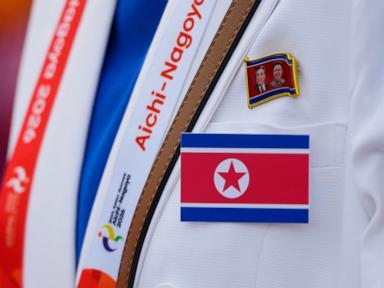
International athletic assemblies operate on a presumption of deterministic execution. When national anthems are synchronized with state flags prior to competitive fixtures, the expected error rate approaches zero. Yet, during the men's field hockey fixture between South Korea and Bangladesh at the Asian Games in Gifu, Japan, stadium operators routed the national anthem of North Korea (Aegukka) onto the sound system in place of South Korea's Aegukga.
While mainstream reporting categorizes this incident as an "awkward mishap" or an administrative oversight, a rigorous operational analysis reveals a systemic failure in metadata handling, asset database design, and protocol redundancy. The convergence of hostile geopolitical positioning and automated playlist ingestion creates a high-impact vulnerability that standard multi-sport event management structures fail to mitigate.
The Taxonomy of Audio Routing Failures
In multi-sport environments managing thousands of athletes across compressed schedules, audio files are digitized, tagged, and indexed within local storage systems operated by third-party venue contractors. The error vector that caused the substitution of the South Korean anthem with that of the North Korean state stems from three distinct architectural weaknesses:
- Nomenclature Collapse: Database indexing systems that rely on string matching or alphabetical proximity frequently group jurisdictions by regional prefixes. In poorly curated asset libraries, file labels such as "KOR - North" and "KOR - South" or ISO alpha-3 country codes stored adjacent to each other create high risk for selection error under time-pressure operator workflows.
- Absence of Dual-Key Verification: Unlike financial transactions or broadcast cueing systems that mandate a secondary confirmation checkpoint, stadium audio operators typically execute playlist tracks via single-action user interfaces. There is no automated algorithmic gatekeeper checking the metadata of the audio file against the registry code of the officially designated team lineup sheet.
- Operator Cognitive Overload: Venue audio technicians operate within compressed temporal windows, managing multiple inputs across parallel venues. When schedules shift to accommodate early-round tournament structures—such as field hockey matches preceding the official opening ceremonies—the cognitive load on local contractors spikes, reducing verification diligence.
The Geopolitical Cost Function
The operational friction of playing an adversarial state's anthem to a sovereign delegation is compounded by the legal and historical reality of the Korean peninsula. The 1950–1953 Korean War concluded via an armistice rather than a peace treaty, leaving both nations technically at war. Furthermore, domestic South Korean statute strictly regulates or outright bans the public display of North Korean state symbols and anthems under the National Security Act.
When the audio broadcast began at Green Stadium, the South Korean athletes faced an immediate tactical dilemma in physical posture:
- Standing at attention validated the sonic representation of an adversarial regime.
- Breaking formation or protesting disrupted the mandatory protocol of pre-match ceremonies.
The players ultimately maintained discipline while exhibiting visible bewilderment, neutralizing an explosive optical moment through sheer composure. However, the incident exposed a secondary risk: the weaponization of administrative incompetence. While the Gifu incident was verifiably accidental, the absence of rigid cryptographic or metadata verification leaves major international games exposed to malicious audio substitution attacks via compromised local network nodes.
Systemic Remediation Frameworks
Preventing recurrence requires moving past manual apologies and issuing structural mandates across organizing committees for future continental and global games:
- Cryptographic Asset Locking: Audio files must be cryptographically hashed and immutably bound to the official sport accreditation database. A mismatch between the team registration ID and the audio asset metadata must trigger a hard system lock preventing playback.
- Mandatory Air-Gapped Verification: Local venue operators must be stripped of unverified local file editing privileges. Playlists should be compiled via centralized, pre-cleared digital distribution channels managed directly by continental federation officials.
- Redundant Supervisory Controls: Every anthem playback station requires a two-person integrity rule where the audio engineer and a neutral delegation liaison independently verify the waveform and metadata before execution permission is granted.
The 5-0 victory achieved by the South Korean team on the turf ultimately insulated the delegation from competitive failure, but the administrative collapse off the pitch highlights a permanent vulnerability in modern sports logistics. Until tournament organizers treat asset management with the same security rigor applied to anti-doping controls and credentialing, international competitions will remain hostage to human error at the mixing board.