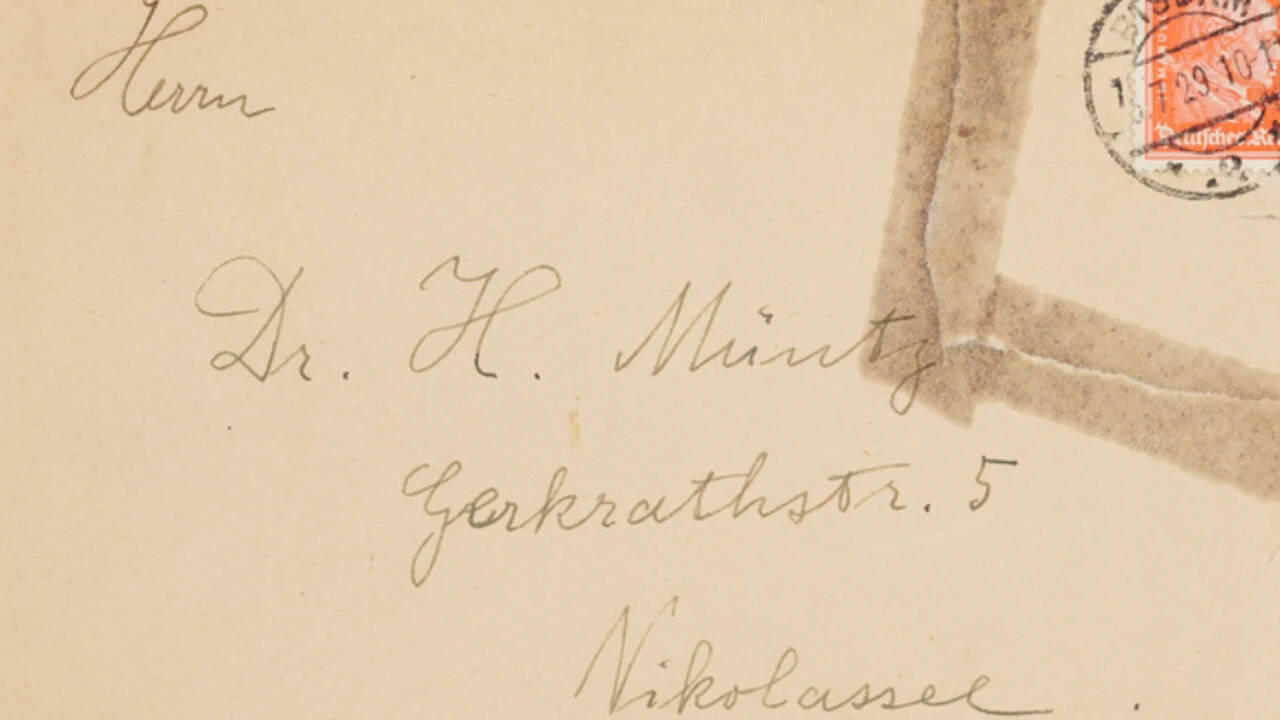
A single-sheet handwritten letter covered in mathematical notation from Albert Einstein clearing at roughly $71,811 exposes a structural flaw in how conventional auction coverage evaluates scientific artifacts. Surface-level reporting treats a hammer price or all-in sale figure like a retail sticker tag, assuming a neat equivalence between historical fame, physical ink on paper, and market value. In reality, pricing a century-old physics letter requires evaluating an illiquid, single-lot asset where mathematical substance, recipient provenance, archival completeness, and two-sided bidder liquidity collide inside a narrow window of auction attention. This analysis breaks down the pricing mechanics behind such sales, maps the causal chains standard reports ignore, separates verified auction facts from analytical hypotheses, and defines how collectors and curators should value these manuscripts without falling for headline theater.
Why Headline Prices Distort Manuscript Valuation
Conventional media coverage reduces complex auction outcomes to one number and one narrative: a famous scientist wrote equations a century ago, and a buyer paid a specific sum. That framing misses how thin-market auctions actually clear prices. Unlike liquid equities or standardized commodities, a handwritten scientific letter has no continuous order book, no identical comparables, and no guaranteed resale depth on any given Tuesday.
When a lot clears around $71,811, that number reflects the intersection of a particular catalog presentation, the specific buyers active in that room or online portal, and the perceived intellectual weight of the text. Two bidders with high conviction can push a modest archival sheet well above routine autograph pricing. Conversely, a deeper or more technically dense sheet can clear for less if it sits inside a crowded catalog or lacks clear framing for non-specialist buyers.
Standard commentary also conflates gross sale totals with net seller proceeds or intrinsic archival worth. Auction houses apply buyer's premiums and seller commissions, and currency conversions or lot-specific terms can shape how a headline number is reported. Treating a single transaction price as an objective market rate confuses an isolated clearing event with a stable valuation benchmark.
The Four Pillars of Scientific Manuscript Pricing
To analyze handwritten physics correspondence rigorously, evaluate every lot across four distinct structural pillars rather than relying on celebrity halo alone.
- Mathematical and Theoretical Substance: Equations range from routine algebraic manipulations or pedagogical restatements to working derivations, field equations, tensor notation, or early attempts at unified field theory. Technical depth alters the buyer pool from general autograph collectors to serious historians of science and institutional collections.
- Epistolary Context and Recipient Provenance: A letter addressed to a prominent physicist, collaborator, or institutional peer carries relational and historical context that an isolated sheet lacks. Knowing who received the letter, when it was sent, and what problem both correspondents were wrestling with anchors the document inside the history of ideas.
- Physical Condition and Authentication Integrity: Paper aging, ink legibility, fold wear, annotations, envelope retention, and provenance chain determine both preservation risk and institutional acceptability. Clean authentication and transparent ownership history reduce transaction friction and protect long-term liquidity.
- Catalog Framing and Competition Dynamics: How an auction house explains the math, situates the date, and markets the lot determines whether generalist bidders understand what they are looking at. Competition requires at least two motivated buyers willing to bid past the reserve and past each other's reservation prices.
When one pillar is strong and another is weak, pricing behaves unpredictably. A sheet packed with equations can underperform if the catalog fails to explain why those specific symbols matter, while a shorter or more accessible sheet can outperform if two competing collectors view it as a centerpiece acquisition.
Known Facts Versus Analytical Hypotheses in Auction Analysis
A rigorous valuation assessment separates documented auction facts from interpretive claims. Treating hypotheses as settled facts leads to flawed acquisition models and overconfident forecasts.
Documented Market Facts
- Single-Lot Illiquidity: Each handwritten letter or equation sheet is a unique physical artifact rather than a fungible unit, meaning every sale is a discrete price discovery event.
- Dual-Audience Appeal: Einstein manuscripts sit at the overlap of two distinct collecting markets: historical autograph and celebrity memorabilia buyers on one side, and physics and history-of-science collectors or institutions on the other.
- Information Asymmetry: Technical equations create a comprehension gap between specialized physicists or historians and general bidders unless the catalog bridges that gap clearly.
Analytical Hypotheses Requiring Case-by-Case Verification
- Equation Density Premium Hypothesis: A working hypothesis in manuscript valuation is that explicit mathematical derivations command higher interest than purely prose letters of similar length. That relationship holds only when the equations connect to recognizable themes or active research periods, not automatically when notation is routine or disconnected from major breakthroughs.
- Chronological Proximity Hypothesis: Another common assumption is that letters from peak theoretical years automatically outprice later correspondence. In practice, later letters touching on quantum mechanics foundations, cosmology, or unified field theory can still attract strong interest when their conceptual argument is clear and well documented.
- Catalog Translation Multiplier: A practical hypothesis for auction strategy is that clear, non-jargony explanation of the mathematical context widens the active bidder pool beyond specialists. Without clear framing, many capable bidders hesitate because they cannot judge whether a page of symbols is routine arithmetic or a meaningful step in an argument.
The practical takeaway from separating facts from hypotheses is discipline. Never infer a broad price curve for all Einstein equation letters from a single headline sale without inspecting the exact content, provenance, and competitive context of the specific lot.
Causal Chains Standard Coverage Misses
Surface-level articles list the price and quote general praise for Einstein's genius, skipping the cause-and-effect mechanisms that actually move bids during a sale.
The Comprehension Bottleneck
Many prospective buyers recognize Einstein's name and understand general relativity or mass-energy equivalence at a conceptual level, yet cannot read handwritten tensor indices or German scientific shorthand. This creates a comprehension bottleneck. When a bidder cannot quickly verify the significance of the equations on a page, their willingness to pay stalls unless trusted catalog notes or outside specialists clarify the stakes before bidding closes.
The Provenance and Institutional Filter
Museums, university archives, and serious private collections face strict rules on authenticity, export or cultural heritage compliance, and chain of title. If provenance is murky or fragmented, institutional buyers often step back. Removing institutional bidders narrows the top of the market, which can cap peak prices even when private collectors find the artifact visually compelling.
The Catalog Sequencing Effect
Auction catalogs are sequences of competing lots, not isolated billboards. A scientific letter placed right after a blockbuster museum-grade manuscript or buried inside a mixed estate sale experiences different attention dynamics than a well-positioned feature lot. Attention is a scarce resource inside any auction session; poor sequencing starves a niche lot of marginal bids.
Step-by-Step Framework for Evaluating a Scientific Letter
Anyone evaluating a handwritten scientific letter for acquisition, insurance, or editorial analysis can apply a disciplined five-step sequence before forming a valuation view.
- Audit the Physical and Archival Baseline: Verify date, physical format, ink and paper condition, surviving envelope or attachments, and documented ownership history. Flag any missing provenance links or restoration work immediately.
- Classify the Mathematical and Textual Content: Separate prose from equations. Determine whether the math represents original working notes, an explanation sent to a colleague, a summary of established theory, or routine calculation.
- Map the Correspondents and Historical Moment: Identify the recipient and check the historical context of the date. A letter exchanged with a fellow theorist often carries sharper analytical weight than a polite reply or casual note.
- Benchmark Against Comparable Archival Tiers: Compare the asset against clear tiers of scientific manuscripts—such as foundational research drafts, substantive technical correspondence, routine signed letters, and annotated offprints—rather than treating all signed paper as equivalent.
- Assess Buyer Pool Depth and Sale Format: Evaluate whether the auction house reaches specialized physics collectors, how clearly the lot is explained, and how many serious bidders are likely to contest the upper increments.
Operational Realities and Limitations of Valuation Models
Even a structured five-step framework has clear boundaries. No valuation rubric turns an illiquid historical artifact into a precision instrument.
First, archival scarcity means sample sizes for closely matched comparables are always small. Two letters written years apart with different recipients and different mathematical content are cousins, not twins. Second, auction psychology introduces noise that formulas cannot capture; a single passionate collector deciding "I want this piece" can override conservative valuation bands in the final minutes of bidding. Third, expert consultation takes time and carries its own cost, which can constrain fast decisions in timed online sales.
Recognizing these limits prevents over-engineering price estimates. Use frameworks to establish a disciplined range, spot red flags, and avoid overpaying for superficial novelty—not to pretend an auction room follows a deterministic equation.
Strategic Play for Buyers, Sellers, and Analysts
For buyers and collectors targeting handwritten scientific correspondence, the highest-leverage move is to prioritize documented context and clear mathematical provenance over headline celebrity alone. Before placing a ceiling bid, secure independent verification of the scientific content and provenance chain, benchmark against the true tier of the manuscript rather than a single viral sale price, and walk away whenever excitement outruns clarity on what the page actually contains. For sellers and consignors, the parallel play is to invest in rigorous scholarly description and targeted specialist outreach before the catalog goes live so informed bidders can price the substance rather than guessing at the symbols.