The arithmetic of international diplomacy rarely aligns with the reality of a scorched-earth internal conflict. In Berlin, global powers recently pledged over 1.3 billion euros to address the humanitarian catastrophe in Sudan, a nation currently enduring what many aid agencies describe as the world’s most neglected civil war. While the financial figure appears substantial on a press release, it represents a fraction of what is required to stabilize a region where the state apparatus has effectively dissolved. This funding is a reactive measure for a crisis that has been festering for three years, driven by a brutal power struggle between the Sudanese Armed Forces (SAF) and the Rapid Support Forces (RSF).
Money alone cannot fix a logistics nightmare. Even if every cent of the 1.3 billion euros is delivered—a rare occurrence in the world of international pledges—the challenge remains getting that aid past the very generals whose war created the need for it.
The Mirage of Humanitarian Pledges
Diplomatic conferences are often exercises in optics. The Berlin gathering served as a much-needed signal that the West hasn't entirely forgotten Khartoum while focusing on Gaza and Ukraine. However, history suggests a massive gap between a "promise" and a "disbursement." In previous cycles of the Sudanese conflict, realized funding often lagged behind pledges by as much as 40 percent.
The 1.3 billion euros must be viewed against the backdrop of a total collapse in local production. Sudan was once touted as a potential breadbasket for the Arab world. Today, its farmers are being hunted off their land, and its grain silos are frequently looted or burned by paramilitary groups. When a country's internal economy is erased, the cost of importing and distributing life-saving supplies triples. This means the "record-breaking" sum agreed upon in Germany will likely buy significantly less than it would have two years ago.
The Geopolitical Chessboard and the Gold Factor
To understand why this war won't end, you have to look at the gold. Sudan is one of Africa’s largest producers of the metal, and control over the mining sites in Darfur and other regions provides the RSF with a private treasury that is immune to international sanctions. This isn't just a tribal or political war; it is a resource grab disguised as a national struggle.
While European nations gather in Berlin to discuss aid, other regional players are funneling hardware to the combatants. The RSF has maintained a steady supply chain of weaponry through neighboring borders, allegedly supported by interests that profit from the illicit gold trade. On the other side, the SAF relies on its traditional state-to-state alliances to maintain its dwindling air superiority.
This creates a cynical cycle. International donors fund the food and medicine, while regional powers fund the bullets that create the need for food and medicine. Without a unified front to cut off the financial lifelines of the warring generals—specifically the gold exports and the foreign bank accounts that hold the profits—the 1.3 billion euros is merely a temporary bandage on a severed limb.
The Logistics of Death
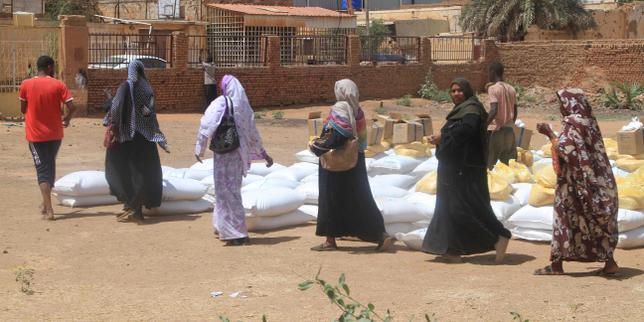
The most harrowing aspect of the Sudanese crisis is the intentional obstruction of aid. It is a weapon of war. Negotiating "humanitarian corridors" has become a repetitive, failing ritual. The SAF frequently blocks cross-border aid from Chad, claiming it serves as a cover for weapons shipments to the RSF. Conversely, the RSF’s decentralized command structure means that a convoy might get permission from a general in one town only to be hijacked by a local commander ten miles down the road.
Aid workers are not just collateral damage in this conflict; they are targets. Hospitals have been systematically occupied and turned into military barracks. When the international community talks about "delivering aid," they often gloss over the fact that there is no functioning infrastructure left to receive it. The port of Port Sudan is congested and plagued by bureaucracy, while the interior of the country is a patchwork of shifting frontlines.
The Looming Famine of Choice
We are witnessing a man-made famine. Unlike the droughts of the 1980s, the current hunger crisis in Sudan is the direct result of military policy. By preventing planting seasons and destroying markets, the warring factions are using starvation as a tool of population control.
The Berlin conference focused heavily on the "how much" but lacked a definitive "how." There was no clear mechanism established to ensure that the SAF-led government in Port Sudan or the RSF-occupied territories would actually allow the funds to translate into calories for the 25 million people currently in need.
The Displaced and the Destabilized
Sudan now holds the grim title of the world’s largest displacement crisis. Millions have fled into neighboring South Sudan, Chad, and Egypt. These are countries that were already struggling with their own economic and security challenges.
By failing to stop the war and merely funding the fallout, the international community is risking a regional contagion. Chad, in particular, is under immense pressure. The influx of refugees into its eastern provinces is straining local resources to the breaking point, potentially reigniting old ethnic tensions that could draw another nation into the fire. The 1.3 billion euros is, in many ways, "hush money" paid to the periphery of the conflict to keep the refugees from moving further toward Europe’s borders.
The Failure of the Transition Model
The root of this disaster lies in the botched transition that followed the ousting of Omar al-Bashir in 2019. The international community, led by the US and various European partners, prioritized a "stability-first" approach that integrated two rival military entities into a power-sharing agreement with civilians. It was a deal with the devil that everyone knew wouldn't hold.
By treating General Abdel Fattah al-Burhan and Mohamed Hamdan Dagalo (Hemedti) as legitimate political actors rather than warlords, the West provided them the time and resources to prepare for this final showdown. The Berlin conference is the price of that diplomatic naivety. We are now paying for the consequences of a policy that favored the comfort of a handshake over the messiness of actual democratic reform.
A Strategy Beyond the Checkbook
If the 1.3 billion euros is to be anything more than a footnote in a history of failure, the approach must shift from charity to leverage.
- Sanctioning the Gold Trade: Any entity purchasing Sudanese gold without verified, transparent supply chains must be locked out of the global financial system.
- Targeted Neutrality: Aid must be decoupled from the recognition of either faction. This means bypassing central authorities and working directly with the "Resistance Committees"—the grassroots civilian networks that have been the only effective providers of aid since the war began.
- A Regional Arms Embargo: Until the flow of weapons through the borders of neighboring countries stops, no amount of humanitarian aid will stabilize the country.
The generals in Sudan are not fighting for an ideology or a vision of the state. They are fighting for survival and the right to loot the treasury. They have shown a total disregard for the lives of their citizens and the pleas of the international community.
Providing funds without a corresponding increase in diplomatic and economic pressure on the combatants is an exercise in futility. The world is essentially paying to keep people alive just long enough to be caught in the next crossfire. True leadership in this crisis requires more than a signature on a pledge; it requires the courage to treat the perpetrators of this war as the outcasts they have become.
The 1.3 billion euros will disappear into the sands of the Sahel. The question is whether any of it will actually reach the mouth of a starving child in Darfur before the next shipment of ammunition reaches the frontlines. Stop the flow of gold and the flow of guns, or keep writing checks for a war that will never end.