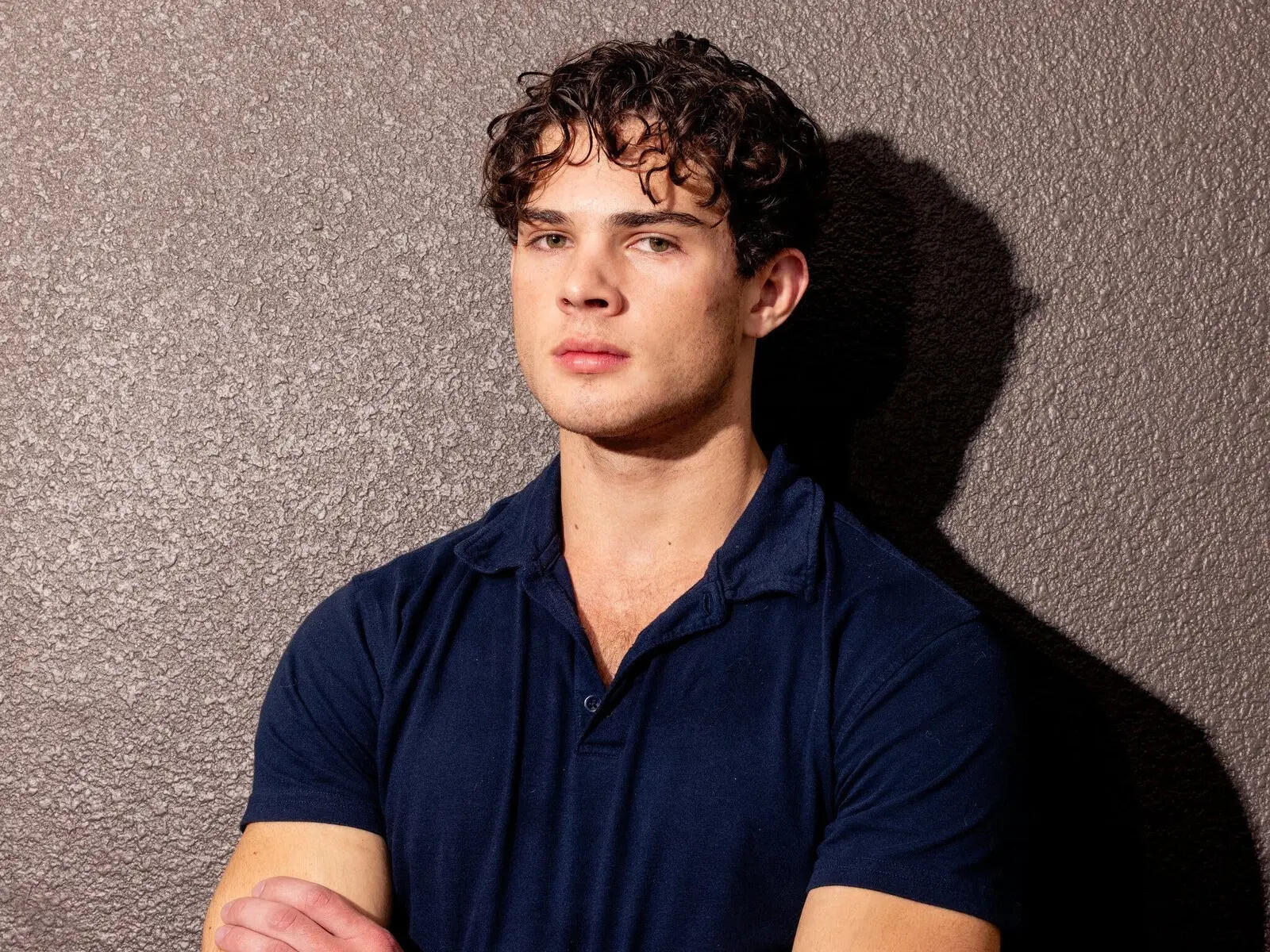
The mirror does not lie, but it can be a cruel narrator. For months, a twenty-four-year-old digital creator known online as Clavicular stared at her reflection, seeing not a face, but a mathematical equation that needed solving. Her chin sat slightly back. Her bite did not perfectly align. To the casual observer, she was entirely ordinary, perhaps even striking. But in the hyper-polished world of social media feeds, ordinary feels like a failing grade.
So, she made a plan. She went public with it.
She documented her preparation for an elective, $35,000 double jaw surgery, a grueling medical procedure officially known as orthognathic surgery. It involves literally breaking the upper and lower jaws, repositioning the bones, and securing them with titanium plates and screws. It is an operation designed to correct severe functional issues like sleep apnea or the inability to chew food. Yet, Clavicular’s motivation leaned heavily into the aesthetic. She wanted a more defined structure. She wanted symmetry.
Then came the phrase that set the internet on fire: "If the surgery goes wrong...."
The comment sections erupted. Tens of thousands of people weighed in, sparking an explosive debate that transcended a single influencer's medical choices. It pulled back the curtain on a deeper, collective anxiety about our cultural obsession with physical perfection and the lengths to which we will go to achieve it.
The Invisible Weight of the Digital Gaze
Bone breaks. It heals. But the psychological blueprint that drives someone to willingly shatter their face is far more complex to repair.
To understand why a young woman would sign up for months of liquid diets, permanent nerve damage risks, and immense physical pain, we have to look at the environment we have built. We live online. We view our lives through front-facing cameras that distort our features, feeding our images into algorithms that reward a very specific, standardized type of beauty. High cheekbones. A sharp, angular jawline. A symmetrical facial thirds ratio.
Consider a hypothetical teenager sitting in a bedroom today. Let’s call her Maya. Maya doesn't look at her classmates to gauge how she fits into the world; she looks at a global feed of filtered perfection. When every face she sees is mathematically flawless, her own normal, human asymmetries begin to look like deformities.
The medical community has a term for this fixation: body dysmorphic disorder. While it is unfair to diagnose strangers online, the line between wanting a cosmetic upgrade and suffering from a profound dissatisfaction with one's natural body has become dangerously thin. The $35,000 price tag on Clavicular’s surgery isn't just a financial metric. It represents the literal cost of admission to a perceived elite tier of beauty.
But what happens when the machinery of self-improvement stalls?
Breaking Bones and Shifting Identities
Orthognathic surgery is not a routine trip to the clinic for Botox or lip filler. It is major trauma inflicted on the body under general anesthesia.
During a typical bilateral sagittal split osteotomy—the technical term for the lower jaw portion of the procedure—surgeons cut through the gum tissue behind the molars to expose the jawbone. They use a specialized saw to split the mandible lengthwise. The nerve that provides sensation to the lower lip and chin runs directly through this bone. Surgeons must carefully navigate around it, but the mere act of stretching the nerve during the bone advancement often causes temporary, and sometimes permanent, numbness.
Imagine waking up from a multi-hour operation with your mouth wired shut. Your face swells to twice its normal size. Blood drips from your nose. You cannot breathe through your mouth, and you cannot swallow solid food. For weeks, your sustenance comes through a syringe or a thin plastic tube.
This is the reality Clavicular’s followers began to dissect. The backlash wasn't born out of cruelty, but out of a collective shock at the sheer extremity of the choice. People started asking the hard questions. Is a slightly more prominent jawline worth risking the ability to feel your own lower lip when you kiss someone? Is it worth the tiny, terrifying chance of avascular necrosis—a rare complication where the bone loses its blood supply and literally dies?
The debate quickly split into two fiercely defensive camps.
On one side stood the champions of bodily autonomy. They argued that if a person has the financial means and the mental fortitude to undergo a procedure to look the way they desire, society should stay out of it. It is her face, her money, and her future.
On the other side lay a deep, systemic worry. Critics argued that promoting such invasive procedures as a standard lifestyle upgrade normalizes an extreme level of self-optimization. It sends a message to millions of young viewers that if you do not like your face, you should simply save up thousands of dollars and have a surgeon rewrite your skeleton.
The Illusion of Control
We crave control in a world that feels increasingly chaotic. Our careers, our relationships, and our futures can feel wildly unpredictable. The body, however, feels like something we can mold. We gym-rat our way to better silhouettes. We skin-care our way to youth. And when those fail, we look to the scalpel.
But cosmetic surgery offers an illusion of control that often shatters upon impact with reality.
When a procedure goes wrong, the psychological fallout is devastating. Unlike a bad haircut or a poorly tailored outfit, you cannot hide a facial surgery mishap. It is your calling card to the world. The internet debate surrounding Clavicular highlighted this exact fear. What if the swelling goes down, and you don't recognize the person looking back at you? What if the asymmetry you sought to fix is replaced by a different, unnatural stiffness?
The human face is our primary tool for emotional connection. It is how we signal trust, warmth, fear, and love. When we treat it like a piece of clay to be reshaped according to the trend of the decade, we risk alienating ourselves from our own identity. The sharp, hyper-masculine or hyper-feminine jawlines trending on social media right now are just that—trends. A few decades ago, softer, rounder facial features were prized.
We are altering permanent bone structure for temporary cultural preferences.
Beyond the Scalpel
The fixation on structural perfection obscures a simpler, quieter truth. True facial appeal has rarely been about the exact millimeter placement of the mandible. It exists in the vitality of expression, the warmth of a smile, and the spark of genuine human presence.
Clavicular’s journey is a modern parable. It forces us to look away from her specific jawline and look inward at our own habits. How many times a day do we check our own reflections through a digital lens? How much of our self-worth have we outsourced to the consensus of strangers in a comment section?
The explosive debate over a $35,000 surgery isn't really about surgery at all. It is a collective cry for boundaries in an era where beauty has been weaponized by technology. It is a plea to remember that our bodies are homes to be lived in, not products to be endlessly edited, upgraded, and optimized for an audience that will move on to the next viral video in a matter of seconds.
The bone will knit back together in the dark of the jaw, but the cultural obsession that demanded its fracture remains wide open, staring back at us through the screen.