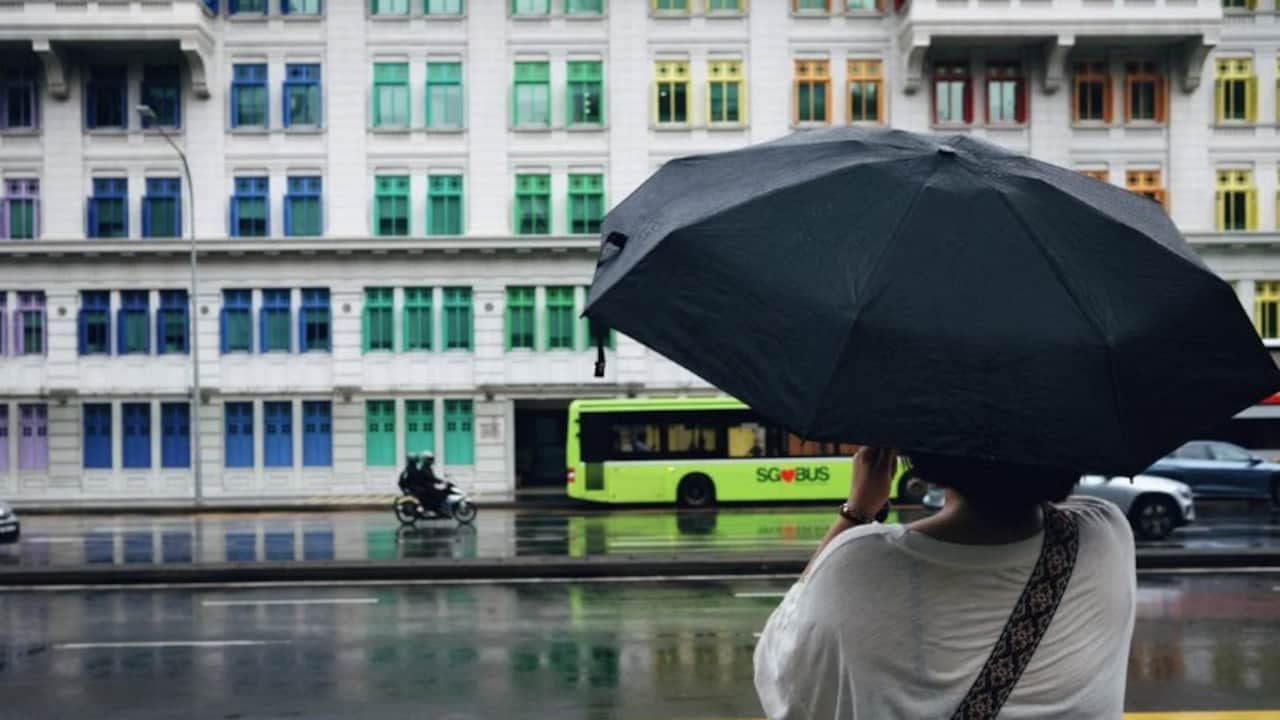
The air inside the cabin hits you first. It is chilled, sterile, and entirely devoid of the messy, chaotic soundtrack that defines public transit in almost every other major city on Earth.
In New York, the subway is a roaring theater of competing rhythms—a busker tuning a guitar, a teenager's phone speaker crackling with bass, the sharp crinkle of a cellophane wrapper tearing open over a morning bagel. In London, the Tube hums with the muffled murmur of overlapping conversations, newspapers folding, and the occasional sigh of exhaustion. In Mumbai, the local trains surge with relentless, pulsing energy.
Step onto a bus or train in Singapore, however, and you enter a different dimension.
Silence reigns.
It is not an accidental quiet. It is engineered. It is protected by steel, policy, and the very real threat of a heavy fine.
Consider Marcus. He is a newcomer, jet-lagged and running late on a Tuesday morning. He scrambles onto a crowded bus, a warm, flaky pastry in one hand and a smartphone playing a loud video in the other. He wants to catch up on the news while grabbing a quick breakfast. To him, this is standard urban multitasking. A harmless routine.
Within seconds, the atmosphere shifts. Heads turn. Not with angry shouts or dramatic confrontations—that would violate the peace just as much—but with quiet, disapproving glances. The social friction is palpable. Before Marcus can even finish his first bite, a transit officer or a vigilant fellow passenger steps in, or the quiet realization hits him as he spots the unyielding red signs plastered across the windows.
There is no food allowed here. Not a drop of water. Not a crumb. And that sound leaking from his phone? A violation of the Rapid Transit Systems regulations.
The penalties are swift and severe. Eating or drinking on the Mass Rapid Transit system or public buses carries a fine that can climb up to five hundred Singapore dollars. Playing audio files out loud without earphones breaches civic rules, inviting similar financial stings. For a traveler or an unprepared resident, a stray sip of iced coffee can cost more than a week of meals.
Why does a nation-state police a crumb or a beat so fiercely?
To understand the fines, you have to understand the geography and the history. Singapore is a tiny island nation squeezed into a tight footprint. Over five million people share a landmass smaller than many major global cities. Space is not just a luxury; it is a finite resource that must be managed with surgical precision.
Decades ago, during the rapid urbanization of the late twentieth century, the government realized that high-density living without strict social contracts quickly degenerates into squalor and friction. Cleanliness and order were not aesthetic choices; they were survival strategies for a multi-ethnic, multi-religious society striving to maintain harmony in close quarters.
When you pack millions of people into high-density housing and shared transit systems daily, personal habits stop being purely personal. A dropped crumb attracts ants and pests in a tropical climate where heat and humidity accelerate decay. A sticky spill on a rubberized floor creates a slip hazard for hundreds of boarding passengers. Loud audio cuts through the fragile collective calm, fraying the nerves of commuters who have already endured long work hours in a high-pressure economy.
Order is the structural integrity of the city.
Critics often call these rules draconian. They point to the sheer cost, the lack of leniency, and the micromanagement of daily life. They argue that a society governed by penalty notices stifles spontaneity, turning the daily commute into a sterile march of compliance where citizens walk on metaphorical eggshells.
Yet, spend a week riding these trains, and a strange psychological shift occurs.
The anxiety drops. The claustrophobia of the crowd softens. Because everyone agrees—or is legally compelled—to respect the acoustic and physical boundaries of the space, the commute becomes a sanctuary of shared quiet. You can read a book without straining against a wall of abrasive noise. You can stand inches from a stranger without the intrusion of someone else's private phone conversation broadcasted on speakerphone.
It forces a radical reimagining of public space. The train is not an extension of your living room or a chaotic extension of the street. It is a shared ecosystem built on mutual consideration.
The rules do not care about your intentions. They do not care if you skipped breakfast because your alarm failed or if your headphones broke minutes before boarding. The law draws a clean, sharp line between public courtesy and private convenience.
Marcus learns this lesson the hard way. He pockets his pastry, slips his wired earphones over his ears, and stands in silence. The bus rolls forward, gliding smoothly over the asphalt, carrying its quiet cargo through the blinding equatorial sun.
Peace comes with a cost. In Singapore, that cost is clearly marked, heavily enforced, and universally understood.