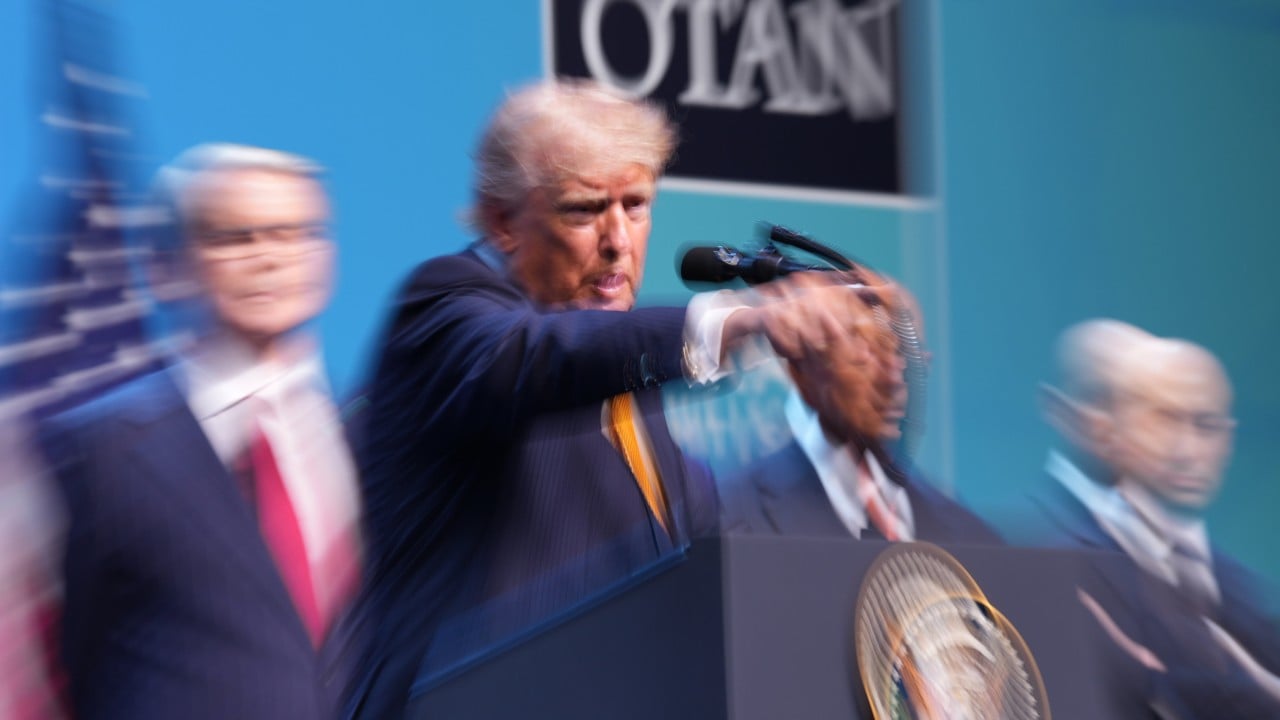
The server farm doesn't care about politics. It doesn't listen to speeches, it doesn't care who occupies the Oval Office, and it breathes in cold, air-conditioned silence. But inside those humming black towers, a single line of text can trigger an automated panic that moves billions of dollars across the globe before a human being can even blink.
Now, imagine a quantitative trader—let’s call her Sarah—sitting in a high-frequency trading firm in lower Manhattan. Sarah’s entire career is built on a simple, brutal law of physics: information travels at the speed of light, but money moves at the speed of software. For years, Sarah and her peers have relied on algorithms to scrape the internet, parsing the public statements of world leaders to buy or sell oil, equities, and currencies.
But the rules of the game just changed, and the entry fee is astronomical.
Trump Media & Technology Group (TMTG) has quieted the room on Wall Street by pitching a premium, licensed data feed known as the "Truth API". The cost? A staggering $100,000 per month. For firms willing to commit long-term, there is a volume discount: $60,000 a month on a three-year contract.
What exactly does a six-figure monthly subscription buy in a world where the news is already free?
Time. Specifically, milliseconds.
The Value of an Instant
To the average citizen scrolling on a smartphone, a millisecond is an abstract ghost. It is imperceptible. But in the ecosystem of algorithmic trading, a millisecond is a vast canyon. If an automated system receives a statement from the U.S. president even a fraction of a second before the rest of the world, it can execute thousands of trades, locking in profits and shifting risk onto slower, unsuspecting market participants.
The "Truth API" promises to deliver real-time data from the platform's 10 most influential accounts directly to a firm's trading models. It bypasses the standard, clunky delivery infrastructure of push notifications and standard web refreshes. It is a direct, mechanized pipe to the source.
Consider the raw power of that signal. TMTG’s own promotional pitch sheet circulated to prospective buyers highlights the concrete reality of this dynamic. On April 9, 2025, a single post from the president's account reading “THIS IS A GREAT TIME TO BUY!!!” allegedly restored $4 trillion to the market capitalization of the S&P 500. In June of that same year, an intraday post warning that the U.S. would hit Iran "very hard tonight" caused a immediate 6 percent spike in global oil prices.
More recently, on March 23, a post indicating "very good and productive conversations with Iran" sent crude tumbling.
If your algorithm is manually scraping the public web feed, you are already too late. You are the liquidity for someone else's profit.
The Mandatory Tax on Wall Street
The initial reaction from financial institutions has been a mixture of quiet resignation and underlying frustration. There is a distinct, uneasy friction when a company majority-owned by the sitting president's family trust begins charging Wall Street for the fastest access to market-moving public policy announcements.
"People will pay because they have to," one hedge fund executive noted bluntly. "If you're behind on that news, you'll get crushed."
It creates a classic prisoner's dilemma. A firm might find the ethics of the arrangement deeply uncomfortable. They might object to the precedent it sets. But if their direct competitor buys the feed, that competitor now possesses a structural speed advantage on every geopolitical headline. To stay out is to voluntarily accept a blind spot.
Other platforms, such as X (formerly Twitter), have long monetized their data pipelines by selling access to algorithmic traders via Bloomberg terminals and direct enterprise APIs. The difference here—the element that makes the financial community hold its breath—is the unique nature of the entity generating the data. The content isn't just social commentary or corporate PR; it is the volatile, unpredictable machinery of statecraft.
The Uncharted Legal Gray
The launch of the data feed has predictably ignited a fierce political backlash in Washington. Lawmakers have labeled the product an unprecedented monetization of the presidency, arguing that it creates a tiered system where wealthy institutional traders can profit off policy shifts before ordinary citizens even know a decision has been made.
Yet, from a purely legal standpoint, the situation exposes a fascinating, modern loophole. Nonpartisan watchdogs point out that while the arrangement feels deeply problematic to critics, it occupies an uncharted legal gray zone.
Traditional federal insider trading regulations are designed to prevent individuals from buying or selling securities based on material, non-public information. But if a presidential post is being distributed to hundreds or potentially thousands of paying subscribers simultaneously, it stretches the definition of "non-public." Furthermore, constitutional anti-corruption frameworks like the Emoluments Clauses generally do not cleanly apply to domestic commercial transactions of this specific structure.
Regulatory bodies simply never anticipated an era where a public official’s short-form social media updates would become a highly valuable, proprietary commercial commodity.
The Silent Core
Back in the server room, the moral debates disappear. The wires don't care about ethics, politics, or the fairness of a system. They only recognize the relentless, binary march of data.
For TMTG, the motivation is clear. The company has faced steep uphill battles trying to scale its traditional media and advertising business against massive, established tech giants, reporting significant net losses earlier this year. Data licensing represents a highly lucrative, recurring revenue stream rooted in an asset no other company on Earth possesses: exclusive control over the delivery architecture of the president's personal megaphone.
The product is slated to officially go live in August, with several customers reportedly already signed up. As the launch approaches, the broader financial landscape is adjusting to a stark new reality. Information, the most basic currency of a democracy, is being unbundled.
The words of the president remain free for anyone to read on a screen. But the right to see them a fraction of a second before everyone else now carries a premium that only the most powerful rooms in the world can afford.



:max_bytes(150000):strip_icc():focal(999x0:1001x2)/taylor-swift-albums-1-93026ca98408417097660e117a10a6a9.jpg)