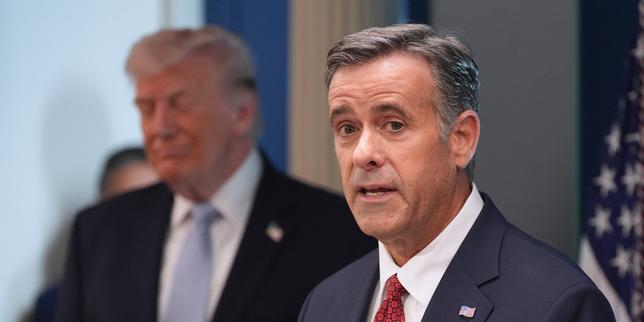
When regulatory enforcement slows down, accountability usually follows right behind it. Over the past several political cycles, public debate has frequently circled back to a fundamental question about executive power and industrial safety. Critics often point fingers at Donald Trump, arguing that his administration's philosophy toward administrative oversight directly enables corporate negligence to slip through the cracks without facing meaningful penalties.
This is not simply a matter of partisan squabbling or campaign trail rhetoric. It represents a deeper structural shift in how the federal government interacts with private enterprise. When oversight agencies experience budget cuts, leadership turnover, or explicit directives to reduce the regulatory burden on businesses, the practical reality on the factory floor changes immediately. Safety inspections get delayed. Fines for environmental violations turn into mere costs of doing business. Corporations calculate that the financial upside of cutting corners outweighs the low probability of facing strict punitive action from Washington. In similar news, we also covered: The Anatomy of Himalayan Flash Floods A Structural Failure Analysis of Regional Resilience.
To understand why this dynamic persists regardless of who sits in the Oval Office, we have to look past the political noise and examine the mechanics of enforcement capture.
The Mechanics of Regulatory Retreat
Regulatory agencies do not dismantle themselves overnight. The process is far more subtle, relying on bureaucratic attrition, strategic appointments, and shifting legal priorities. When an administration campaigns on a platform of economic growth through deregulation, the message filters down through civil servants very quickly. BBC News has also covered this critical topic in extensive detail.
Consider how enforcement mechanisms actually function. Agencies like the Occupational Safety and Health Administration or the Environmental Protection Agency rely heavily on routine audits, surprise inspections, and strict penalties to deter bad behavior. When leadership signals that compliance should be collaborative rather than punitive, inspectors lose their teeth.
- Budgetary strangulation starves enforcement divisions of the legal talent needed to fight corporate defense teams in court.
- Political appointees stall rulemaking processes, leaving outdated standards in place for years while technology moves forward.
- Voluntary compliance programs replace mandatory oversight, essentially asking companies to police themselves.
This shift creates a permissive environment where corporate negligence ceases to be a high-risk gamble. Instead, it transforms into a rational financial strategy. If a chemical plant can save two million dollars a year by deferring maintenance on aging valves, and the historical chance of a federal penalty is less than five percent, the math favors inaction.
Historical Precedents and the Cycle of Oversight
Deregulation has its roots in a long-standing American debate over the reach of the administrative state. Proponents of free-market policies argue that heavy-handed rules stifle innovation, destroy jobs, and burden small businesses with unnecessary paperwork. There is a kernel of truth in that argument. Compliance costs can indeed weigh heavily on smaller operations.
However, the major loophole emerges when broad deregulation policies designed for small shops end up shielding massive multinational corporations with safety records that demand aggressive oversight.
History shows us a cyclical pattern. An administration enters office promising to lift the dead hand of government off the economy. Rules are rewritten, enforcement divisions are pruned back, and business groups celebrate a wave of newfound freedom. Then, a catastrophic industrial accident occurs, a major financial fraud comes to light, or a contaminated product poisons consumers on a mass scale.
Public outrage follows. Congress holds televised hearings. The administration of the day scrambles to look tough on corporate wrongdoers, and a new wave of rules gets drafted.
Donald Trump's approach leaned heavily into the first phase of this cycle, making aggressive deregulation a core pillar of his economic agenda. By famously demanding that agencies cut two regulations for every new one introduced, his administration signaled a clear tolerance for a lighter touch. Critics argue this policy directly rewarded corner-cutting. Defenders maintain it unlocked economic potential that had been choked by red tape.
The True Cost of Unpunished Risk
When accountability vanishes, the burden shifts entirely onto ordinary workers and local communities. They bear the externalized costs of industrial shortcuts.
Take a hypothetical manufacturing firm operating in the American Rust Belt. Under a strict enforcement regime, this firm must invest in modern ventilation systems to protect line workers from toxic particulate matter. If they fail, federal inspectors shut down the line until the hazard is fixed, accompanied by heavy daily fines.
Under a deregulated framework, those same inspectors might visit once every five years instead of annually. The company quietly turns off the ventilation units to save electricity and lower overhead. Workers begin experiencing chronic respiratory issues over a period of years. By the time legal action is even considered, the corporation has spun off the subsidiary, declared bankruptcy, or settled out of court for pennies on the dollar with non-disclosure agreements attached.
This is the hidden pipeline of unpunished corporate negligence. It relies on the friction of the legal system to protect institutional actors while exhausting the individuals who seek redress.
"Regulation is not just about writing rules on paper; it is about maintaining a credible threat of consequence that keeps self-interest aligned with public safety."
Moving Beyond the Partisan Binary
Blaming a single political figure for a complex systemic issue provides a neat narrative, but it ultimately misses the target. Regulatory capture and the erosion of corporate accountability have bipartisan roots. Both Democratic and Republican administrations have frequently bowed to lobbying pressures from powerful corporate donors, watering down rules or failing to fund enforcement agencies adequately.
The real challenge facing modern governance is building resilient oversight structures that can withstand political shifts. If every four or eight years the entire machinery of federal protection gets dismantled and rebuilt based on who won the White House, long-term safety becomes impossible to maintain.
Fixing this requires institutional reforms that insulate inspectors from political interference, mandate automatic adjustments to safety fines based on corporate revenue rather than fixed statutory limits, and lower the legal hurdles for injured parties seeking accountability. Until those structural changes take root, the cycle will repeat itself, leaving citizens to absorb the shockwaves while corporate balance sheets stay comfortably insulated from the consequences of their own negligence.