The floorboards of the Bundestag always seem to echo a little louder when a German Chancellor has to explain where the shield ends.
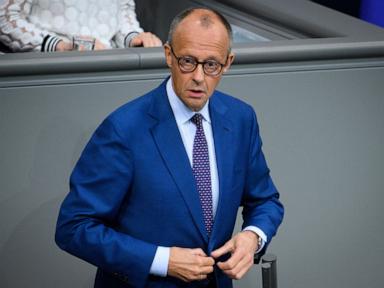
On a rain-slicked Thursday in Berlin, Friedrich Merz stood before the parliament. He had just stepped off a flight from Ankara, fresh from the frantic, high-stakes corridors of a NATO summit that many expected to fracture. Instead, he brought home a signature. Germany is buying American Tomahawk cruise missiles.
To the defense analysts tracking procurement pipelines, it was a data point—a transaction to "close a strategic capability gap," as the official phrasing goes. But look past the sterile military jargon. What happened in Turkey was a quiet admission that the ground beneath Europe has fundamentally shifted, and the old assumptions about who protects whom have expired.
For decades, Western Europe lived under a comforting illusion: that geography and American goodwill were permanent defenses. If a threat emerged from the east, a phone call to Washington would mobilize an unmatched arsenal. But agreements made on paper can be erased by a change in administration. When Donald Trump halted previous plans to deploy an American missile battalion to German soil, the sudden chill in Berlin was palpable. Security, it turned out, could be outsourced only until the landlord decided to change the terms of the lease.
The Invisible Threat in the Exclave
To understand why a 20-foot metal tube packed with liquid fuel and guidance chips matters to an ordinary citizen in Frankfurt or Munich, you have to look at a map of the Baltic Sea. Specifically, you have to look at Kaliningrad.
There, tucked away in a heavily fortified Russian exclave, sit Iskander missile systems. They are quiet, static, and perpetually pointed westward. For years, German defense officials knew a brutal mathematical truth: if those systems ever fired, Germany had no conventional land-based weapon capable of reaching back across the 1,500-kilometer distance to stop them. Their existing arsenal, like the air-launched Taurus missile, requires a pilot to climb into a cockpit, take off, and fly directly into contested, radar-heavy skies just to get within range.
Imagine a fictional air force captain—let's call him Thomas—sitting in a briefing room in Schleswig-Holstein. Under the old status quo, Thomas's safety depended entirely on the hope that deterrence never failed, because if it did, his mission profile involved flying straight into a wall of air defenses.
The Tomahawk changes that math. It is a weapon designed to do the dangerous work from the safety of a ground-based Typhoon launcher, navigating just 30 meters above the treetops, matching the contours of the earth beneath it like a ghost evading radar. It shifts the burden of risk from human skin to cold machinery.
The Friction of Sovereignty
Getting the deal done was not a matter of writing a check. It required wading through a messy, deeply human political feud.
Just months ago, Merz and Trump were trading sharp rhetorical barbs over the conflict in Iran. Merz publicly lamented that Washington was being humiliated; Trump fired back that the German leader was doing a terrible job. Defense Minister Boris Pistorius even had to cancel a scheduled trip to Washington because his American counterpart, Pete Hegseth, wouldn't grant him a meeting. The machinery of international defense stalled because of hurt egos and political posturing.
The breakthrough in Ankara was less about sudden warmth and more about hard realism. Merz walked away with the missiles, but without the American soldiers to run them. Germany gets the hardware, but it must shoulder the responsibility alone. There will be no American battalion stationed on German soil to pull the trigger.
Consider what happens next: Germany is now forced into a dual reality. It is buying American technology to survive the immediate future, while simultaneously pledging billions alongside a dozen European allies to build an entirely independent, European-made long-range strike system over the next decade. It is an expensive, agonizing transition from dependency to self-reliance.
Security is rarely about the weapon itself; it is about the psychological weight of knowing it exists. For a long time, Europe chose to spend its money on schools, high-speed rail, and social safety nets, leaving the ugly reality of long-range deterrence to the Americans. That era is over. The arrival of the Tomahawks is a physical manifestation of a continent waking up to the fact that peace is not a natural state of affairs. It is something bought, maintained, and paid for in sovereign coin.
The Chancellor finished his address, the microphones went silent, and the lawmakers filtered out into the Berlin afternoon. On paper, Germany is more secure today than it was yesterday. But the true cost of that security will be felt for generations, measured in the quiet understanding that Europe can no longer rely on the ocean to keep its monsters at bay.