The brass handle of the bakery door in Frankfurt feels cold this morning, but inside, the air is thick with the scent of yeast, flour, and anxiety.
Annette stands behind the counter, dusting flour from her apron. For twenty years, her ritual has been unchanging. Mix, knead, rise, bake. But lately, a different kind of math has invaded her kitchen. The flour costs more. The electricity to run the massive deck ovens costs more. Even the paper bags she uses to wrap the sourdough loaves cost more.
Last week, she did something she hates. She raised the price of a standard loaf by forty cents.
To a central banker sitting in a glass tower less than two miles away, that forty cents is a tiny fraction of a data point, a microscopic tick on a chart tracking consumer price indexes. But to Annette, it is a daily negotiation with her neighbors. She watches them look at the new price tag, hesitate, and sometimes change their mind.
This is what inflation looks like before it gets translated into percentages. It is not an abstract economic theory. It is the slow, grinding erosion of predictability. When money loses its value, time itself becomes distorted. You cannot plan for next month when this week’s grocery bill is a moving target.
For three years, the European Central Bank kept the cost of borrowing money at historic lows. Money was cheap. It washed through the Eurozone economy like a warm tide, encouraging spending, borrowing, and growth. But tides eventually turn, and when they do, they leave a lot of people stranded on the sand.
The Invisible Engine Breaks
To understand why the continent is suddenly shifting gears, we have to look at the plumbing of the global financial system.
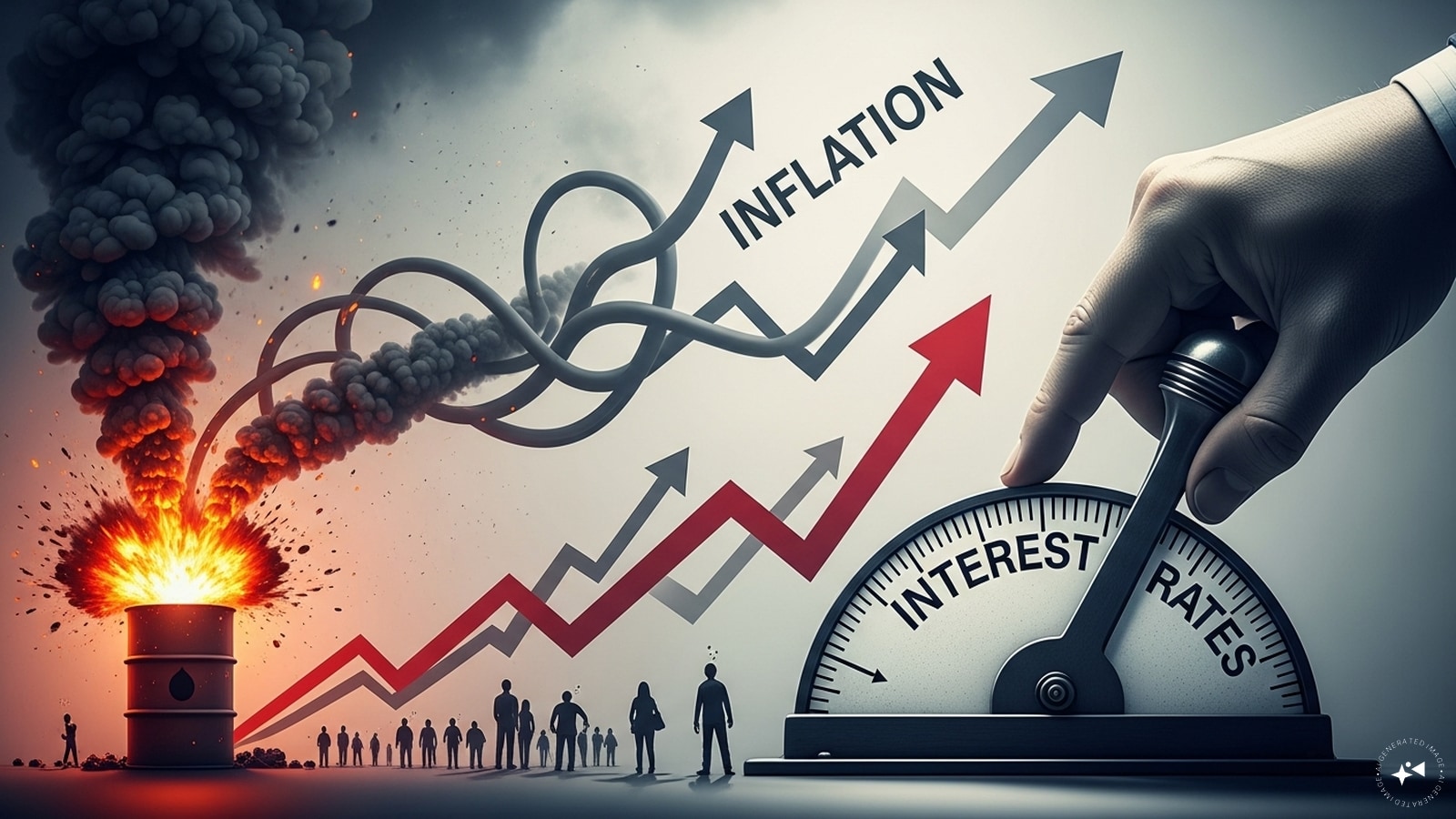
Central banks have one primary lever to control the speed of an economy: the interest rate. Think of it as the thermostat of the financial world. When the room feels cold—when growth is sluggish and people aren't spending—the bankers turn the heat up by lowering rates. This makes loans cheap. Businesses buy new machinery. Families take out mortgages. The economy hums.
But if you leave the heat on high for too long, the room starts to swelter.
That is exactly what happened across the nineteen countries using the euro. A perfect storm of global supply chain snarls, soaring energy costs, and the lingering aftershocks of a global pandemic sent prices skyrocketing. Inflation did not just creep into the Eurozone; it burst through the door.
When the cost of living hits an 8.6% annual increase, it ceases to be a minor inconvenience. It becomes an emergency.
Consider a hypothetical family in Madrid, let's call them the Garcias. They are not economists. They do not read the financial pages. But they know that their monthly utility bill now rivals their grocery budget. They know that their savings, sitting quietly in a local bank account, are effectively shrinking every single day. The euros they saved last year can buy roughly nine percent less stuff today.
That is the hidden tax of inflation. It steals purchasing power without anyone ever touching your wallet.
The European Central Bank watched these numbers climb month after month. For a long time, the official narrative was that this inflation was "transitory"—a temporary glitch in the system that would iron itself out once shipping ports reopened and energy markets stabilized.
They were wrong.
The Pivot in the Glass Tower
When reality finally broke through the consensus in Frankfurt, the response was swift, historic, and painful. The ECB announced it would raise its benchmark interest rate by half a percentage point.
Fifty basis points.
It sounds small. It sounds like a rounding error. But in the world of high finance, a half-point hike after three years of absolute stillness is a seismic event. It was the largest rate increase the central bank had implemented in over a decade. The message was unmistakable: the era of free money is officially over.
By raising rates, the ECB is deliberately trying to cool the engine. When borrowing becomes more expensive, businesses think twice before expanding. Consumers think twice before putting a new car on a credit card. Demand drops. When demand drops, sellers are forced to stop raising prices, and eventually, inflation tamps down.
It is a brutal mechanism.
The central bank is essentially trying to cure the economy's fever by throwing it into a cold bath. The risk, of course, is that the shock kills the patient. If you raise rates too fast or too high, you do not just stop inflation; you stop growth entirely. You trigger a recession.
This is the tightrope the policy makers are walking. On one side is the abyss of runaway inflation, where currency becomes meaningless and the social fabric begins to fray. On the other side is economic stagnation, where businesses close and unemployment lines grow.
The Fractured Continent
The problem is compounded by a reality unique to the Eurozone. The ECB is not managing a single country; it is managing a monetary union of vastly different economies.
Imagine trying to set a single thermostat for a house where one room is a drafty attic and another is a sunroom with no insulation.
Germany, the industrial powerhouse, might need higher rates to cool down its massive economy. But Italy, burdened with a mountain of public debt, trembles at the thought of higher borrowing costs. When interest rates rise, the cost for governments to borrow money rises too. If Italy’s bond yields spike too high, the specter of the old Eurozone debt crisis rebalances on the edge of the knife.
The bankers in Frankfurt know this. They are trying to build an architectural marvel out of smoke and mirrors, creating new financial tools to protect weaker economies while simultaneously tightening the screws on the whole continent.
It is a dizzying, confusing spectacle for the average citizen. One day the news tells you the economy is too hot; the next day they warn it is about to freeze. It is entirely normal to feel a sense of whiplash. The experts who were supposed to have their hands firmly on the wheel seem to be reacting to the road rather than steering through it.
The Concrete Costs of Tomorrow
What does this mean for you when you walk out your front door tomorrow morning?
If you are trying to buy a house in Dublin or Lyon, the landscape just shifted under your feet. The mortgage that looked affordable last month will now cost hundreds of euros more over its lifetime. The bank will look at your application with a colder, more skeptical eye.
If you run a small business, the line of credit you use to buy inventory before the holiday season just got heavier. You will have to make a choice: absorb the extra cost and watch your margins disappear, or pass it along to your customers, just like Annette did with her sourdough.
This is how the decision made in a secure boardroom in Germany ripples out into the kitchens and storefronts of millions of people who will never see the inside of a central bank.
Money is not just paper or numbers on a screen. It is a promise. It is an agreement between millions of strangers that a token earned today will hold its worth tomorrow. When that promise is broken, trust breaks with it.
The ECB's rate hike is an attempt to restore that trust, to prove that someone is guarding the value of the currency. But the medicine is bitter. The coming months will not be measured in charts or policy papers, but in the quiet choices made at kitchen tables across Europe. Do we skip the vacation? Do we delay the renovation? Can we afford the good bread?
Annette turns off the ovens as the afternoon sun begins to slant through the bakery window. The loaves that didn't sell are gathered into a basket to be donated. She counts the register, noting the dip in total transactions.
The glass towers in Frankfurt remain visible on the horizon, gleaming, silent, and indifferent to the smell of flour. The heat has been turned down, and across the continent, everyone is waiting to see how cold the room is going to get.