The steel door did not slam; it clicked. It was a heavy, precise sound that signaled the exact moment a person ceased to be a citizen and became property.
In 1977, a twenty-four-year-old woman named Gabriele Stötzer sat inside a cell at Hoheneck, the notorious East German women’s prison. Her crime was not theft, nor violence. She had simply signed her name to a piece of paper—a petition protesting the regime's forced expatriation of dissident songwriter Wolf Biermann. For the Socialist Unity Party, that stroke of a pen was an act of "defamation of the state." The state responded by taking away her books, her university studies in German and art education, and her freedom. If you found value in this piece, you should check out: this related article.
Imagine sitting in total silence, stripped of everything that connects you to the outside world, knowing that your own body is the only piece of territory the state does not yet fully control. That is where Stötzer's real work began.
When she was released a year later, she did not look for a quiet, compliant life. She went underground. She entered a twilight world of illegal galleries, forbidden Super 8 cameras, and radical art collectives. Today, as Berlin’s Gropius Bau museum mounts her largest institutional solo exhibition, Dabei sein und nicht schweigen (Showing up and Not Remaining Silent), her five-decade legacy of quiet defiance is finally demanding a reckoning. For another perspective on this story, see the recent coverage from IGN.
But to understand the art, you have to understand the sheer economic and physical vulnerability of the people who made it. They were broke. They were watched. Yet they were entirely obsessed with an idea of freedom that most people inside the Western bubble take completely for granted.
The Economy of Nothing
Living as a dissident artist in the German Democratic Republic (GDR) was an exercise in radical scarcity. You could not simply walk into a shop and buy high-quality oil paints or canvas. The state controlled the distribution of art supplies, reserving them strictly for members of the official artists’ union who churned out heroic, idealized paintings of factory workers and socialist triumph.
If you were independent—if you were a rebel—you had to improvise with whatever the gray economy left behind.
Consider a hypothetical afternoon in Erfurt in 1980. You want to make a film. You cannot buy a modern video camera. Instead, you scrape together precious East German marks to buy a secondhand Super 8 camera on the black market. The film cartridges are short, giving you exactly three minutes and twenty seconds of footage per roll. Every frame costs equivalent to a week's worth of bread. You do not have the luxury of multiple takes. You shoot with your heart in your throat, knowing that the Stasi—the state's omnipresent secret police—could raid your apartment, confiscate your film, and send you back to a cell before the chemicals even dry.
Stötzer and her circle transformed this scarcity into an aesthetic. Because they lacked resources, they used themselves.
In her photographs and underground films, Stötzer turned her own body, and the bodies of her friends, into landscapes of resistance. They wore homemade, radical clothing that mocked the drab, standardized uniforms of the state. They photographed each other naked, not out of exhibitionism, but to reclaim their physical forms from a regime that demanded total conformity. When Stötzer held a Super 8 camera, she held it close. She filmed her subjects so intimately that her breathing is practically audible on the track. It was a tactile, urgent way of looking at another human being—an act of pure validation in a society that wanted everyone to blend into an anonymous mass.
The Secret Rooms of Erfurt
By 1980, the pressure from the authorities was suffocating. The official culture left no room for alternative voices, especially not for women who refused the state-sanctioned myth of the happy, socialist mother-worker. Stötzer responded by creating her own spaces.
She took over a private apartment and opened the Galerie im Flur (Gallery in the Hallway) in Erfurt. It was exactly what it sounded like: a narrow residential corridor transformed into a sanctuary for forbidden ideas. People crowded shoulder-to-shoulder under the dim hallway lights to look at expressive paintings, read typed pages of underground poetry, and feel, if only for an hour, that they were part of something real.
But running an independent gallery in East Germany was like building a campfire in a dry forest. It was only a matter of time before the smoke attracted notice.
The Stasi kept meticulous records on Stötzer. They monitored her visitors, intercepted her mail, and planted informants within her wider social circles. In 1981, the authorities finally squeezed the Galerie im Flur out of existence, forcing its doors shut.
But you cannot easily extinguish a fire once people have tasted its warmth. Instead of retreating, Stötzer pushed further into the margins. In 1984, she co-founded Exterra XX, one of the few independent women’s art collectives in the GDR. They staged public interventions, created experimental textiles, and produced photographic books like und, frauen miteinander (and, women together), which challenged the deeply entrenched patriarchal structures of both the communist state and the male-dominated underground art scene in East Berlin's Prenzlauer Berg.
They possessed no money, no official recognition, and no guarantees of safety. What they had was an unshakeable solidarity.
The True Cost of Free Expression
It is easy to look at a museum exhibition in 2026 and view it through a lens of historical nostalgia. We see the grainy black-and-white photographs, the flickering Super 8 loops, and the hand-stitched fabrics, and we think of them as artifacts from a vanished era.
That view misses the point entirely.
The work of Gabriele Stötzer is not a relic; it is a warning. It reminds us that the first thing an authoritarian system tries to crush is not economic activity, but the human imagination. It shows us that when a state controls the narrative, a blank piece of paper becomes a dangerous weapon, and the simple act of choosing your own clothing, your own friends, or your own language becomes a revolutionary deed.
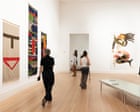
The Gropius Bau exhibition brings together around 150 of these raw, urgent works. Standing in front of them, the distance between the past and the present begins to dissolve. We live in a world where expression feels incredibly cheap—we post, we stream, we comment without a second thought. But Stötzer’s life asks us a fundamental question: What would you be willing to say if it cost you everything?
Consider the sheer weight of that choice. It is the realization that a life lived in comfortable silence is its own kind of prison. Gabriele Stötzer chose the clicked door of Hoheneck over the quiet safety of submission, and in doing so, she bought herself a terrifying, beautiful, and absolute freedom.