The Escalation Risk in Regional Epidemics
The containment of localized viral outbreaks often breaks down at the intersection of border controls and healthcare infrastructure. When an outbreak of Ebola virus disease occurs, the immediate clinical priority is isolation and treatment. Yet the structural challenge that determines whether an outbreak remains localized or becomes an international health emergency rests on early detection, rapid response logistics, and cross-border coordination.
Failure to secure border zones during the initial weeks of an outbreak allows high-pathogenicity viruses to migrate from rural epicenters into high-density urban transit hubs. Once a pathogen enters an international travel network, the cost and complexity of containment increase exponentially. Stopping Ebola from evolving into a regional crisis requires moving beyond reactive emergency funding toward permanent epidemiological surveillance frameworks in vulnerable border corridors.
[Image of Ebola virus structure]
Why Border Surveillance Systematically Fails
Containment strategies routinely rely on rigid geographic boundaries that do not reflect actual human movement. Border communities across Central and West Africa participate in fluid informal economies. Daily trade, family networks, and agricultural work mean thousands of individuals cross porous frontiers without passing through official checkpoints.
Standard screening protocols at established border posts rely on thermal imaging and symptom checklists. These methods contain inherent flaws.
- Incubation Period Gaps: The incubation period for Ebola ranges from 2 to 21 days. An infected individual can pass through multiple checkpoints while asymptomatic, showing no fever, and testing negative on quick physical assessments.
- Resource Shortages: Remote monitoring stations frequently lack reliable electricity, basic personal protective equipment, and rapid diagnostic test kits.
- Distrust and Avoidance: High-intensity military or police presence at official crossings often drives populations toward unmonitored trails, rendering contact tracing nearly impossible.
When public health strategies rely strictly on formal border crossings, they track only a fraction of regional traffic. Effective surveillance requires mobile community-led monitoring teams that operate within informal trade routes rather than static checkpoints.
The Infrastructure Bottleneck in Local Health Systems
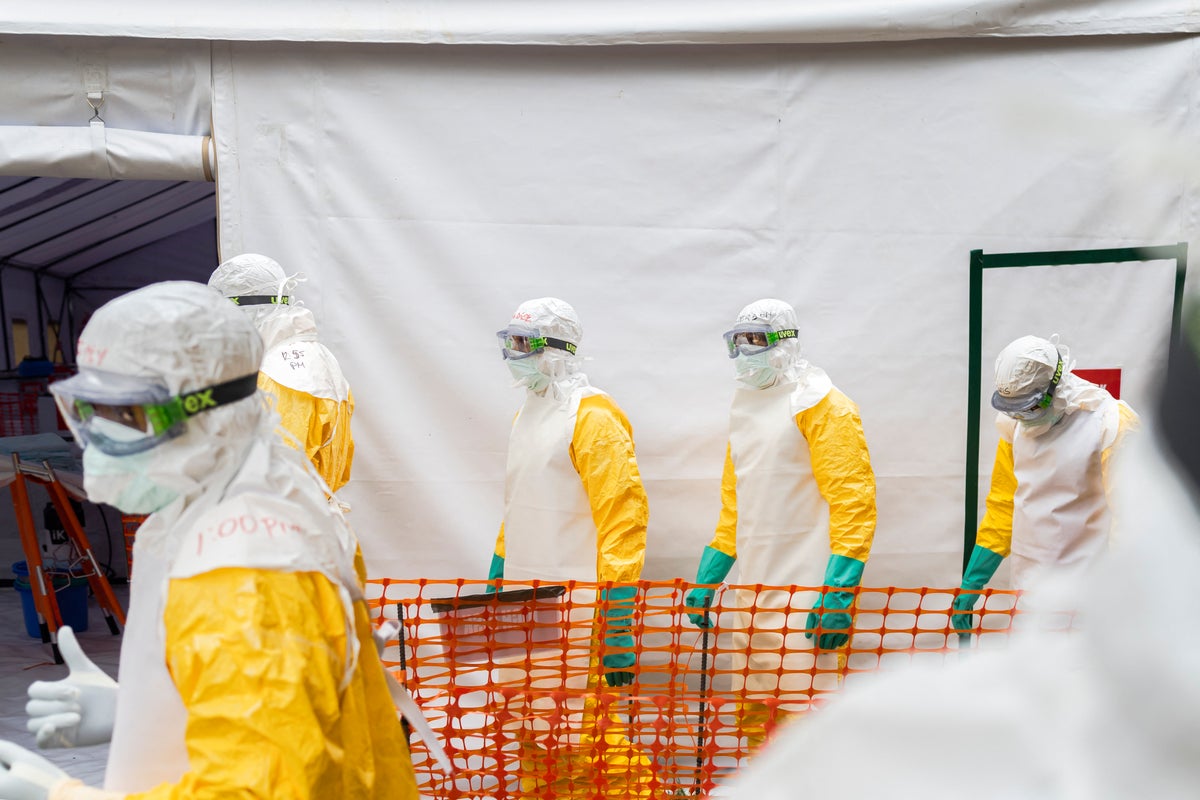
Early intervention hinges on the speed of diagnosis. In rural districts where Ebola outbreaks historically originate, local clinics lack the biosafety equipment required to process suspected viral hemorrhagic fever samples safely.
+-----------------------------------------------------------------------+
|                       Diagnostic Delay Timeline                       |
+-----------------------------------------------------------------------+
| [Day 1] Symptom Onset                                                 |
|   └─ Patient presents at rural clinic without isolation facilities    |
|                                                                       |
| [Day 3] Sample Transport                                              |
|   └─ Unregulated transport of unverified biohazard samples            |
|                                                                       |
| [Day 5] Central Lab Arrival                                           |
|   └─ Real-time PCR testing begins at national reference center        |
|                                                                       |
| [Day 7] Delayed Confirmation                                          |
|   └─ Outbreak confirmed; high contact exposure has already occurred   |
+-----------------------------------------------------------------------+
This structural delay creates a critical window of vulnerability. During the days required to transport samples to national reference laboratories, local healthcare workers treat patients without adequate protection, turning medical facilities into amplification points for the virus.
To prevent regional spillover, international health organizations must prioritize decentralized diagnostic technology. Field-deployable polymerase chain reaction (PCR) units capable of running on solar power drastically reduce confirmation times from days to hours.
The Economics of Preparedness vs Emergency Response
International financing for epidemic management remains fundamentally reactive. Millions of dollars flood into affected regions once an outbreak dominates international news cycles, but routine funding for foundational health systems remains chronically depressed.
| Funding Category | Reactive Mobilization | Proactive Infrastructure |
|---|---|---|
| Primary Objective | Emergency containment and emergency medical deployment | Continuous disease surveillance and health worker safety |
| Cost Efficiency | Extremely low due to panic buying and emergency logistics | High long-term return through sustained local capacity |
| Community Trust | Low; external emergency teams often face local hostility | High; managed by established, local healthcare personnel |
| Infrastructure Impact | Temporary field hospitals dismantled after outbreak ends | Permanent diagnostic, isolation, and supply chain networks |
Redirecting capital into permanent regional disease control centers creates a resilient buffer. Emergency airlifts of equipment cannot substitute for trained local epidemiologists who understand regional dialects, cultural burial practices, and local geography.
Rebuilding Containment Protocols
A containment framework capable of stopping international transmission relies on three distinct operational pillars.
First, ring vaccination protocols must be pre-funded and pre-approved by regional regulatory bodies. Deploying vaccines immediately to the contacts of confirmed cases, as well as contacts of those contacts, creates a ring of immunity that halts viral transmission chains.
Second, cross-border health agreements must allow real-time data sharing between neighboring ministries of health. Epidemiological data cannot be held up by bureaucratic clearance when a pathogen is actively moving across a river border.
Third, community engagement must replace top-down enforcement. Resistance to public health interventions drops significantly when local leaders, traditional healers, and civic groups lead the educational outreach regarding safe isolation and burial practices.
Without a fundamental shift from reactive crisis management to sustained border-level surveillance, regional outbreaks will continue to threaten global health security.