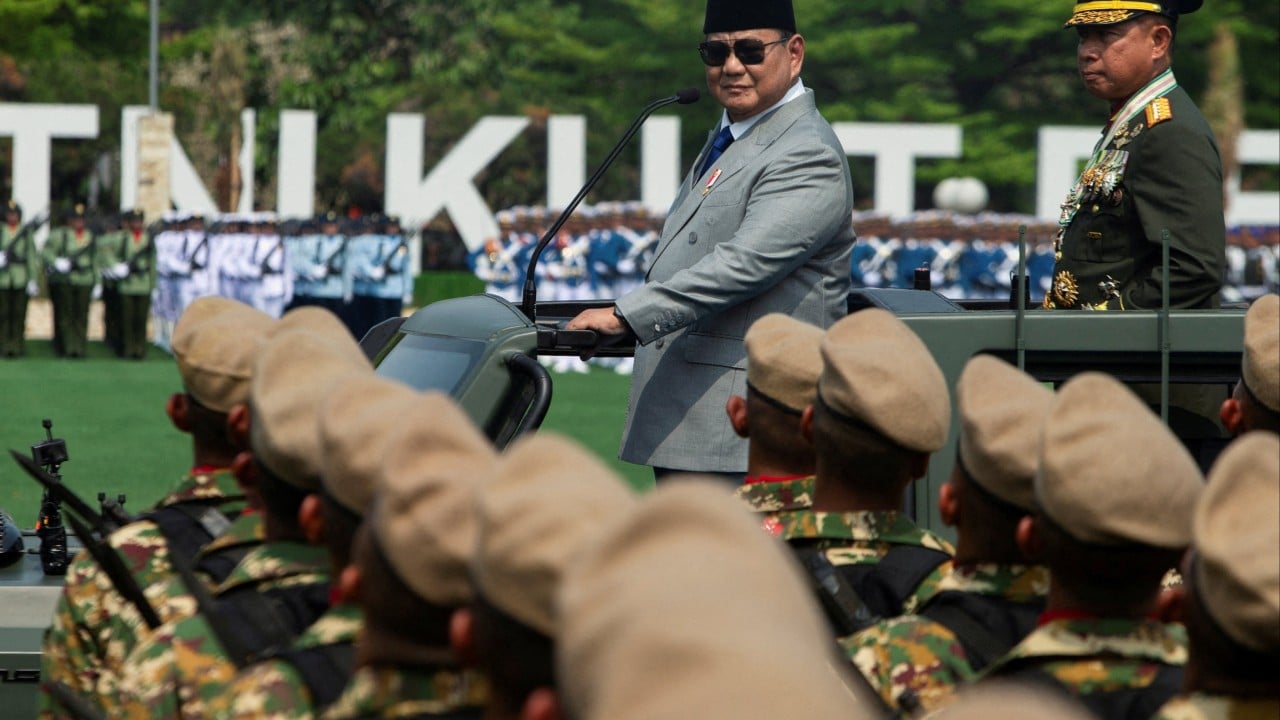
Mainstream political analysts love a simple story. They see President Prabowo Subianto appointing former allies of Joko Widodo as special advisers while his polling numbers dip, and they immediately yell "panic."
They are completely wrong. If you liked this piece, you should check out: this related article.
If you believe Prabowo is scrambling to borrow popularity from his predecessor to stop a bleeding approval rating, you do not understand how power actually operates in Jakarta. You are falling for the oldest optical illusion in Southeast Asian politics.
Let us dismantle the lazy consensus. The standard media narrative claims that Prabowo’s administration is stalling, public patience is wearing thin over economic headwinds, and the former general is running back to Jokowi’s inner circle for a life raft. That reads nicely in a shallow morning newsletter. In reality, bringing a rival's loyalists inside your tent is not an act of desperation. It is the classic opening move of a hostile takeover. For another perspective on this story, refer to the latest coverage from The Washington Post.
The Myth of the Life Raft
To understand why the panic narrative fails, you have to look at the mechanics of Indonesian coalition politics. Jakarta does not run on ideological parties. It runs on bagi-bagi kekuasaan—the calculated distribution of patronage, state-owned enterprise boards, and advisory seats to neutralize threats before they organize against you.
I have watched political operatives across the archipelago burn millions of dollars trying to fight entrenched networks from the outside. It never works. When a new president takes office in Indonesia, the outgoing president’s machine does not just evaporate. It sits in the ministries, the regional governments, and the business conglomerates, quietly waiting to see if the new boss will feed it or starve it.
If you starve them, they sabotage your policy rollout from within the bureaucracy. If you bring their top lieutenants into the palace as "advisers," you achieve three things overnight:
- You sever their direct line to the old boss. A special adviser reports to the sitting president, collects a state salary, and relies on the current palace for relevance. Their loyalty shifts from ideological nostalgia to immediate survival.
- You turn rivals into human shields. If economic policies falter or flagship programs hit logistical walls, the blame no longer falls solely on Prabowo’s inner circle. Jokowi’s former heavyweights now own a piece of the execution.
- You map the opponent's network from the inside. You cannot dismantle a shadow cabinet you cannot see. Putting them on the payroll brings them into the light.
Why Polling Dips Do Not Scares Generals
Western commentators obsess over approval ratings as if Jakarta operates on a two-year congressional election cycle. It does not. Prabowo has a five-year mandate. A dip in approval ratings during the early-to-mid stretch of a presidency is standard friction when an administration transitions from populist campaign promises to the brutal math of fiscal reality.
Funding massive social programs while maintaining Indonesia’s strict statutory budget deficit cap of 3 percent of GDP is a mathematical nightmare. Taxes have to rise, subsidies have to be trimmed, or state spending has to be ruthlessly reallocated. Every single one of those choices hurts a vocal constituency and drags down headline approval numbers.
Prabowo knows this. He spent decades studying power dynamics, both in the military and through multiple presidential campaigns. A temporary drop in survey numbers from polling outfits like Indikator Politik or Litbang Kompas is noise. What actually threatens an Indonesian president is not a 5-point polling slide; it is an elite fracture in Jakarta.
When elite factions splinter, legislation dies in the DPR (House of Representatives), cabinet ministers leak against each other, and regional governors drag their feet on infrastructure permits. By absorbing Jokowi’s trusted operators—figures who know where every bureaucratic lever is buried—Prabowo is buying elite peace during the exact window when unpopular fiscal adjustments have to happen.
The Nuance Everyone Missed About "Adviser" Roles
Pay close attention to the titles being handed out. Special adviser. Presidential envoy. Institutional consultant.
In corporate and political governance, there is a massive difference between a line role and a staff role.
- Line roles control budgets, hire and fire civil servants, and sign procurement contracts. Think Finance Minister, State-Owned Enterprises Minister, or Defense Minister.
- Staff roles write memos, attend ceremonial meetings, and offer recommendations that the principal is entirely free to ignore.
Look at who holds the real purse strings and security apparatus in Prabowo’s government. The core budget controllers, the military brass, and the strategic resource ministries are locked down by Prabowo’s own loyalists and party apparatus. Handing out prestigious advisory titles to Jokowi’s former circle gives them status, protocol cars, and media visibility without handing them the keys to the treasury.
Political scientists like Marcus Mietzner and Edward Aspinall have spent years documenting how Indonesian presidents manage sprawling "rainbow coalitions" (koalisi gemuk). The playbook is consistent: co-optation is always cheaper than confrontation. By giving former Jokowi aides a seat at the table, Prabowo denies any emerging opposition movement the experienced technocrats it would need to mount a credible challenge.
Dismantling the Wrong Questions
If you search for news on this topic, you see the same tired questions dominating the conversation. Let us strip away the flawed premises behind them.
Is Prabowo losing control of his own administration?
No. A leader losing control fires his own loyalists and hands over budget-controlling ministries to rivals under duress. A leader consolidating control expands the advisory perimeter to absorb floating political talent before it can coalesce around a competing power center.
Does Jokowi still run Indonesia from behind the curtain?
This is the favorite conspiracy theory of Jakarta coffee shops, and it ignores basic human nature. Power in Indonesia is fiercely transactional and fiercely centered on the man holding the presidential seal. Jokowi’s influence naturally decays every single month he is out of office. His former allies know this better than anyone. They are not joining Prabowo’s advisory team to serve Jokowi; they are joining because they realize the train has left the station and they do not want to be left standing on the platform in Solo.
Will bringing back old advisers fix Prabowo’s falling approval rating?
It will not move the needle with everyday voters by a single percentage point, and it is not meant to. Voters care about the price of rice, cooking oil, fuel subsidies, and job creation. They do not care who sits on a presidential advisory council. Anyone analyzing this move through the lens of public relations is looking at the wrong scoreboard.
The Real Risk Nobody Is Talking About
Taking a contrarian stance does not mean pretending the strategy is bulletproof. Co-optation carries a lethal flaw if executed poorly: decision paralysis.
When you pack the palace with competing factions, every major policy directive turns into an internal negotiation. I have seen massive organizations grind to a halt because the leader hired ten brilliant voices who all wanted to steer the ship in different directions. Instead of bold execution, you get watered-down compromises designed to keep everyone in the room happy.
There are three specific dangers Prabowo now faces with this bloated advisory structure:
- Bureaucratic Mixed Signals. When ministers receive conflicting guidance from the president’s core party loyalists and newly appointed presidential advisers, civil servants freeze. In Indonesia’s risk-averse bureaucracy, freezing means budget absorption drops, infrastructure projects stall, and economic growth slows down—which actually does hurt approval ratings.
- Patronage Inflation. Every political faction brought into the fold expects economic oxygen for its networks. If the state budget is already stretched thin by flagship social programs, feeding an expanded circle of advisers and their business backers increases the temptation to lean on state-owned enterprises or issue market-distorting regulations.
- Erosion of Brand Identity. Prabowo campaigned on decisive, top-down leadership and a break from bureaucratic inertia. If his administration starts looking like a carbon copy of the previous decade’s consensus politics, his core base—the voters who specifically wanted a stronger, faster-moving executive—will grow cynical.
How to Read Jakarta Like an Insider
If you are an investor, a policy analyst, or just someone trying to understand where Southeast Asia’s largest economy is heading, stop reading headlines about polling dips and palace intrigue. Watch the actual indicators of power consolidation:
- Follow the procurement budgets, not the titles. Check which ministries get budget increases in the revised state budget (APBN-P) and who controls the disbursement committees.
- Watch the State-Owned Enterprises (BUMN). Real political rewards in Indonesia are paid out through commissioner seats on state banks, energy giants, and mining holding companies. Track who gets appointed to those boards over the next six months.
- Monitor the legislative bottlenecks. Watch how fast controversial bills move through the DPR. If Prabowo’s legislative priorities pass without noisy committee delays, the co-optation strategy is working.
Stop viewing Indonesian politics as a soap opera of fragile egos and panicked reactions. Prabowo Subianto spent twenty years fighting to sit in the Merdeka Palace. He did not invite his predecessor’s generals into his tent because he was losing the war. He invited them inside so he could lock the doors from the outside.