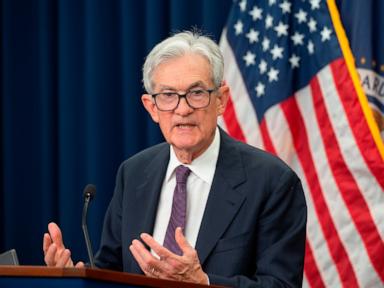
The legacy of a Federal Reserve chair is ultimately measured by a two-variable cost function: the preservation of price stability and the maintenance of institutional autonomy under political pressure. For Jerome Powell, these two dimensions do not exist in isolation; they are deeply coupled. The systemic misjudgment of inflation dynamics between late 2020 and late 2021 directly exposed the central bank to heightened executive branch friction, altering the trajectory of US monetary policy. To evaluate this tenure requires moving past surface-level political drama and dissecting the structural mechanisms of the Fed's monetary framework, the data-dependency bottlenecks that delayed the rate-hiking cycle, and the institutional design choices that shielded the central bank from direct executive interference.
The Structural Mechanics of the Transitory Inflation Failure
The defining macroeconomic error of the early 2020s was the Federal Reserve’s mischaracterization of inflation as "transitory." This was not merely a forecasting glitch; it was the logical output of a newly adopted monetary architecture: the Flexible Average Inflation Targeting (FAIT) framework introduced in August 2020. For an alternative look, check out: this related article.
Under the previous framework, the Federal Reserve acted preemptively. When the unemployment rate fell near the estimated natural rate of unemployment ($u^*$), the Fed would begin tightening policy to head off anticipated inflation, relying heavily on the Phillips Curve. The FAIT framework inverted this logic. It required actual, realized evidence of inflation hitting and exceeding 2% before initiating a tightening cycle, intentionally seeking to run the economy hot to achieve an inclusive labor market recovery.
This structural shift created a severe lag in policy response due to three distinct analytical blind spots: Further reporting on the subject has been shared by USA Today.
- The Elasticity Miscalculation: The Fed’s models assumed that pandemic-era supply chain disruptions were highly elastic and would self-correct rapidly. In reality, supply chains proved highly inelastic, transforming localized bottlenecks into generalized price increases.
- The Base-Effect Distortion: Early inflation prints in Q2 2021 were dismissed as statistical anomalies driven by low 2020 baseline numbers. This caused policymakers to discount consecutive month-over-month increases that signaled a sustained upward trend.
- Fiscal-Monetary Mismatch: The Fed evaluated monetary aggregates through traditional transmission channels, underestimating the velocity of money when combined with unprecedented, direct-to-consumer fiscal stimulus packages passed throughout 2020 and 2021.
By treating a systemic shift in the aggregate supply and demand equilibrium as a temporary friction, the Federal Reserve remained at the zero-lower bound for interest rates while CPI accelerated past 5% in the summer of 2021, eventually peaking above 9% in June 2022. The cost of this delayed reaction function was a compressed, aggressive tightening cycle that forced the Federal Open Market Committee (FOMC) to execute four consecutive 75-basis-point rate hikes. This rapid escalation triggered severe balance sheet stress across the regional banking sector, culminating in the banking stresses of early 2023.
Executive Friction and the Institutional Defenses of Central Bank Autonomy
Concurrently, the Powell tenure was defined by a historic level of public friction with the executive branch, specifically during the Trump administration. This friction offers a pristine case study in institutional resilience under existential pressure. The tension was not merely personal or rhetorical; it represented a fundamental clash between short-term political business cycles and long-term monetary stability.
Politicians operating on short-term horizons naturally prefer a low interest rate environment to maximize nominal GDP growth and employment ahead of election cycles. The Federal Reserve, conversely, must optimize for long-term price stability, which often requires inducing deliberate economic slowdowns to anchor long-run inflation expectations. When the FOMC executed a series of gradual rate increases throughout 2017 and 2018 to normalize policy after a decade of quantitative easing, it triggered aggressive public condemnation from the White House.
The executive branch attempted to leverage several friction points to influence monetary policy:
- Public Rhetorical Pressure: Utilizing public platforms to criticize rate decisions, explicitly demanding interest rate cuts and the resumption of quantitative easing.
- Personnel Weaponization: Nominating unorthodox ideological figures to the Board of Governors to shift the internal consensus of the FOMC, though these efforts largely stalled during the Senate confirmation process.
- Legal and Structural Threats: Floating the legal possibility of demoting or removing the Federal Reserve Chair from office.
The survival of the Fed’s independent policy trajectory during this period depended on specific structural design elements established by the Federal Reserve Act of 1913. First, the staggered 14-year terms of the Board of Governors insulate members from immediate political retribution. Second, the decentralized composition of the FOMC—which includes five rotating regional Federal Reserve Bank presidents who are selected by local boards of directors rather than political appointees—prevents any single executive administration from capturing the committee's voting majority.
Powell’s strategy relied on a rigid adherence to institutional formalism. By explicitly refusing to comment on political statements during press conferences and anchoring every policy explanation in statutory mandates (maximum employment and price stability), the Fed maintained its credibility with financial markets. This market credibility is highly measurable: during the peak of the executive-monetary conflict, long-term inflation break-even rates remained anchored, proving that market participants believed the Fed would continue to act as an independent inflation fighter regardless of White House rhetoric.
The Operational Trade-Offs of the Volcker vs. Powell Doctrines
To evaluate the true efficacy of Powell's monetary stewardship, it must be benchmarked against the historical standard of monetary hawkishness: the Volcker Doctrine. While Paul Volcker subdued the stagflation of the late 1970s through brute-force monetary tightening—pushing the federal funds rate past 20% and accepting a severe double-dip recession—the Powell era required navigating a far more complex financial ecosystem.
The contemporary macro-financial environment contains structural vulnerabilities that did not exist in 1980. The most critical constraint is the global leverage matrix. Total US public debt-to-GDP was roughly 40% when Volcker took office; during Powell’s tenure, it exceeded 120%. This massive fiscal burden fundamentally changes the transmission of monetary policy, creating a feedback loop where high interest rates significantly increase the federal government’s net interest costs, compounding fiscal deficits.
[Federal Funds Rate Hikes] ──> [Increased Net Interest Costs on Public Debt] ──> [Widening Fiscal Deficits] ──> [Inflationary Structural Pressures]
Furthermore, the modern financial system is heavily dependent on non-bank financial intermediation (shadow banking). Volcker dealt primarily with a commercial banking sector governed by traditional deposit and loan mechanics. Powell had to manage an environment where rapid interest rate spikes could trigger systemic runs in vulnerable parts of the financial plumbing, such as money market funds, open-ended bond funds, and regional banks holding massive unrealized losses on fixed-rate securities.
Therefore, the Powell tightening cycle had to employ a dual-track strategy: aggressive interest rate hikes via the front-end of the curve, paired with surgical liquidity interventions—such as the Bank Term Funding Program (BTFP) in 2023—to ring-fence financial instability. This approach successfully brought inflation down from its 9% peak toward the 2% target without triggering mass unemployment, a feat long considered unachievable by traditional economic models. However, this success came at the expense of permanent structural damage to the housing market, where mortgage rate lock-in effects severely restricted supply and distorted affordability metrics for a generation.
The Final Equilibrium Capital Reallocation and Policy Calibration
The net evaluation of Jerome Powell’s stewardship yields a deeply nuanced ledger. The institutional cost of the 2021 "transitory" misjudgment was immense, damaging the central bank's forecasting credibility and forcing an unnecessarily violent economic adjustment. Yet, the subsequent execution of monetary tightening demonstrated a rare capacity to recalibrate policy rapidly under immense data volatility, preserving the anchor of long-term inflation expectations while navigating severe political and financial crosscurrents.
For institutional allocators, corporate treasurers, and macroeconomic strategists, the post-Powell monetary regime demands a permanent restructuring of risk models. The era of sustained ultra-low interest rates and predictable, forward-guided monetary liquidity has concluded. Moving forward, corporate capital structures must be optimized for higher capital costs and structural volatility in terminal interest rates.
Firms should systematically shift away from heavy reliance on short-term floating-rate debt instruments, locking in long-term fixed liabilities during periods of temporary yield curve compression. Furthermore, treasury strategies must factor in a structurally higher baseline for the term premium, meaning the cost of long-term borrowing will remain elevated relative to short-term rates. The primary strategic objective must be resilience against sudden liquidity contractions, as the Federal Reserve has demonstrated that it will prioritize its price-stability mandate over asset-price insulation whenever the two come into direct conflict.