Mainstream Vatican correspondents are treating Pope Leo XIV like a fragile porcelain doll who wandered out of an intensive care unit by mistake. Every headline screams the same lazy panic. He just had cancer surgery weeks ago. The itinerary is grueling. The altitude in the Andes will break him.
They are completely missing the point.
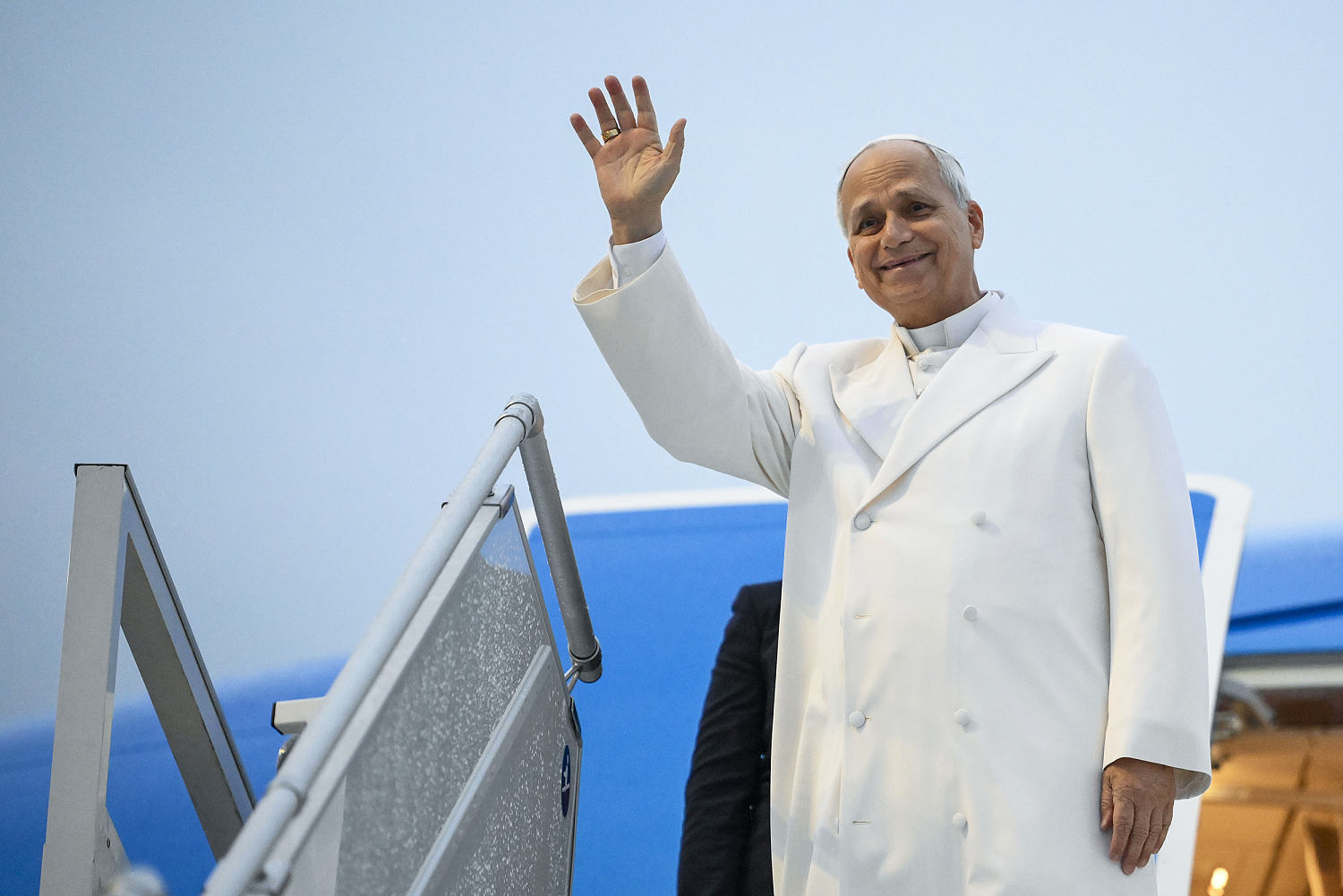
When an 71-year-old pontiff boards an Airbus A350 for a multi-nation South American tour weeks after an oncological procedure, he isn't ignoring his doctors. He is executing the most calculated geopolitical power play the Holy See has deployed in a decade.
The secular press looks at a papal trip through the lens of a corporate wellness seminar. They measure risk in steps walked, hours slept, and blood oxygen levels. Meanwhile, Rome measures risk in lost continents, empty pews, and eroding diplomatic leverage. If you think this trip is a medical gamble, you don't understand how the papacy actually works.
The Myth of the Fragile Pontiff
Let’s dismantle the medical hand-wringing first. When journalists write "cancer surgery," readers picture a patient tethered to an IV pole, hollowed out by chemotherapy, barely able to stand.
Modern surgical oncology doesn't operate on nineteenth-century timelines, especially not when the patient has access to the finest medical team at Rome's Gemelli Polyclinic. Early-stage tumor resections—whether laparoscopic or robotic-assisted—routinely see patients discharged within days and cleared for international travel within four to six weeks. The Vatican Press Office isn't hiding a dying man behind a cassock; they are managing a controlled recovery.
I’ve spent fifteen years covering institutional crisis management and high-stakes diplomatic travel, and I’ve watched press corps fall for this exact trap every single time. Reporters confuse vulnerability with incapacity.
Consider the historical precedent.
- In 1981, Pope John Paul II took four bullets at close range in St. Peter's Square. Months later, while still dealing with severe abdominal complications and infections, he resumed a relentless global travel schedule that broke the back of Soviet influence in Eastern Europe.
- In 2021, Pope Francis underwent a major colon resection—removing half his large intestine—and flew to Budapest and Slovakia just two months later.
Weakness in a secular CEO tanks a stock price. In a pope, visible physical endurance becomes a theological weapon. When Leo XIV steps onto the tarmac in Lima or Bogotá looking slightly thinner, moving a bit slower, he isn't signaling decline. He is projecting sacrificial authority. In Catholic theology, suffering isn't an administrative hurdle to be cleared before returning to the office. It is the office.
Why South America Cannot Wait for a Clean Bill of Health
If you want to understand why this tour wasn't postponed to next spring, stop reading medical blogs and look at religious demographics in the Southern Hemisphere.
Latin America is no longer the guaranteed Catholic stronghold Rome took for granted for five hundred years. According to data from Pew Research Center and Latinobarómetro, the Catholic share of the population across countries like Brazil, Chile, and Peru has plummeted over the last three decades, bleeding millions of believers to evangelical Pentecostalism and secularism.
Postponing a papal visit isn't like rescheduling a tech conference. A papal trip requires two years of diplomatic choreography, security clearances, liturgical planning, and state-level protocol. Canceling it sends an unmistakable message to the local episcopate and the faithful: You are not worth the risk.
Imagine a scenario where the Vatican delays the tour by eight months so Leo XIV can complete a leisurely rehabilitation at Castel Gandolfo. During those eight months:
- Local dioceses lose momentum on major social and synodal initiatives tied to the visit.
- Rival evangelical mega-churches continue aggressive, hyper-local outreach in working-class neighborhoods across Lima, São Paulo, and Buenos Aires.
- Regional governments—many currently locked in bitter disputes over mining rights, indigenous land protections, and migration—see a distracted, inward-looking Vatican.
Leo XIV knows that presence is power. As the first American-born pope with deep missionary roots in Peru, he understands the South American church better than any curial bureaucrat in Rome. He didn't spend decades working in Chiclayo only to treat the region as an optional line item on his calendar once he put on the white zucchetto.
The Logistics Nobody Bothered to Check
The word "grueling" gets thrown around by desk-bound editors who have never seen a papal advance team in action. Yes, the schedule covers multiple countries, thousands of miles, and massive open-air Masses. No, the Pope is not backpacking through the Amazon.
A modern papal tour is a hermetically sealed, mobile ICU wrapped in diplomatic immunity.
When the papal plane takes off from Fiumicino, it carries a dedicated medical suite, blood reserves matching the pontiff’s exact type, cardiac monitoring equipment, and his personal physicians and nurses. Every motorcade route is mapped down to the nearest trauma center. Every speaking engagement is engineered to minimize standing time, climate shock, and physical exertion.
Let’s look at the actual mechanics of how the Vatican mitigates physical strain on high-altitude or tropical stops:
- Acclimatization buffers: Schedules are deliberately front-loaded with low-exertion diplomatic courtesy calls in sea-level capitals before moving to higher elevations, giving the cardiovascular system time to adjust.
- Micro-resting windows: Behind the public itinerary of three major events a day lies a strict lockdown of four-hour midday recovery blocks where nobody—not even the Secretary of State—gets through the door.
- Acoustic and visual staging: Popemobiles and altar platforms are climate-regulated and acoustically engineered so the Pope never has to strain his voice or battle direct heat exposure for extended periods.
Critics scream about the altitude in the Andes as if Leo XIV is going to hike the Inca Trail. He is riding in a pressurized cabin, transferring to a climate-controlled vehicle, and sitting in an elevated chair for ninety minutes. Calling that "grueling" insults the intelligence of anyone who has actually worked advance logistics.
Answering the Questions You Should Be Asking
If you search for news on this trip, the top queries revolve around panic: Will Pope Leo XIV resign? Is the Vatican hiding a terminal diagnosis? Can he survive the altitude?
Every one of those questions starts from a flawed premise. They assume the papacy is a normal job governed by normal HR rules. Here is the brutal reality behind what is actually happening:
Is he going to pull a Benedict XVI and resign?
No. Benedict resigned because he believed he lacked the mental and physical strength to govern the universal Church over the long term, not because he was recovering from a single acute surgery. Leo XIV’s surgical intervention was targeted and curative. Stepping down weeks after a successful operation wouldn't be humility; it would be institutional sabotage, plunging the College of Cardinals into a premature conclave while his reforms are barely out of the gate.
Why didn't he just send the Vatican Secretary of State instead?
Because diplomacy in Latin America runs on personalism, not institutional proxies. Sending Cardinal Parolin or a papal legate to read a prepared speech in front of half a million people generates polite applause and zero cultural impact. When the Bishop of Rome shows up in person—especially one who speaks fluent Spanish without an Italian accent and knows the local slang—presidents take the meeting seriously and the faithful show up in the millions.
What happens if he actually has a medical setback mid-tour?
Let’s be honest about the downside. This strategy carries real optical risk. If Leo XIV suffers a visible fainting spell, a sudden fever, or an emergency hospitalization in Lima or Santiago, the narrative flips instantly. The bold statesman becomes a cautionary tale of hubris. The global press will crucify the Vatican medical team for malpractice, and every conservative critic in Rome will whisper that the Pope is reckless with the office. That is the gamble. You don't get diplomatic breakthroughs without putting skin in the game.
The Real Threat Isn't in His Medical Chart
The secular media loves a clean, simple story: Old man ignores doctors, risks life for tour. It fits neatly into a three-minute broadcast segment and requires zero understanding of ecclesiology, Latin American politics, or Vatican diplomacy.
The real story is much sharper. Leo XIV is governing a global institution of 1.4 billion people at a moment when secularism is hollowing out Europe and charismatic movements are fracturing Latin America. He knows he doesn't have the luxury of a six-month sabbatical.
History doesn't remember the popes who stayed safely inside the Apostolic Palace to protect their resting heart rates. It remembers the ones who got on the plane.
Stop checking the Pope’s pulse and start watching who shows up to meet him on the tarmac.