The cancellation of headlining talent from live events is typically driven by acute operational, health, or contractual failures. However, the rapid attrition of over 75 percent of the announced musical lineup for the Freedom 250 "Great American State Fair" concert series within 48 hours of its public release reveals a distinct structural mechanism: the sudden crystallization of political risk premium.
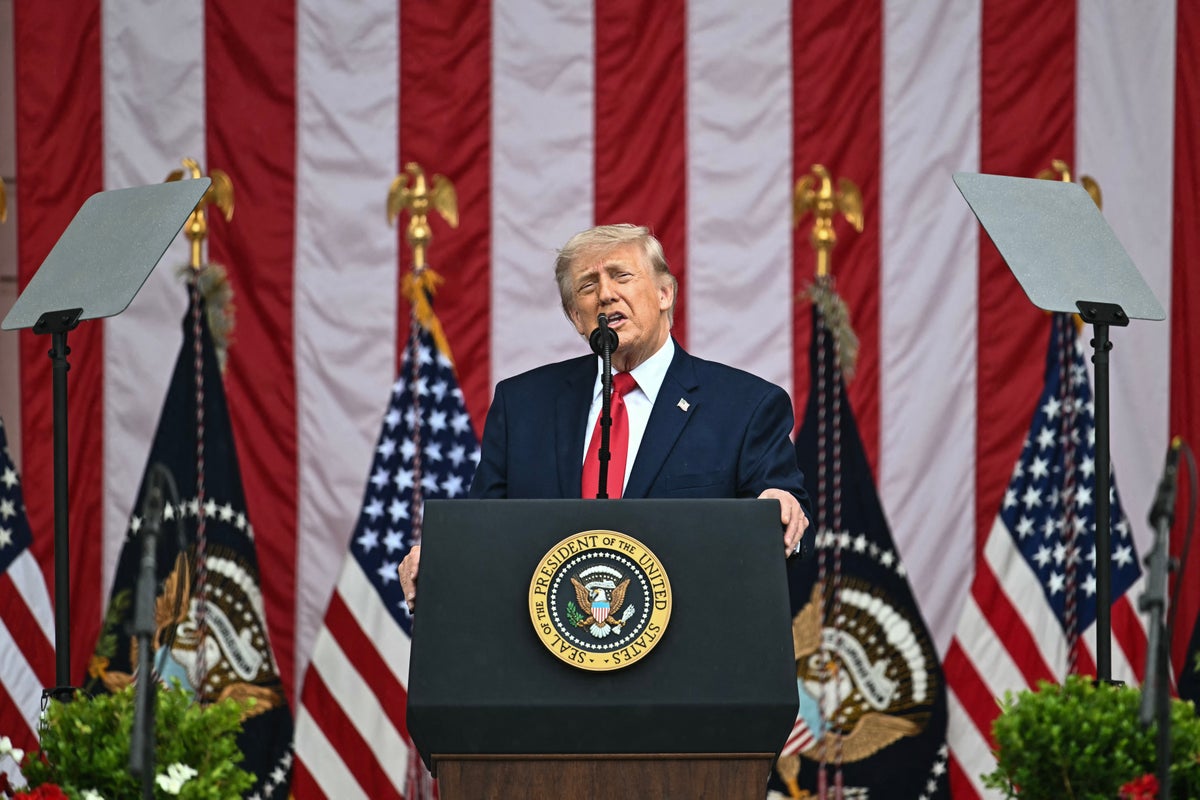
When an event organized by a public-private partnership heavily identified with a highly polarizing political figure is marketed to talent as a nonpartisan national celebration, a structural information asymmetry occurs. Once the public market corrects this asymmetry through immediate consumer and media backlash, the talent faces an uncompensated escalation in brand risk. The resulting exodus of artists like Bret Michaels, Martina McBride, and the Commodores, followed by Donald Trump’s pivot to substitute himself as the primary attraction via a political rally format, illustrates a predictable economic and strategic calculation in contemporary entertainment asset management.
The Mechanics of Brand Equities and Information Asymmetry
Live entertainment assets operate on a foundation of brand equity that relies on broad market appeal to maximize lifetime value. For mainstream legacy artists—spanning country music icons to late-20th-century pop and funk acts—their core economic engine is built upon non-exclusive, multi-demographic consumer goodwill.
The initial booking process for the Freedom 250 concert series relied on framing the event under its 501(c)(3) nonpartisan status, designed to commemorate the United States semiquincentennial on the National Mall. This framing created an information asymmetry between the event organizers and the talent’s management agencies. The talent evaluated the booking based on standard commercial metrics:
- Guaranteed performance fees from public-private funding pools.
- High-visibility exposure on a historic national stage.
- Alignment with low-risk, universally positive patriotic sentiment.
The bottleneck emerged when the public rollout tied the event explicitly to the political brand of Donald Trump. The inclusion of highly politicized parallel events—such as administration-backed initiatives for commemorative currency and specialized passports—altered the consumer perception of the concert series. The event was instantly re-categorized by the market from a neutral state-sponsored celebration to an active political endorsement.
The Cost Function of Artist Attrition
For a commercial artist, the decision to perform or withdraw from an event after a contract is executed can be modeled through a strict risk-reward cost function. The utility ($U$) of the performance to the artist can be expressed as:
$$U = R_{f} + E_{b} - (C_{o} + P_{r})$$
Where:
- $R_{f}$ is the financial revenue from the appearance fee.
- $E_{b}$ is the positive brand exposure and audience expansion.
- $C_{o}$ is the direct operational cost of production and travel.
- $P_{r}$ is the political risk premium, representing potential long-term revenue loss due to consumer boycotts, canceled future bookings, and internal team attrition.
When the market recognized the event as politically charged, $P_{r}$ escalated exponentially, rapidly outstripping the fixed financial upside ($R_{f} + E_{b}$).
Statements from the departing talent validate this mathematical shift. Bret Michaels cited explicit threats to the safety of his crew and fans, alongside an evolution into "something much more divisive" than the original nonpolitical pitch. Martina McBride noted that the opportunity presented as nonpartisan turned out to be misleading. Freedom Williams of C+C Music Factory and representatives for the Commodores similarly indicated they were blindsided by the immediate negative feedback from their core networks.
The three primary variables driving this asymmetric risk distribution explain why certain artists fled while others remained:
1. Future Enterprise Value Vulnerability
Artists like McBride and Michaels maintain active touring operations dependent on diverse, multi-quadrant corporate bookings, amphitheater packages, and mainstream media partnerships. The downside risk of a sustained consumer boycott presents a multi-million-dollar threat to their enterprise value. Conversely, legacy acts with lower current touring velocity or those whose brands are built on counter-cultural or hyper-specific niches face a different risk profile. Vanilla Ice and Flo Rida, who opted to remain on the bill, operate on brand models less sensitive to conventional political polarization, prioritizing immediate liquidity and transactional performance value over long-term institutional goodwill.
2. The Multi-Tiered Stakeholder Cost
An artist is not a solitary economic actor but the head of a complex supply chain including managers, booking agents, publicists, backing musicians, and technical road crews. When an event becomes a lightning rod for political discourse, the internal labor costs rise. Labor friction, crew retention issues, and the operational burden of heightened security measures introduce logistical liabilities that standard performance contracts are rarely structured to indemnify.
3. The Threat of Platform De-platforming
In a highly consolidated live entertainment market dominated by a few major promoters and ticketing platforms, alignment with an intensely polarizing political brand carries the tail-risk of subtle institutional marginalization. If major venue networks or streaming algorithms perceive an artist as a localized brand liability, the long-term distribution of their product faces friction.
Strategic Substitution and the Monopolistic Attraction Model
The strategic response to this systemic talent defection offers a textbook study in brand re-anchoring. Rather than attempting to stabilize the collapsing festival lineup with costly, short-notice musical substitutions—which would face the same high political risk premium—the organization pivoted toward a vertical integration strategy centered on a single, zero-cost asset: Donald Trump himself.
By mocking the departing artists as having "the yips" (a psychological sports term denoting a sudden, inexplicable loss of basic motor skills) and declaring himself the "Number One Attraction anywhere in the World," Trump flipped the narrative from an operational failure to an intentional strategy. This structural pivot replaces a diversified commercial asset (a multi-genre music festival) with a monolithic, highly optimized political asset (a campaign-style rally).
From an audience acquisition standpoint, this substitution relies on a distinct economic framework:
[Traditional Concert Lineup] -> Depends on diverse fanbases -> High churn under political pressure
[Politicized Substitution]  -> Depends on core brand loyalty -> Zero churn under political pressure
A multi-artist concert series requires a broad coalition of casual consumers to fill a space as massive as the National Mall over a multi-week period. The attrition of talent creates structural voids in the schedule, destroying the event's cross-demographic appeal.
By substituting the musical lineup with a singular political address, the event organizers shed the requirement for cross-demographic appeal. The target demographic narrows from the general public to highly committed brand loyalists. For this specific audience segment, the utility of a political speech exceeds the utility of a performance by legacy pop or country acts. Trump's self-comparison to "Elvis in his prime" operating "without a guitar" reflects an understanding of his personal brand as an independent entertainment monopoly capable of commanding inelastic demand from its core consumer base.
Operational Bottlenecks of the Pivot
While substituting a political rally for a multi-act concert series resolves the talent acquisition crisis, it introduces severe operational and structural friction.
The first limitation involves the pre-existing regulatory and compliance framework. Freedom 250 is established as a public-private partnership operating under a 501(c)(3) nonpartisan tax designation. The explicit purpose of the organization is to execute civic commemorations. Transforming a federally permitted, nonpartisan celebration on the National Mall into a platform for a major political speech creates immediate legal vulnerabilities regarding the misuse of non-profit structures and public resources for partisan campaigning.
The second bottleneck is geographic and infrastructural. A state-fair concept featuring a 110-foot Ferris wheel and multi-state exhibits is designed for extended, passive foot traffic and consumer spending over a 16-day window (June 25 to July 10). A political rally, by contrast, is a high-density, short-duration event designed for explosive synchronous engagement. The physical infrastructure required to support a rolling, multi-week civic exposition does not align cleanly with the security, crowd-control, and logistical footprints required for a massive, singular political demonstration.
The Playbook for Political Brand Insulation
For corporate sponsors, municipal partners, and talent agencies navigating public-private events over the coming production cycles, the Freedom 250 contraction offers clear operational lessons for risk mitigation.
Organizers must implement rigorous disclosure protocols during the talent acquisition phase. Attempting to mask the underlying political alignment of an asset behind a neutral 501(c)(3) wrapper guarantees a market correction the moment the information asymmetry resolves. Talent agencies will increasingly demand "politicization clauses" in performance contracts. These clauses allow for immediate termination with full fee retention if an event’s marketing or parallel programming shifts beyond agreed-upon nonpartisan parameters.
For the organizers of the semiquincentennial celebrations, the path forward requires a complete separation of asset classes. To maintain any semblance of broad market viability, civic expositions must strictly isolate their commercial entertainment assets from partisan brand identities. If an event cannot achieve this isolation, it must bypass mainstream commercial talent entirely, opting from the outset for highly ideological, pre-aligned performers or shifting directly to a pure political rally model. Attempting to bridge the gap between open-market commercial entertainment and partisan political mobilization is an operational strategy bound by the laws of economic risk to collapse under its own gravity.
For an objective assessment of how contemporary political movements utilize live spectacles to bypass traditional media distribution channels, see this analysis of modern political rally architecture and its origins in legacy entertainment staging.