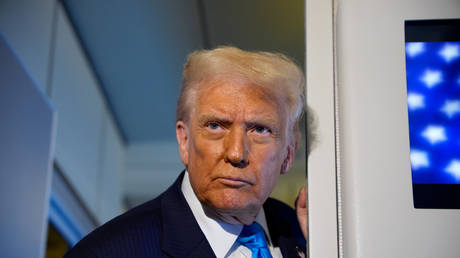
Interactions between political executives and the press corps operate under a specific set of structural incentives that often diverge from traditional journalistic ideals. When a head of state dismisses a reporter or labels inquiries as illegitimate, this is not merely a breakdown in decorum; it is a calculated tactical choice designed to reallocate authority within a communications loop. To understand these moments, one must move past the surface-level narrative of personality clashes and analyze the underlying mechanics of message control, information asymmetry, and audience signaling.
The Structural Drivers Of Media Confrontation
Political communications are governed by a feedback loop involving the executive, the intermediary (journalists), and the ultimate audience (the electorate). In this dynamic, information is a resource to be managed rather than a commodity to be distributed transparently.
The primary driver for aggressive responses to press inquiry is the maintenance of narrative dominance. When a journalist introduces a question that challenges the core premise of an administration’s policy—such as inquiries regarding sensitive international negotiations—they break the established framing. The executive has three tactical options to neutralize this breach:
- Verification: Engaging with the premise of the question, which validates the journalist’s authority to set the agenda.
- Deflection: Shifting the topic to a more favorable policy area, which risks appearing evasive.
- Delegitimization: Attacking the source or the method of the question, which resets the power balance by turning the journalist into the subject of the news cycle.
When an executive chooses delegitimization, they are signaling to their base that the mainstream media apparatus is not an objective observer, but an active participant in a competing narrative. This serves to immunize the base against future reporting from those sources. The cost of this maneuver is a permanent reduction in the executive’s access to neutral-to-hostile media channels, but the gain is a heightened consolidation of loyalty among supporters who view that antagonism as a proxy for strength.
The Economics Of The Hostile Soundbite
The effectiveness of such exchanges in the modern digital media environment is driven by the economics of attention. Traditional media outlets require conflict to generate engagement, while political entities require conflict to generate distinction.
In this model, the "loud" or "boisterous" confrontation functions as a high-density asset. It provides immediate, bite-sized content that is easily consumed across social media platforms, bypassing the nuance of long-form policy analysis. This creates a feedback loop where the media's hunger for dramatic clips aligns perfectly with the politician's goal of bypassing traditional institutional filters.
The mechanism here is the commodification of the interview. By treating the reporter as an adversary rather than a conduit, the politician ensures that the resulting news segment features their own voice—and their own framing—dominating the clip. The journalist’s actual question becomes secondary to the politician’s reaction, effectively shifting the focus from the subject matter (e.g., policy toward Korea) to the nature of the relationship between the executive and the press.
Information Asymmetry And The Agenda Setting Bias
The tension inherent in these interactions stems from differing definitions of "public interest." The journalist operates under the imperative of accountability and the search for discrepancies in official narratives. The politician operates under the imperative of electoral coalition management.
This misalignment explains why questions regarding specific international developments are often met with blunt rejection rather than detailed explanation. The political actor perceives such questions as threats to the stability of a delicate negotiation, while the journalist perceives them as necessary transparency. The rejection is not necessarily an indication of the lack of a policy, but rather a calculation that disclosing information—or even confirming the premise of a question—reduces the executive's tactical flexibility in private international forums.
Tactical Divergence In Press Management
To analyze the performance of any executive in this arena, one must categorize their response strategy based on the specific intent of the query.
Defensive Posturing
When the administration is under stress—whether through low polling numbers or a perceived policy failure—responses to the press tend to become more volatile. This is an attempt to create a "rally around the flag" effect. By labeling the questioning as "fake" or "noise," the executive forces their supporters to choose between the authority of the leader and the credibility of the reporting. Statistically, this strategy succeeds in environments where institutional trust is already low.
Offensive Re-framing
Conversely, when an administration is on stable ground, it may use the press as a prop to demonstrate strength. Rather than attempting to silence the room, the executive may provide performative, lengthy answers that serve as a showcase for their policy priorities, occasionally punctuated by sharp critiques of the media's intent. This is a more sophisticated play: it maintains the appearance of being accessible while ensuring that the actual content of the answer remains firmly within the pre-defined strategic narrative.
Information Containment
When a subject is genuinely sensitive or a policy is in a state of flux, the executive will employ total containment. This involves limiting the number of questions, selecting reporters from friendly outlets, or employing a blanket refusal to engage. This is the most effective method for controlling the flow of sensitive data, though it carries the highest risk of negative press coverage regarding the lack of transparency.
The Institutional Cost Of Antagonism
While the short-term benefit of direct confrontation is narrative dominance, the long-term impact on the democratic ecosystem is measurable. Persistent delegitimization of the press decreases the utility of the press as a check on executive power. If a segment of the population believes all critical inquiry is inherently biased, the administration effectively removes itself from the oversight mechanism that historically forces accountability.
Furthermore, this dynamic creates a bifurcated information landscape. One segment of the electorate consumes information that confirms the administration’s narrative, while another consumes information that highlights the executive's volatility. Neither segment is exposed to the complex, often messy reality of policy formation. The result is a diminished public capacity for understanding nuance, as the debate is constantly reset to the level of personal conflict.
Strategic Forecast For Communications Management
Future political communications will likely move further away from traditional press conferences. We are observing the obsolescence of the formal, multi-question Q&A format. Political actors are increasingly shifting toward direct-to-audience communication channels, such as podcasts, influencer-led interviews, and curated social media streams. These platforms offer the benefits of long-form exposure without the risks associated with an adversarial press corps.
The strategy for any administration seeking to optimize its media presence will be to minimize the time spent in contested environments. The goal is to maximize "owned media" reach while reducing the frequency of interaction with "earned media" channels that prioritize friction. Expect an increase in the use of localized press tours, sector-specific digital content, and algorithmic targeting, which allow for the delivery of the executive's message directly to the target demographic, entirely bypassing the intermediary.
The political entity that successfully masters this shift will cease to treat the press as a partner or even a necessary foe. They will treat the media environment as a purely technical challenge to be navigated through selective engagement and algorithmic bypass.