The red light of a recording studio and the soft glow of a press conference podium represent two different Americas. One is a place of unfiltered, three-hour marathons where hunters, comedians, and scientists talk until they run out of breath. The other is a world of calculated optics, where every syllable is weighed by a team of consultants before it ever hits the air. When these two worlds collide, it isn't just a political spat. It is a clash over what we perceive as "real."
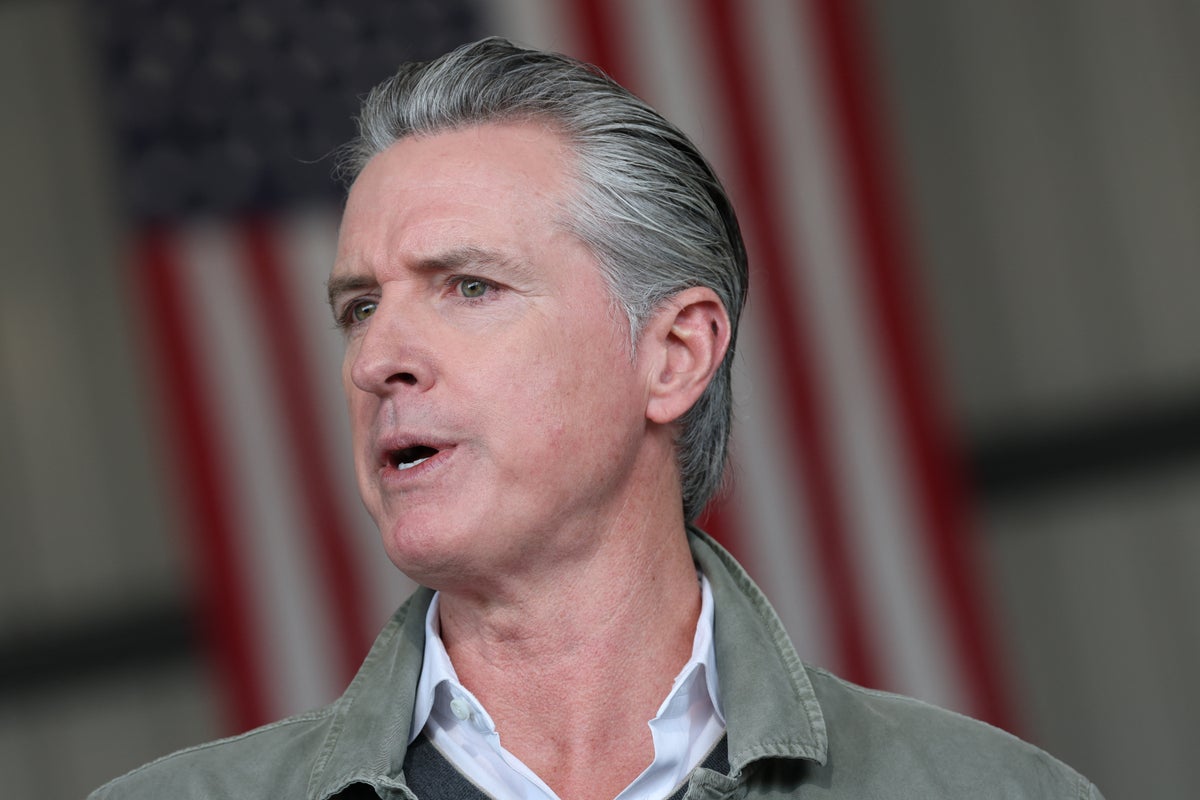
Joe Rogan sits in an Austin studio, a man who has built an empire on being the ultimate Everyman, albeit one with a penchant for elk meat and sensory deprivation tanks. On the other side of the digital divide stands Gavin Newsom, the Governor of California, a man whose hair is as disciplined as his talking points. Recently, the friction between them transitioned from passive grumbling to an open, public confrontation.
Rogan didn't just disagree with Newsom’s policies on homelessness or taxation. He went for the jugular of the Governor's identity, dismissing him as a "cardboard cutout of a person." It was a critique of the soul, or lack thereof. It suggested that underneath the expensive suit and the perfectly timed smiles, there was nothing but a series of programmed responses.
The Anatomy of an Insult
To understand why "cardboard cutout" stings more than "bad politician," we have to look at the current currency of the internet: authenticity. We live in an era where voters are exhausted by the curated. They would often prefer a messy truth over a polished lie. When Rogan leveled that charge, he was tapping into a specific frustration felt by millions who look at high-level politicians and see a product rather than a human being.
Newsom, however, refused to play the role of the silent victim. He stepped into the fray, not with a dry press release, but with a direct rebuttal. He challenged the idea that being prepared and articulate is a sign of being fake. There is a specific kind of courage required to be the "establishment" guy in a world that increasingly worships the "disruptor."
Consider the hypothetical voter, let’s call him Elias. Elias lives in a small apartment in Fresno. He watches Rogan clips while he eats dinner. To Elias, Rogan feels like a friend at a bar. When Newsom speaks on TV, Elias feels like he is being sold a luxury car he can’t afford. This gap is where the "cardboard" comment finds its power. It isn't about the data on GDP or the nuances of the California budget. It is about the vibe.
The High Stakes of the Digital Coliseum
Newsom’s decision to engage Rogan is a calculated risk. By acknowledging the podcaster, the Governor validates Rogan’s massive platform—a platform that reaches more young men than almost any traditional news network. But by pushing back, Newsom is attempting to pierce the bubble. He is trying to prove that the "cardboard cutout" can actually bleed, argue, and fight.
The reality of California is a complex, often contradictory story. It is the fifth-largest economy in the world, a titan of innovation and cultural exports. Yet, it is also a place of visible suffering, with tent cities lining the streets of its most prosperous hubs. When Rogan mocks Newsom, he uses these failures as proof of the Governor’s "hollow" nature. He points to the disparity between the Governor’s rhetoric and the grit on the ground.
Newsom’s defense rests on the sheer scale of the task. He argues that governing a state of 39 million people requires more than just "real talk" and opinions; it requires a structural, often bureaucratic, persistence. To Newsom, the polish isn't a mask. It’s the armor of a professional.
Why We Can’t Stop Watching
This isn't just about two famous men. It is about the tension between two different ways of processing information. On one hand, we have the Rogan model: long-form, meandering, and skeptical of all authority. On the other, we have the Newsom model: structured, authoritative, and focused on the levers of power.
The podcaster demands raw transparency. The politician provides a vision of stability.
We find ourselves caught in the middle. We want our leaders to be relatable, but we also want them to be competent. We want them to be "one of us," but we also need them to be better than us at managing a crisis. When Rogan calls Newsom a cutout, he is asking us to choose between the guy we’d like to have a beer with and the guy we want running the state.
But the real problem lies elsewhere. It isn't in the insults or the rebuttals. It is in the fact that these two men are talking past each other, representing two halves of a fractured national psyche. One side sees the other as a dangerous populist spreading misinformation; the other sees a technocratic elite who has lost touch with the common man.
The Mask and the Mirror
Imagine a mirror held up to the state of California. In one reflection, you see the glittering high-rises of Silicon Valley and the shimmering Pacific. In the other, you see the cracked pavement of a neglected neighborhood and the smoke of a wildfire. Both are true. Both are California.
Newsom’s battle with Rogan is an attempt to control which reflection the public focuses on. Rogan wants to show you the cracks. Newsom wants to show you the architecture.
When the Governor fired back, he wasn't just defending his ego. He was defending the idea of the professional politician in an age of the amateur influencer. He was asserting that there is value in the polish, that the "cutout" is actually a blueprint for a functioning society. Whether the public buys that defense depends entirely on their own definition of what is real.
The interaction leaves us with a haunting question about the nature of modern leadership. If a leader is too polished, we call them fake. If they are too raw, we call them dangerous. We demand a middle ground that perhaps no longer exists in a world of 280-character attacks and three-hour podcasts.
The red light in Austin continues to glow. The podium in Sacramento remains standing. The two men continue their dance, each convinced they are the one telling the truth about the world. And the rest of us are left to decide if we want a leader who sounds like us, or one who looks like the person we wish we could be.
The silence that follows a political debate is never truly empty. It is filled with the echoes of everything left unsaid, the human messy bits that don't fit into a soundbite or a viral clip. In the end, the "cardboard" insult is just a way of saying we are lonely for a version of power that doesn't feel like it’s being performed. We are looking for the person behind the persona, and we are terrified that when we finally find them, they might be just as confused as we are.