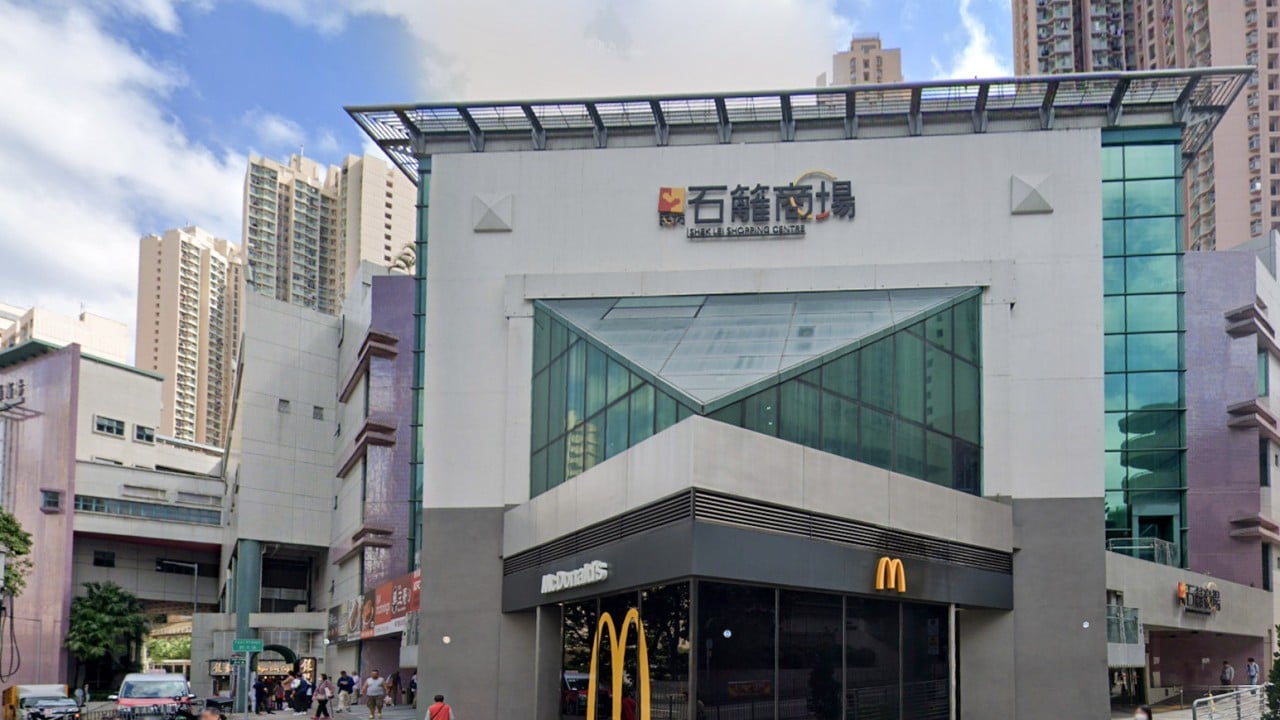
Vertical transportation systems inside high-density commercial real estate spaces operate as continuous mechanical loops under high physical load, yet public safety discourse treats them as passive architectural staircases. When three elderly individuals sustained injuries following a balance failure on an upward-moving unit at the Shek Lei Shopping Centre Phase 1 in Kwai Chung, mainstream reporting framed the event as an isolated mishap or a misfortune of age. This framing masks systemic failures in spatial design, mechanical threshold control, and population-vulnerability matching.
A rigorous operational audit reveals that commercial escalators in hyper-dense urban environments are high-risk kinetic interfaces. Analyzing the mechanics behind these incidents requires breaking down the variables of human reaction times, step geometry, and the cascading domino effect triggered by a single point of balance failure. Don't miss our previous post on this related article.
The Kinematics Of Kinetic Collapse
An escalator step moves at a standard velocity of approximately 0.5 meters per second, providing a rigid, non-compliant aluminum surface that offers zero shock absorption. When a passenger loses equilibrium, the window to arrest the fall is constrained by the speed of the preceding step and the density of the passenger queue behind them.
At the Kwai Chung shopping center incident, police reports established that a primary passenger lost balance, creating an immediate physical obstruction that triggered a rearward cascade. In physics terms, this is a kinetic domino sequence. The kinetic energy of the falling body is transferred directly to trailing passengers who lack the lateral bracing required to absorb an off-center load. To read more about the history here, The New York Times offers an in-depth summary.
Traditional safety guidelines rely on the assumption that individuals will instinctively grip the polyurethane handrail. However, handrail synchronization failures—where the handrail moves fractionally faster or slower than the steps—introduce micro-discrepancies that destabilize users whose proprioception is already compromised. For an aging demographic experiencing declining neuromuscular response times, these micro-discrepancies act as hidden triggers for catastrophic falls.
The Demographic Mismatch In Urban Architecture
Commercial property developers optimize vertical circulation for maximum throughput, designing transit nodes that move massive volumes of foot traffic between retail floors. This throughput-maximizing model assumes an idealized user profile: an agile adult capable of dynamic balance adjustments.
Retail hubs situated in mature residential districts naturally attract high concentrations of elderly visitors. This creates a severe demographic mismatch. The architectural parameters of standard commercial escalators—step heights of roughly 20 centimeters, tread depths of 40 centimeters, and an angle of inclination set to 30 degrees—are engineered for general populations, not for aging cohorts experiencing sarcopenia or vestibular degradation.
When an elderly user steps onto a moving tread, they must execute a precise temporal calculation. Misjudging the entry vector by even a fraction of a second results in uneven weight distribution across adjacent steps. Unlike a stationary staircase where a stumble can be mitigated by halting forward momentum, a mechanical escalator continues its linear ascent or descent, turning a simple misstep into an unyielding mechanical hazard.
Systemic Latency In Emergency Response Loops
Mitigating injuries during a kinetic failure depends on two operational safeguards: immediate activation of emergency stop mechanisms by bystanders or staff, and the automated engagement of auxiliary brakes. In many documented retail incidents, human latency introduces a dangerous delay.
Bystanders frequently experience cognitive freezing when confronted with a sudden accident, or they waste critical seconds recording the event rather than locating the red emergency stop button positioned at the landings. Property management protocols often dictate that security personnel must visually assess a situation before intervening, adding layers of bureaucratic latency to a mechanical emergency that requires sub-second response times.
When an escalator is left running while passengers lie injured on the metal steps, the risk profile multiplies. Moving treads can compound soft tissue injuries, dragging limbs against comb plates or skirt guards. The absence of automated weight-sensors or optical tripwires that can instantly halt a unit upon detecting a fallen body represents a major engineering gap in current safety compliance standards.
The Economic And Operational Fixes
Property owners and facility management firms treat escalator maintenance as a compliance checkbox governed by routine engineering sign-offs rather than predictive safety modeling. Standard monthly inspections verify structural integrity, motor torque, and brake holding capacity, but they ignore behavioral telemetry and crowd dynamics.
To eliminate recurring casualties, commercial operators must transition from reactive maintenance to active operational intervention. High-risk retail nodes servicing aging populations require the implementation of variable-speed governance, allowing facility managers to reduce escalator velocity during peak hours when elderly foot traffic surges.
Furthermore, physical infrastructure must be retrofitted with optical sensors capable of detecting surface obstructions or fallen passengers, triggering instantaneous emergency braking independent of human reaction times. Escalator placement must also be evaluated against vertical alternatives. If a retail center cannot guarantee safe, unobstructed elevator access adjacent to every major escalator bank, the architectural layout itself constitutes an active hazard. Mitigating the vulnerability of urban transit requires treating vertical mobility not as a real estate utility, but as a high-consequence transport system demanding rigorous kinetic management.