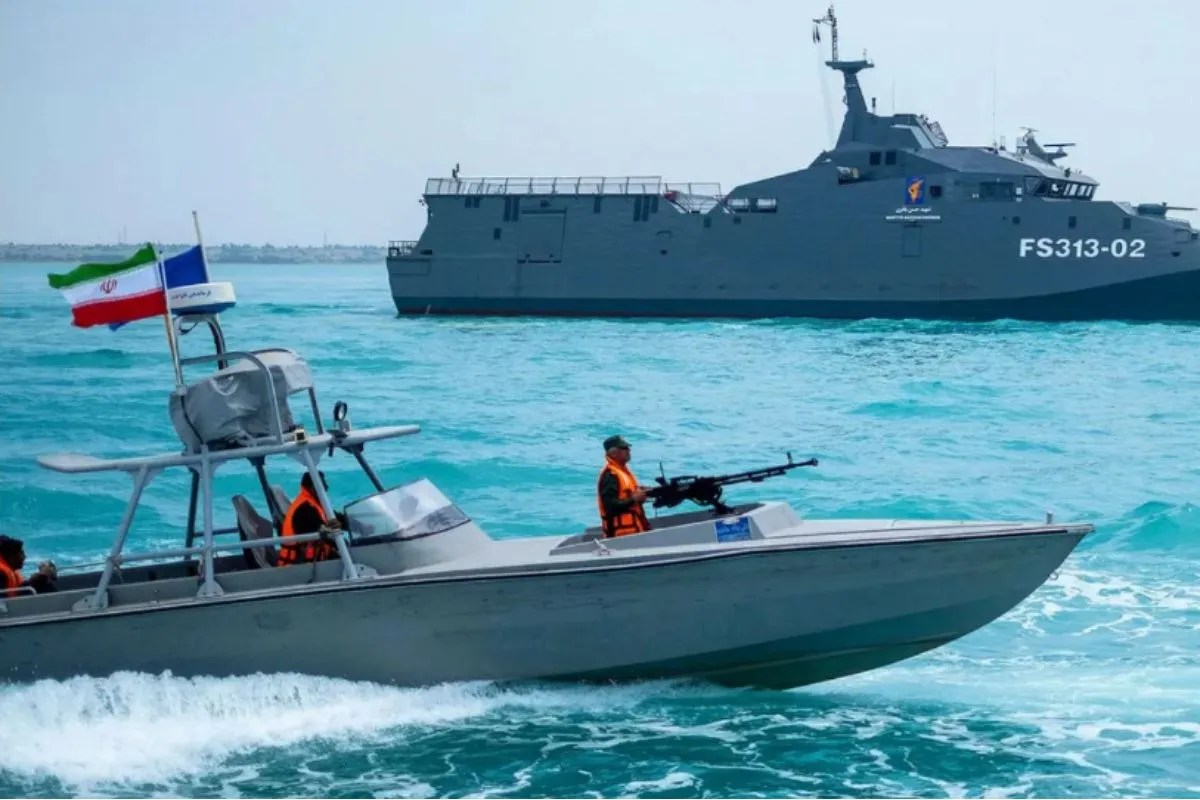
The kinetic strike on the Qatari LNG carrier Al Rekayyat in the Strait of Hormuz on July 7, 2026, exposed a structural divergence between public risk perception and maritime engineering reality. While initial reports of the drone attack triggered immediate alarms regarding catastrophic detonations along a critical global energy chokepoint, the vessel's physical response—sustaining an engine room fire without compromising its cargo—conformed precisely to the thermodynamic constraints governing liquefied natural gas transport. Evaluating the survivability of gas carriers under asymmetric attack requires moving past sensationalized blast scenarios to analyze the precise thermodynamic and structural mechanisms that prevent catastrophic hull failure.
The Flammability Corridor and Liquid Methane Thermodynamics
The primary defense against an explosive yield on an LNG carrier is not weapon interception, but the fundamental chemical state of the cargo. Liquefied natural gas is composed almost entirely of methane ($CH_4$) chilled to a cryogenic state of -162°C (-260°F) at near-atmospheric pressure. This process reduces the volumetric footprint of the gas by a factor of approximately 600, transforming a highly volatile vapor into an unpressurized, stable liquid phase. In related developments, we also covered: Why Trump Removing Syria From The Terrorist List Is A Corporate Land Grab Disguised As Peace.
For methane to combust, let alone detonate, it must satisfy three rigid conditions simultaneously: vaporization, mixing with oxygen within a narrow concentration window, and exposure to an ignition source. Liquid methane itself cannot burn; it contains zero oxidizers within the sealed, oxygen-free environment of the cargo tanks.
[Ignition Source] + [Vaporized Methane (5-15%)] + [Atmospheric Oxygen] = Combustion
The flammability limit of methane vapor in the air is constrained to a range between 5% and 15% by volume. NPR has also covered this critical subject in great detail.
- If the concentration of vaporized methane falls below 5%, the mixture is too lean to support a flame front.
- If the concentration exceeds 15%, the environment is too rich, meaning there is insufficient oxygen to sustain chemical propagation.
When a kinetic asset, such as a loitering munition or an anti-ship cruise missile, impacts an LNG carrier, the immediate thermal energy generated by the detonation is generally incapable of propagating into the cargo core. If a strike fails to breach the inner containment tank, the thermal energy is absorbed by the structural steel and surrounding water ballast spaces. If a strike manages to pierce both the outer hull and the inner insulation, the immediate escape of methane creates a localized jet or pool fire at the breach site rather than an internal detonation. The lack of oxygen inside the tank guarantees that the flame front cannot travel backward into the storage vessel. The system lacks the stoichiometric conditions required to support an internal explosion.
Structural Isolation and Containment Topology
Modern LNG carriers utilize defensive structural frameworks designed to handle extreme operational stresses, which inherently double as effective armor against low-to-medium yield kinetic threats. The global fleet relies primarily on two main containment configurations: the Moss Rosenberg spherical tank system and the GTT membrane containment system. Both architectures utilize a mandatory double-hull design that creates a substantial physical buffer between the environment and the cargo.
The Double-Hull Matrix
International maritime regulations dictate that the distance between the outer shell of the ship and the inner cargo tank must be a minimum of 2 meters along the sides and bottom of the vessel. This space is not void; it is packed with structural stiffeners, transverse webs, and liquid ballast tanks.
When a missile or drone strikes the side of the vessel, it must first penetrate:
- The outer steel hull (typically high-strength structural carbon steel).
- The internal structural web framework designed to absorb energy from low-speed ship-to-ship collisions.
- The inner hull plating.
- The thick primary and secondary insulation layers (comprising polyurethane foam, fiberglass, or reinforced balsa wood).
- The actual primary containment membrane or tank wall.
In the case of Al Rekayyat, the weapon impacted the port side of the engine room. This zone sits aft of the cargo containment block. The separation of the propulsion machinery space from the cargo deck by a reinforced, gas-tight cofferdam acts as an effective thermal and structural barrier. The engine room possesses its own dedicated fire suppression infrastructure, typically high-pressure carbon dioxide or water mist systems, which isolated the fire to the machinery space and prevented thermal conduction into the adjacent cargo holds.
Spherical vs. Membrane Mechanical Responses
The two primary tank geometries behave differently under dynamic loading conditions.
Moss Rosenberg System:
[Outer Hull] -> [2m Ballast Gap] -> [Heavy Insulation] -> [Self-Supporting Thick Aluminum Sphere]

GTT Membrane System:
[Outer Hull] -> [2m Ballast Gap] -> [Inner Hull] -> [Secondary Insulation] -> [Secondary Membrane] -> [Primary Insulation] -> [Primary Invar Membrane]
The Moss Rosenberg design employs self-supporting, thick-walled aluminum or nickel-steel spheres that sit independently inside the ship's hold, supported only at the equator by a massive cylindrical skirt. This design leaves a large air space between the tank sphere and the inner hull. If a weapon breaches the hull, the fragment or blast pressure wave must cross this open internal void before impacting a thick, curved metal structure that is highly efficient at deflecting directional force.
The membrane system integrates thin, flexible layers of Invar (a 36% nickel-iron alloy with an extremely low coefficient of thermal expansion) or corrugated stainless steel directly supported by the ship’s inner hull through rigid foam insulation. While structurally lighter and volumetrically more efficient for commercial shipping, the membrane design relies completely on the integrity of the inner hull. A deep kinetic breach that deforms the inner hull will immediately deform and potentially tear the internal membrane, causing a direct cargo leak into the insulation space.
The Physical Impossibility of a Low-Pressure BLEVE
Public commentary frequently attributes the risk of a Boiling Liquid Expanding Vapor Explosion (BLEVE) to LNG carriers under military attack. This is a technical mischaracterization based on a failure to separate low-pressure cryogenic storage from high-pressure ambient storage.
A BLEVE requires a substance to be stored under high pressure at a temperature significantly above its atmospheric boiling point. This phenomenon occurs routinely in LPG (Liquefied Petroleum Gas, such as propane or butane) railcars or road tankers. When an LPG tank is exposed to an external fire, the liquid inside heats up, increasing the internal pressure. If the tank shell weakens and ruptures, the sudden drop to atmospheric pressure causes the superheated liquid to instantly flash into vapor. This instantaneous, violent expansion generates a devastating overpressure wave, which is then ignited if the substance is flammable.
LNG carriers do not operate under these thermodynamic conditions. The cargo is maintained in a boiling state at atmospheric pressure (typically between 1.05 and 1.25 bars absolute). The temperature is kept low by continuous, controlled evaporation, known as Boil-Off Gas (BOG). The vaporized gas is drawn off to either fuel the ship's propulsion plants or reliquefied and returned to the tanks.
Because the liquid inside the tank is not superheated or highly pressurized, a catastrophic structural failure of the container does not trigger a rapid, explosive flash expansion of the entire liquid volume. Instead, the liquid pours out under gravity, behaving similarly to spilled oil or water, until it absorbs enough heat from its new surroundings to vaporize at a normal, non-explosive rate.
Non-Explosive Failure Modes: Cryogenic Fracture and Pool Fires
The absence of an internal detonation risk does not mean an LNG carrier is immune to destruction. If a heavily armed kinetic strike directly penetrates the cargo hold, it triggers two severe, non-detonative failure modes that can destroy the vessel: cryogenic embrittlement and massive unconfined pool fires.
Cryogenic Structural Fracture
The primary hazard of an open LNG leak inside a ship's hull is the thermal shock experienced by standard structural steel. The maritime steel used to build the outer hull, deck plates, and internal framing is designed to operate at ambient ocean temperatures. When exposed to spilled LNG at -162°C, these carbon steels instantly drop below their ductile-to-brittle transition temperature.
LNG Leak (-162°C) -> Contact with Mild Carbon Steel -> Instant Loss of Ductility -> Cryogenic Embrittlement -> Structural Cracking under Wave Loads
The steel loses its elasticity, becoming as brittle as glass. Under the immense bending and torsional stresses experienced by a ship at sea, an uninsulated inner or outer hull exposed to cryogenic liquid will rapidly develop propagating cracks. This process can lead to structural failure, causing the ship to split or sink under its own weight without ever experiencing a conventional explosion. Modern ships combat this by installing drip trays made of stainless steel or specialized alloys under manifold areas, but these systems cannot handle a massive, internal structural breach.
Unconfined Pool Fires and Rapid Phase Transitions
If LNG escapes the hull and spills onto the open sea, it spreads rapidly across the water's surface, forming a thin, flat pool. The sea acts as a massive heat source, causing the liquid methane to vaporize rapidly.
If an ignition source is present—which is guaranteed during a missile or drone strike—the vapor cloud ignites into a pool fire. These fires burn with extreme intensity, generating a high thermal heat flux ($200 \text{ to } 250 \text{ kW/m}^2$ at the core). This radiant heat is capable of melting the superstructure of the ship, warping steel decks, and destroying firefighting equipment, eventually leading to a complete abandonment of the vessel.
If the spilled LNG does not immediately ignite, it faces another phenomenon known as a Rapid Phase Transition (RPT). When a large volume of cryogenic liquid comes into direct, turbulent contact with warm water, the heat transfer rate can be so fast that the boundary layer of LNG vaporizes instantly. This creates a localized, physical vapor explosion.
An RPT does not involve chemical combustion; it is a purely physical phenomenon driven by rapid volumetric expansion. While it does not generate a sustained flame, the localized shockwaves from an RPT can cause localized structural damage to the hull plates, accelerating water ingress and destabilizing the ship's buoyancy.
Strategic Interdiction Metrics in Market Architecture
The vulnerability of the Strait of Hormuz to kinetic disruptions forces a recalculation of maritime logistics and energy economics. Because LNG carriers are highly specialized assets costing upwards of $250 million each, the strategic threat is not the physical destruction of the cargo via explosion, but the systematic closure of transit windows due to skyrocketing risk premiums.
The maritime transport sector operates on an interdependent matrix of hull and machinery (H&M) insurance, protection and indemnity (P&I) clubs, and war risk premiums. A single confirmed kinetic strike on an LNG asset, regardless of whether it results in a hull breach, causes underwriters to reprice the risk profile of an entire geographic corridor.
When war risk premiums escalate, the operational cost function of moving a standard 174,000 cubic meter LNG carrier through a chokepoint increases on a daily compounding basis. This cost shift forces charterers to weigh two options:
- Absorbing the insurance premiums and passing the costs down to end-users, directly inflating spot-market gas prices.
- Rerouting vessels around southern geographic alternatives (such as the Cape of Good Hope), adding 10 to 14 days to voyages targeting European or Asian regasification terminals.
The long-term impact of kinetic harassment in narrow waters is a structural reduction in effective global fleet capacity. Longer voyages mean a single hull completes fewer round-trips per annum, artificially constricting the supply chain and decoupling regional spot prices from structural production costs.
Technical Safeguards for Chokepoint Transit
To maintain the flow of cryogenic energy assets through contested narrow seas, fleet operations must shift from passive reliance on structural safety to active, tactical mitigation protocols.
- Forced Vapor Consumption and Tank Pressure Optimization: Prior to entering high-risk corridors, vessels should maximize the drawdown of tank pressures by running reliquefaction plants at peak capacity or increasing the utilization of Boil-Off Gas in the main propulsion units. Minimizing the internal vapor pressure lowers the structural stress on the containment system, expanding the safety margin if a kinetic impact warps the tank frames.
- Dynamic Ballast Water Shielding: Operators can adjust ballasting configurations during high-risk transits, filling the outer wing tanks to capacity with seawater. This creates an immediate, dense physical barrier that absorbs the hydrodynamic blast energy and fragmentation fragments of a drone or light anti-ship missile before the force can propagate through the inner hull insulation.
- Automated Cryogenic Deluge Deployment: Modern gas carriers must integrate localized, automated water and foam deluge curtains along the cargo manifold zones and the borders separating the engine room from the aft cargo tanks. These systems must be linked to infrared detection arrays capable of identifying thermal anomalies instantly, isolating localized fires before they cause cryogenic fracturing of structural steel elements.
The resilience displayed by Al Rekayyat confirms that the physical threat to LNG carriers is characterized by containment breaches, localized thermal stress, and structural embrittlement, rather than catastrophic detonations. Mitigating this risk requires managing the commercial and logistic bottlenecks created by kinetic harassment along critical global maritime trade routes.