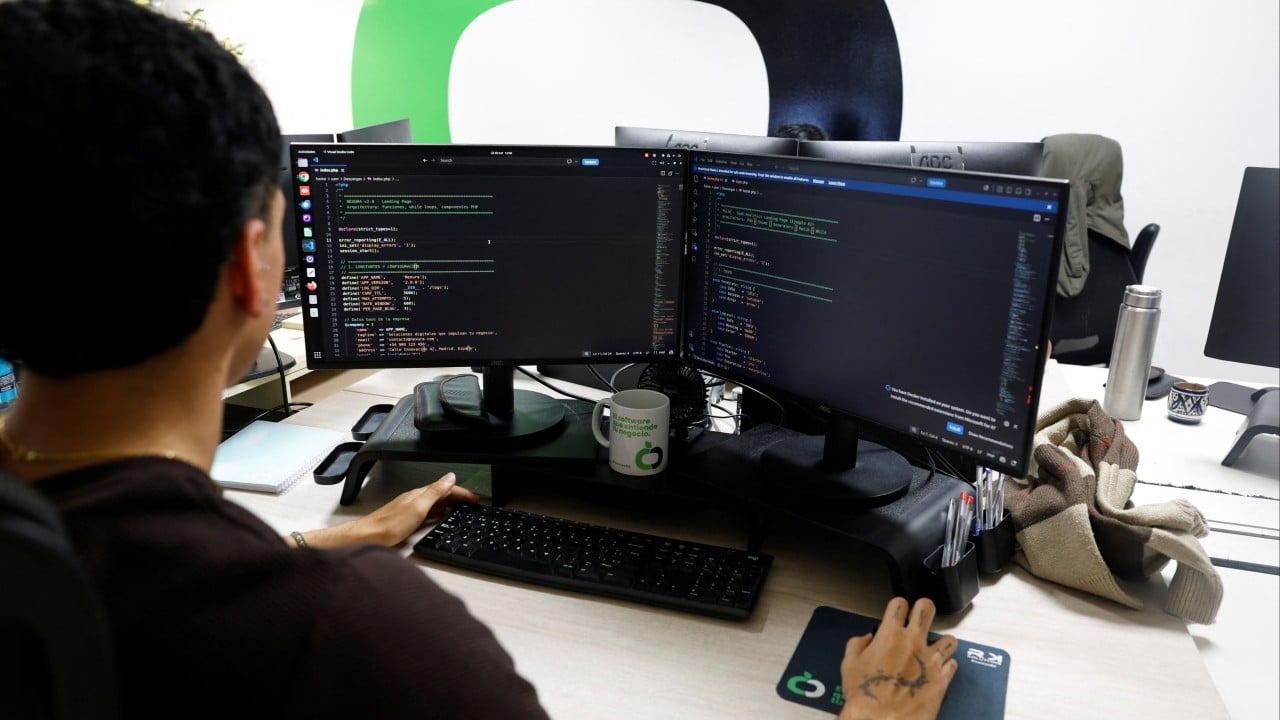
Patching speed is now the primary determinant of whether a routine scripting runtime becomes an unauthenticated remote code execution foothold across an entire enterprise. Standard news coverage of the Cyber Security Agency of Singapore (CSA) advisories around PHP vulnerabilities treats urgent patch calls as a straightforward race between defenders and attackers. That framing misses the real operational bottleneck: organizations cannot patch what they have not inventoried, and third-party supply chain dependencies frequently hide PHP runtimes inside systems teams assume are unrelated to web publishing.
Deconstructing standard coverage of Singapore's PHP security advisories reveals a predictable narrative arc. Typical reporting states that PHP powers a large share of the web, notes that critical vulnerabilities have been disclosed or patched, quotes official urgency from regulators or security leaders, highlights broad exploitation attempts or proof-of-concept activity, and ends with a generic admonition to update systems and check with vendors. While accurate at a high level, that logic treats vulnerability management as a single linear task—flaw discovered, patch issued, administrator updates—ignoring organizational friction, runtime architecture differences, and repeated disclosure cycles.
To build a rigorous operational model, replace that linear assumption with four structured analytical pillars: The Exposure Multiplier, The Architecture Asymmetry, The Vendor Delegation Gap, and The Patch Cadence Trap. Together, these mechanisms explain why public warnings trigger immediate scans while leaving high-risk endpoints exposed for weeks.
The Exposure Multiplier and Why Ubiquity Distorts Risk
PHP remains embedded across an enormous fraction of active web infrastructure, including content management systems such as WordPress, Drupal, and Joomla, as well as custom portals and bundled administrative tools. In public reporting, high adoption is often cited as shorthand for high danger. The underlying mechanism is more specific: ubiquity multiplies surface area heterogeneity, not uniform vulnerability.
Two deployments running the same headline PHP version rarely share the exact same risk profile. Variations in compiled extensions, memory limits, web server integration models, reverse proxy rules, and network exposure determine whether a memory corruption or logic flaw reaches an exploitable state. Furthermore, critical advisories such as CSA's October 2026 alert on PHP2Shell (CVE-2026-109618 and CVE-2026-109619, rated CVSS v4 9.2) and subsequent November 2026 patches addressing multiple critical issues demonstrate that memory-handling conditions—such as out-of-memory error paths, use-after-free states, session handling flaws, and request smuggling—can affect wide swathes of supported branches simultaneously.
When proof-of-concept exploits circulate and automated scanners probe internet-facing hosts at scale, defenders face an asymmetric timing problem. Attackers only need to locate misconfigured or unpatched endpoints that match known preconditions; defenders must verify asset state across every production node, container, staging environment, and forgotten appliance before assuming safety.
Structural Drivers of Exposure
- Internet Reachability: Publicly accessible endpoints face immediate automated probing once advisories and exploit material surface, whereas internal or segmented services require an existing pivot.
- Embedded Runtimes: Organizations frequently run PHP inside third-party web applications, monitoring tools, or legacy appliances even when their primary corporate site uses another stack.
- Version Drift: Long-lived virtual machines, containers built from stale base images, and unmaintained modules preserve vulnerable binaries long after upstream maintainers ship fixes.
- Post-Disclosure Re-Verification: A patch applied during one advisory wave does not immunize a system against subsequent disclosures affecting the same runtime family.
Consider a mid-sized logistics operator in Singapore whose main customer portal runs on a modern cloud stack, while an older internal-facing partner billing tool sits on a virtual machine managed by a former contractor. When a critical PHP flaw breaks, security teams focused on the primary web application may overlook the legacy VM entirely. The cause-and-effect chain is direct: incomplete asset discovery produces false confidence, which extends dwell time if an attacker compromises the unmonitored host.
The Architecture Asymmetry Behind Patch Urgency
Generic advice to "update PHP immediately" flattens crucial differences in how PHP executes behind a web server. Execution architecture shapes both exploitability and operational rollout risk.
In deployments using mod_php embedded directly inside an HTTP server process, request handling occurs tightly coupled with the web server worker lifecycle, meaning unauthenticated requests can hit vulnerable code paths early in request processing. In deployments using PHP-FPM (FastCGI Process Manager) behind a web server or reverse proxy, worker pools and request routing introduce distinct failure modes—ranging from worker crashes and denial of service to backend request smuggling or memory corruption under specific application conditions.
This architectural nuance creates a practical operational tension. Upgrading packages on disk is not the finish line; administrators must reload or restart the relevant PHP service or web server workers and verify the actively running binary and version rather than merely checking package manager metadata. In high-availability environments, rushing an unvalidated update across all nodes simultaneously can cause brief service interruptions or configuration regressions, which is why some public-sector and large web operators temporarily take specific services offline during coordinated patching.
Conversely, waiting days for a full maintenance window carries its own hazard when active exploitation is underway. Temporary mitigations—such as tightening network access controls, restricting exposed endpoints, or adjusting specific PHP configuration directives per vendor guidance—can narrow attack paths when immediate patching is blocked, though they function as interim risk reducers rather than complete cures.
The Vendor Delegation Gap and Shared Responsibility
Competitor coverage often mentions that small and medium-sized enterprises (SMEs) or organizations relying on external vendors may not realize they are exposed. The analytical gap lies in how shared responsibility breaks down in practice when accountability is ambiguous.
In multi-party IT arrangements—spanning managed service providers, web design agencies, hosting platforms, and internal business units—each party often assumes another owns the patch:
- The Business Owner's Assumption: A marketing or operations lead assumes the web agency or hosting provider automatically handles all security updates as part of routine maintenance.
- The Hosting Provider's Boundary: A shared or managed host may patch base platform images or offer newer PHP versions while leaving application-level containers, custom virtual machines, or CMS plugins untouched.
- The Agency's Scope Limit: An external developer who built a site years ago may have no active retainer to monitor advisories, test compatibility, or conduct post-incident forensics.
The result is an accountability vacuum. When an advisory warns of unauthenticated remote code execution, asking a vague question rarely produces verifiable assurance. Security and operations leaders need concrete confirmation of three facts: which exact assets run affected PHP versions, whether patches have been applied and services restarted, and whether logs or system artifacts show signs of prior compromise.
The Patch Cadence Trap and End-of-Life Debt
A single urgent patch cycle does not solve structural vulnerability in organizations carrying deep version debt. When teams run PHP branches nearing or past security support—such as PHP 8.2 approaching its end of security support at the end of December 2026, or legacy 7.x and early 8.x releases—routine point updates become entangled with major compatibility testing.
When critical flaws arrive back-to-back across multiple weeks or months, organizations stuck on legacy versions face a compounding squeeze. Backports for older branches, if available at all, are frequently minimal stopgaps that disable features or carry higher integration friction than upgrading to a supported release line. Meanwhile, repeated advisories exhaust engineering bandwidth if teams treat every alert as a bespoke emergency rather than exercising a repeatable patch pipeline.
A Step-by-Step Operational Triage Sequence
To move from reactive alarm to disciplined execution during a critical PHP advisory, technical and business leads should execute five sequential steps:
- Enumerate Runtime Footprints: Query asset inventories, cloud instances, container registries, and reverse proxies to map every host, application, and third-party component running PHP—explicitly including non-obvious and staging assets.
- Rank by Exposure and Execution Path: Prioritize internet-facing systems first, paying special attention to
mod_phpand PHP-FPM deployments exposed to untrusted traffic. - Deploy Verified Patches and Restart Services: Apply vendor-supplied security updates, restart the affected PHP or web server processes, and confirm the live runtime version responding to requests.
- Enforce Interim Containment Where Blocked: Where an application cannot be patched immediately due to testing or legacy constraints, apply vendor-documented temporary controls, network restrictions, or service isolation while scheduling the upgrade.
- Audit for Prior Intrusion: Inspect web server access and error logs, process trees, scheduled tasks, and file integrity across exposed hosts for indicators of exploitation before and after patching, rather than assuming an update automatically expels an existing attacker.
Limitations and Trade-Offs No Playbook Eliminates
Even a disciplined triage workflow has hard constraints that leaders must account for openly. First, zero-day and rapid post-disclosure windows compress reaction time: when proof-of-concept exploits appear rapidly after disclosure, automated scans can precede an organization's internal change-management cycle. Second, compatibility risk is real: upgrading PHP or CMS components on custom or legacy codebases can break plugins, session behavior, or third-party integrations, requiring staged verification rather than blind production pushes. Third, patching closes the door, not a prior breach: if an attacker already achieved code execution before the fix landed, updating the binary alone will not remove persistence mechanisms or reverse data exfiltration.
The Strategic Play
Treat critical PHP advisories not as isolated news events, but as stress tests of your asset inventory accuracy and release velocity. Mandate a single source of truth for every web-facing and third-party runtime within the next 30 days, require written confirmation of patched live versions and compromise checks from every hosting and development vendor during active advisories, and retire unsupported PHP branches ahead of end-of-life deadlines so emergency security fixes remain routine minor upgrades rather than architectural rescues.
Cyber Security Agency urges organisations to patch critical PHP
This video provides a concise visual broadcast summary of Singapore's urgent advisory on critical PHP vulnerabilities and the push for rapid organizational patching.