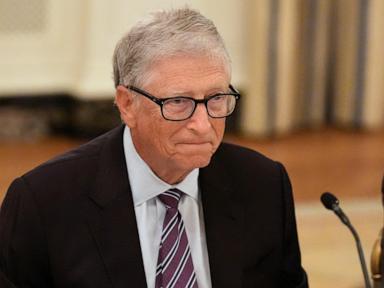
The headlines are predictable. They focus on the timeline of meetings, the "regret" over social associations, and the slow-motion car crash of a foundation "reviewing" its ties to Jeffrey Epstein. This focus is a distraction. It treats the Bill & Melinda Gates Foundation—and the billionaire class it represents—as a group of well-meaning ingenues who accidentally walked into a trap.
They didn’t.
The current obsession with when the meetings stopped or who sent the last email misses the structural reality of how global power operates. When you control assets larger than the GDP of most nations, "due diligence" isn't a box you check; it’s a tool you weaponize. The Gates-Epstein saga isn’t a story of poor judgment. It’s a case study in the inherent rot of private philanthropy, where the "good" being done serves as a permanent get-out-of-jail-free card for the methods used to acquire and protect that wealth.
The Myth of the Unwitting Billionaire
Mainstream media loves the narrative of the naive tech genius. They want you to believe that Bill Gates—a man who built an empire through some of the most aggressive, cold-blooded business tactics in history—was somehow "charmed" or "misled" by a socialite financier.
Let’s be real. At that level of wealth, nobody gets through the door without a dossier. You don't "end up" in a townhouse on the Upper East Side. You are there because there is a transactional alignment.
The standard defense is that these meetings were about "increasing philanthropic giving." This is the ultimate shield. By framing every interaction as a search for more capital to save the world, the billionaire class creates a moral force field. If you criticize the association, you are "distracting from the mission of eradicating polio."
It’s a hostage situation. They hold the world's most vulnerable populations as human shields against their own accountability. I’ve seen this play out in boardrooms for twenty years: the more a leader’s personal reputation tanks, the more they ramp up the "impact" PR. It’s a direct inverse correlation.
Wealth Laundering 101
Philanthropy is often described as "giving back." That’s a linguistic lie. It’s actually a system of wealth preservation and social engineering. When a foundation "reviews its ties," it isn't looking for moral clarity. It’s performing a risk assessment on its brand equity.
Most people don't understand how these vehicles actually work. A private foundation allows a billionaire to:
- Avoid estate taxes that would otherwise go into public coffers.
- Maintain control over where that money goes, effectively overriding democratic processes.
- Use the "charitable" label to gain access to heads of state and global policy-makers.
Epstein wasn't a "donor" in the traditional sense; he was a bridge. He provided a specific type of access and financial "efficiency" that the traditional banking system, with its pesky KYC (Know Your Customer) rules and regulatory oversight, often slows down. The Gates Foundation "reviewing" these ties now is like a gambler reviewing his relationship with a bookie only after the police have already raided the basement.
The Data the Critics Are Ignoring
Critics point to the $65 billion endowment of the Gates Foundation as a sign of its benevolence. They’re looking at the wrong side of the ledger. Look at the investment portfolio instead.
Private foundations are required to distribute roughly 5% of their asset value annually to maintain their tax status. That means 95% of the money stays invested, often in the very industries—big pharma, industrial agriculture, fossil fuels—that create the systemic issues the foundation’s grants claim to solve.
- The Conflict of Interest: If your foundation is invested in a company that holds the patent for a life-saving drug, and your foundation is also the primary funder of the global health body deciding which drugs to buy, you aren't a "philanthropist." You are a market-maker.
- The Accountability Gap: Unlike a government, a foundation cannot be voted out. If their "innovative" education or agriculture programs fail, the locals pay the price while the foundation writes a white paper about "lessons learned" and moves on to the next shiny object.
This is why the Epstein connection is so dangerous to them. It breaks the illusion of the "Selfless Problem Solver." It reminds the public that these are men—fallible, status-hungry, and deeply insulated men—not secular saints.
Why We Should Stop Asking "What Did They Know?"
The "People Also Ask" sections of the internet are filled with queries like: When did Bill Gates meet Epstein? or What did the emails say?
These are the wrong questions. The right question is: Why are we allowing individuals to wield more power over global public health than sovereign states, simply because they have a tax-exempt bank account?
When the Gates Foundation decides it wants to focus on a specific disease, the entire world shifts its priorities. National health ministries align their budgets to match the foundation's grants. Scientific research follows the money. This is "philanthropic colonialism." It’s the idea that a handful of people in Seattle know what’s best for a village in sub-Saharan Africa better than the people living there.
The Epstein ties aren't a bug in the system; they are a feature of the social circles that this level of unchecked power inhabits. You cannot have that much influence without rubbing shoulders with the dark side of global finance. They are two sides of the same coin.
The Real Cost of "Doing Good"
The "lazy consensus" says that we should be grateful for the money. "Who cares where it comes from, as long as it saves lives?"
This is a dangerous utilitarian trap. By accepting this logic, we concede that our moral standards are for sale. We agree that if you save enough children from malaria, you can associate with whoever you want, avoid as much tax as you want, and exert as much undemocratic influence as you want.
I’ve sat in the rooms where these "strategic partnerships" are brokered. It’s never about the "good." It’s about the "leverage." Every grant is a tether. Every partnership is a way to ensure the founder’s worldview becomes the global standard.
Dismantling the Foundation Industrial Complex
If we actually wanted to fix this, we wouldn't be waiting for an internal review from the foundation itself. Why would we trust the perpetrator to conduct the audit?
Real change looks like this:
- Mandatory Payout Increases: Force foundations to spend 15-20% of their assets annually. This prevents the permanent accumulation of untaxed power.
- Loss of Board Control: If you want the tax break, you lose the right to dictate the strategy. Move the money into a blind trust managed by public representatives.
- Transparency or Tax: If a foundation's leadership is found to be engaging with sanctioned individuals or using their position for private gain (social or financial), the tax-exempt status should be revoked immediately and retroactively.
The Bitter Truth
The reason this story keeps circulating is that it feels like a betrayal. But you can only be betrayed if you believed in the first place.
Bill Gates didn't change. The foundation didn't change. The only thing that changed is that the curtain was pulled back far enough for the public to see the machinery. These people are not your friends. They are not your leaders. They are billionaires who have figured out that the best way to protect an empire is to label it a charity.
The "review" will find "procedural lapses." It will promise "increased vetting." It will sacrifice a few mid-level staffers on the altar of public relations. And then, it will go right back to the business of buying global influence.
Stop looking at the emails. Start looking at the power. If you’re waiting for a billionaire to have a moral epiphany, you’re the one being played.
Get over the shock. Demand the tax money back.
Manage your own morality. It’s the only thing they haven't figured out how to buy yet.