The blue light from a smartphone screen is a peculiar kind of illumination. It does not warm the face; it hollows it out, casting a pale, clinical glow over midnight hours spent searching for a sign of life on the other side of the glass.
Picture a woman sitting on her couch at two in the morning. Let us call her Maya, though she could be anyone in any city with an active data plan and a quiet apartment. Her thumb swipes right. It is a reflex born of modern loneliness, a tiny, fleeting vote of confidence cast into the digital void. She is tired of the small talk about weekend plans and favorite coffee shops. She wants a story. She wants a reason to believe that out there, past the algorithms and the endless procession of mirror selfies, someone real is waiting.
Then, he appears.
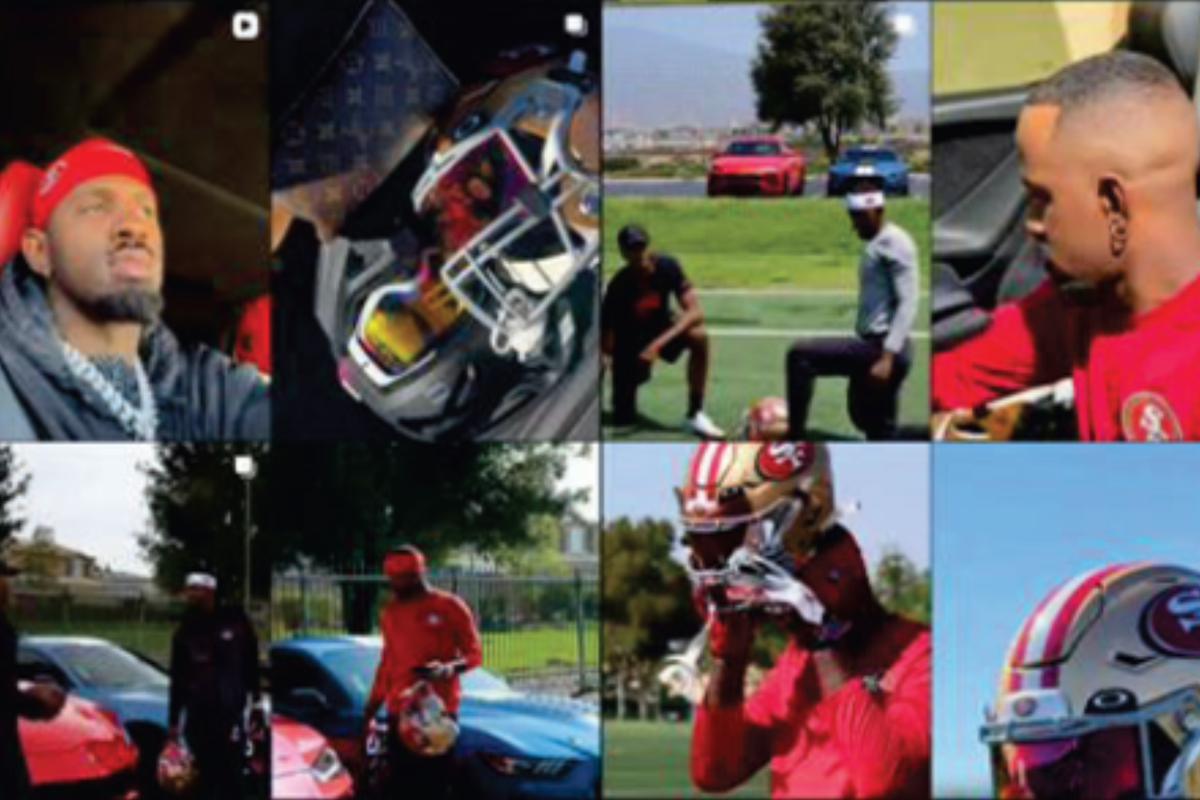
He is tall, broad-shouldered, and possesses the easy, untroubled smile of a man who has never worried about rent or parking tickets. His profile is a masterclass in quiet confidence. There are photos of him on chartered boats, snapshots standing outside stadium tunnels, and captions that hint at a life lived under the Friday night lights. He is a professional athlete. A quarterback. A man whose profession demands physical dominance, yet whose messages are surprisingly tender, attentive, and filled with the specific vocabulary of a high-stakes competitor looking for a safe harbor away from the roar of the crowd.
He calls her kid. He sends voice notes between meetings at the facility, the low hum of a locker room audible in the background. He talks about playbook revisions, knee soreness, and the crushing weight of a million-dollar contract tied to a fragile body.
It feels intoxicating. It feels real.
It is entirely, meticulously, brilliantly fake.
The Anatomy of an Illusion
Con artists have always relied on costuming. Once, it was a tailored suit, a borrowed luxury car, and a fabricated backstory about oil wells or European real estate. Today, the costume is digital, and the theater is the dating application interface.
When a federal indictment eventually unspools a crime of this magnitude—one where a lone operator siphons over a million dollars from women who thought they were investing their hearts and their savings into a future NFL star—we look for the glaring warning signs. We want to believe we would have seen them. We tell ourselves that nobody could be foolish enough to wire money to a man they have never shared a physical cup of coffee with.
That is the great comfort we grant ourselves. We pretend stupidity is the vulnerability.
It is not. The vulnerability is hope.
To understand how a ghost managed to manufacture a multi-million-dollar career out of thin air, you have to look at the architecture of modern romance. We live in an era of hyper-curated existence. Every person we meet online is a brand presentation. We have trained ourselves to accept highlights as the entirety of a human being. When a man presents high-resolution photographs of stadiums and training camps, the brain does not calculate the statistical probability of deception; it yields to the narrative convenience. The story is just too good not to be true.
The scammer did not just steal money. He rented space in their daily routines. He was the morning text wishing them luck on a presentation. He was the late-night voice note whispering reassurance when insomnia struck. The financial transactions—the sudden emergencies, the frozen accounts, the temporary cash flow problems before a massive bonus cleared—did not happen in a vacuum. They were the climax of a long, carefully orchestrated symphony of emotional dependency.
By the time the first wire transfer was requested, the victims were not sending money to a stranger. They were rescuing the man they loved.
The Architecture of the Con
Consider the logistics of the invisible life.
To maintain a fake NFL career across multiple months or even years requires a staggering amount of administrative labor. This was not a hurried scheme executed in a basement. It was a full-time occupation. The perpetrator had to understand sports media cycles, injury reports, roster movements, and the precise vernacular of professional sports management.
When a woman asks how practice went, you cannot simply say it went well. You have to mention a specific nagging hamstring pull, reference a defensive coordinator's blitz scheme, or complain about the turf conditions at a specific practice facility. You have to anticipate Google searches. You have to create secondary digital footprints—fake burner numbers, corroborating social media accounts belonging to fictional teammates or agents, and sometimes even accomplices who played their parts with chilling precision.
It is a bizarre inversion of talent. Imagine pouring that level of focus, empathy mapping, and strategic planning into something legitimate. Imagine if the criminal intellect behind the phantom quarterback had been channeled into building software or counseling troubled youth.
Instead, it was used to weaponize empathy.
The victims were successful women. Lawyers, executives, entrepreneurs—women who commanded respect in their professional lives and possessed the financial independence to fund a lavish lifestyle. That detail shatters the comforting myth that dating app fraud only targets the naive or the elderly. The truth is much darker. The more successful a woman is, the more isolated she often becomes at the top, and the harder it is to find a partner who matches her drive. The fake quarterback did not target weakness; he targeted strength, mirroring it back until it felt like a mirror image of destiny.
The Collapse of the Wardrobe
Every performance eventually runs out of curtain.
The unraveling, when it comes, is rarely cinematic. There is no dramatic confrontation in a dimly lit restaurant where the mask is ripped off in front of applauding onlookers. More often, it is a quiet, suffocating realization that occurs in front of a computer screen.
A text message goes unanswered for twelve hours. Then twenty-four. A reverse image search yields a tiny, anomalous discrepancy—a shadow falling the wrong way, a logo slightly out of proportion, a real athlete whose identity was quietly plundered while he was busy playing actual games on a Sunday afternoon.
The shock is not financial. Money, though devastating to lose, can be earned back. The true devastation is existential.
When you discover that the person who knew your deepest insecurities, your childhood traumas, and your secret ambitions was an empty vessel operated by a stranger in a room somewhere, the ground beneath your feet simply vanishes. You start questioning every instinct you possess. If your heart could be so thoroughly deceived by a string of text messages and voice notes, how can you ever trust your own judgment again? How do you walk back out into the world and look at another human being without wondering what part of them is rendered in code?
The victims of the phantom quarterback did not just lose their savings. They lost the narrative they had written for their own lives. They had cast themselves as the heroines of a modern sports romance, only to wake up and realize they were extras in a tragicomedy written by a ghost.
The Long Silence After the Swipe
We talk endlessly about cybersecurity, two-factor authentication, and phishing links. We train our corporate employees to spot suspicious email addresses and warn our parents about callers claiming to be from the IRS.
Yet we leave our emotional borders entirely unpatrolled.
We have built a society that prizes frictionless connection over friction-filled reality. We want love delivered like an overnight package, tracked step-by-step on a map until it arrives at our doorstep, neatly packaged and ready for consumption. In doing so, we have created a paradise for predators who understand that the human heart is infinitely more hackable than any server firewall.
The phone screen goes dark. The blue light fades.
Somewhere out there, in the vast, humming architecture of the internet, a new profile is being built. New photos are being curated. A new career is being invented, complete with crisp uniforms, cheering crowds, and a backstory designed to disarm the most guarded of hearts.
And somewhere in a quiet apartment, a hand hovers over glass, ready to swipe right. Ready to hope again. Because against all evidence, despite the ghosts and the liars and the hollow screens, the alternative—to stop looking altogether—is simply too lonely to bear.