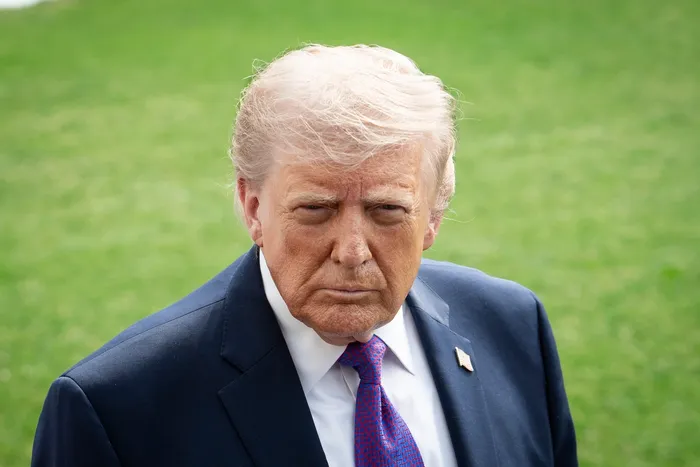
The mainstream media is currently obsessed with a narrative that smells like 2003-era desk stenography. They want you to believe that Donald Trump’s request for allies to escort ships in the Persian Gulf is a reckless gamble that invites a "wider war" with Iran. They treat the Iranian leadership's "warnings" as legitimate strategic deterrents rather than the desperate geopolitical theater they actually are.
Most analysts are asking the wrong question. They ask, "Will this lead to war?" They should be asking, "Why have we spent forty years subsidizing the global energy market with American blood and hardware while our allies reap the benefits of low-cost transit?"
The "lazy consensus" suggests that maintaining a fragile, nervous status quo is the pinnacle of diplomacy. It isn't. It’s a slow-motion surrender of maritime sovereignty. If you’re a stakeholder in global trade, you’ve been sold a lie that stability is something you buy with appeasement.
The Escort Fallacy and the Death of Passive Defense
The current discourse suggests that "escorting ships" is a provocative new escalation. This ignores thirty years of naval history. Operation Earnest Will in the 1980s proved that passivity in the Strait of Hormuz only encourages asymmetric harassment.
When a state actor like Iran threatens to shut down a chokepoint that handles roughly 20% of the world’s petroleum, they aren't looking for a "diplomatic off-ramp." They are exercising leverage. By asking allies to put skin in the game, the U.S. isn't trying to start a war; it’s finally trying to outsource the astronomical cost of maintaining global commerce to the people who actually use it.
Why should the U.S. Navy act as the world’s free security guard?
- China is the primary beneficiary of Persian Gulf oil.
- Europe relies on these lanes for energy security.
- Japan and South Korea would see their economies crater without this transit.
The contrarian truth: The "wider war" has been happening for a decade through proxies, limpet mines, and drone strikes. An escort fleet doesn't create a conflict; it forces a resolution.
The Math of Asymmetric Warfare
Let’s look at the actual physics of this theater. The Iranian strategy relies on the cost-imbalance ratio.
Imagine a scenario where a $20,000 Shahed-style drone or a $50,000 fast-attack boat can successfully harass a $200 million tanker. If the U.S. responds with a $2 million interceptor missile, the U.S. loses the economic war even if it "wins" the skirmish.
The conventional "experts" say we should avoid escalation to keep insurance premiums low. I’ve seen commodity traders lose their shirts waiting for "stability" that never comes because the underlying security architecture is built on sand. True stability only arrives when the cost of aggression exceeds the benefit. Currently, for Tehran, aggression is cheap.
By demanding an international escort coalition, the U.S. changes the math. If a British, French, or Indian ship is the one taking the hit, the diplomatic and kinetic consequences for Iran are no longer localized to a "U.S. vs. Iran" sandbox. It creates a globalized cost for a globalized threat.
Dismantling the Fear of the Strait of Hormuz Closure
Every time a Western leader speaks firmly, the "experts" scream that Iran will "close the Strait."
Let’s get real. Iran cannot "close" the Strait of Hormuz in any meaningful, long-term sense without committing national suicide. The Strait is their only lung. They need to export oil (even via the "ghost fleet" to China) to keep their internal economy from total collapse.
- Geographic Reality: The navigable channels are narrow, yes. But the idea that you can just sink a few ships and block the ocean is a cinematic myth, not a naval reality.
- The Depth Problem: Most of the Strait is deep enough that "blocking" it would require a literal mountain of wreckage.
- Kinetic Response: The moment a physical blockage is attempted, the legal framework of "Transit Passage" under UNCLOS vanishes, and the Iranian Navy ceases to exist within 72 hours.
The fear-mongering about a closed Strait is a psychological operation that the Western media falls for every single time. It’s a paper tiger designed to keep oil prices volatile and Western politicians timid.
The Intelligence of Volatility
The market hates uncertainty, but the industry insider knows that uncertainty is where the profit is.
If you are a logistics firm or an energy hedge fund, you shouldn't be praying for a return to the 2015 status quo. That world is gone. You should be betting on the balkanization of maritime security.
The future isn't a unified global police force; it’s a tiered system of "Pay-to-Play" security. Trump’s move to demand ally participation is the first step toward a privatized or "club-based" security model for the high seas. If you want your cargo protected, you contribute to the fleet. If you don't, you navigate the IRGC's backyard at your own risk.
This is a brutal transition, but it’s a necessary one. The era of the "Global Commons" is being replaced by "Managed Zones."
Why the "Diplomatic Solution" is a Strategic Dead End
The common refrain is that we need a "new JCPOA" or a "regional security framework."
That is a fundamental misunderstanding of the Iranian regime’s internal logic. The IRGC (Islamic Revolutionary Guard Corps) is not a branch of the military; it is a multi-billion dollar conglomerate that owns large swaths of the Iranian economy. They thrive on the "No War, No Peace" state. It justifies their budget and their grip on power.
A diplomatic "fix" that removes the threat of conflict actually weakens the IRGC’s domestic position. Therefore, they will always sabotage it.
The only way to move the needle is to break the IRGC’s business model. That means making the Persian Gulf too expensive for them to play in. It means an overwhelming, multi-national presence that makes "gray zone" harassment impossible.
Stop Asking if Escalation is Dangerous
Of course it’s dangerous. But the "safe" path—the one of letters of protest and UN Security Council meetings—is actually a guaranteed path to a much larger, more chaotic collapse of international law.
When the U.S. asks its allies to escort ships, it is performing a stress test on the Western alliance. It is asking, "Does the 'International Community' actually exist, or is it just a collection of free-riders?"
If the allies refuse, the U.S. should (and likely will) pull back its umbrella. If that happens, watch how fast the "unnecessary escalation" crowd starts begging for the U.S. Navy to return once their gas prices double and their supply chains evaporate.
The real threat isn't a wider war. The real threat is a world where the most vital trade routes are governed by whoever is willing to be the most annoying with a drone and a GoPro.
Security isn't a right; it's a product. And the bill is finally coming due.
Don't look for a "peaceful resolution." Look for a structural realignment of power. The Persian Gulf is just the first domino to fall in a world where the U.S. is no longer willing to pay for everyone else’s dinner.
The era of the free-riding ally is over. Get used to the noise. It's the sound of a system finally correcting itself.
Move your assets. Re-route your expectations. The Strait is only as narrow as your willingness to defend it.
Stop complaining about the fire and start buying the extinguisher.