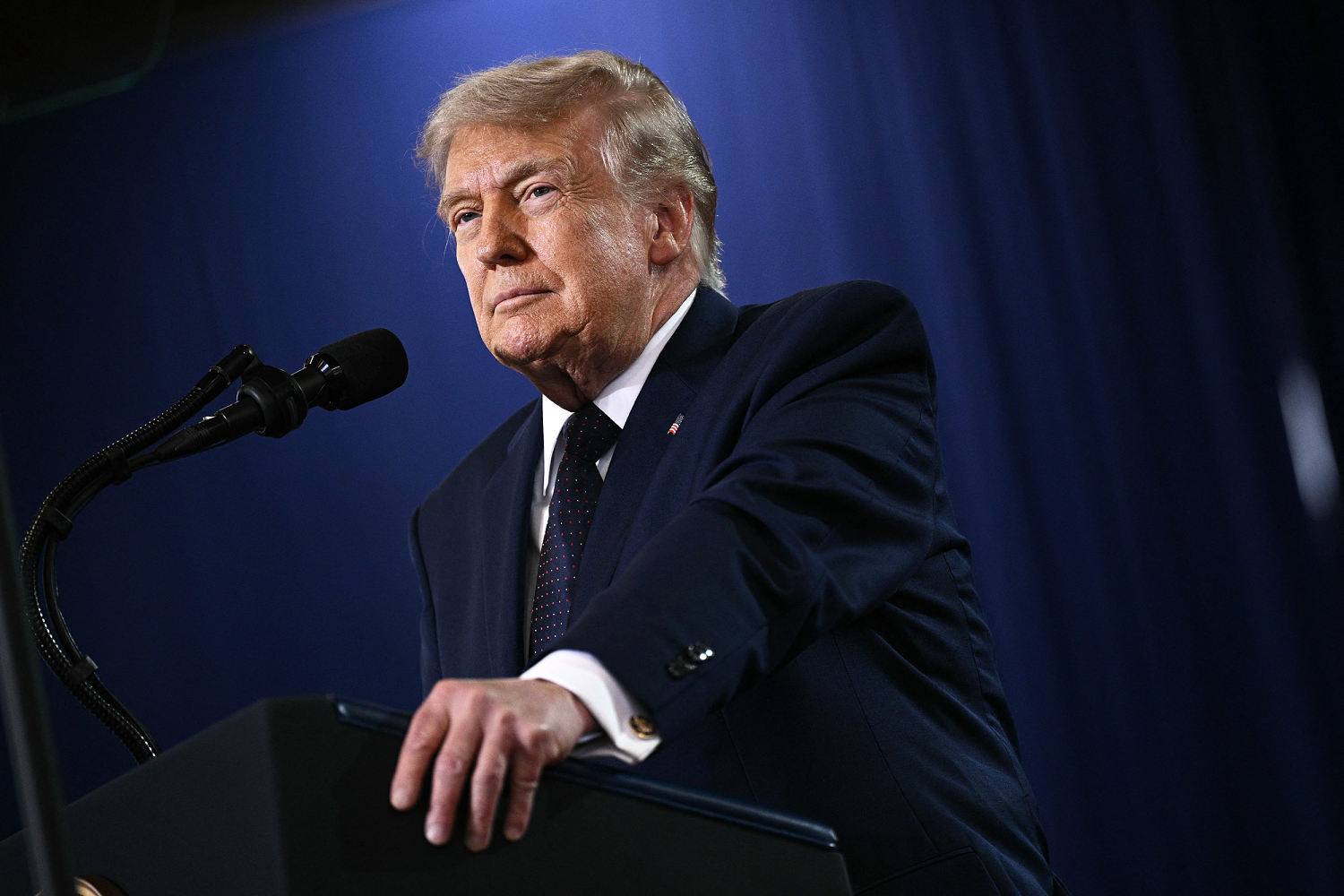
According to CNBC and CBS News, President Donald Trump dismissed growing calls for stricter artificial intelligence regulations on September 14, 2026, while publicly attacking Anthropic CEO Dario Amodei on Truth Social. Most coverage treats this clash like a simple spat between a deregulatory president and a cautious tech founder. That reading misses the actual stakes.
This fight isn't really about whether AI carries risks—both sides acknowledge it does. It's about who gets to hold the brakes, how fast American labs can build infrastructure without handing a lead to Beijing, and what happens when executive authority collides with Silicon Valley's self-policing playbook.
Why Trump Slammed Dario Amodei Over AI Guardrails
Trump didn't mince words on Truth Social. In response to Amodei's public warnings that frontier AI development needs to slow down so safety measures can catch up, Trump argued that Washington already holds plenty of authority without passing new laws.
"The only control or 'guardrails' that AI needs is a STRONG AND SMART (High IQ!) PRESIDENT, and the U.S.A. has that, in spades!" Trump wrote, according to CNBC. He followed that up by targeting Amodei directly: "The Trump Administration has stopped AI 'people' from doing bad, or potentially bad, 'things,' like Dario (Anthropic!), who is now pretending to be a 'perfect little angel' – and we will continue to do so!"
Trump also insisted the federal government already possesses "tremendous CRIMINAL and REGULATORY power over these companies" and dismissed opposition to rapid data center expansion as a "SICK conspiracy" that only helps China. "WHOEVER WINS AI, WINS!" he added.
If you've watched tech policy unfold over the past year, you know Trump's hostility toward Anthropic didn't materialize out of nowhere. The friction goes back months and involves real operational clashes, not just social media rhetoric.
The June Clash Over Claude Fable 5 and Mythos 5
Behind the scenes, the White House and Anthropic had already locked horns during the summer of 2026. According to reporting from Politico and Axios, the trouble began around June 12 when White House officials raised alarms over safety vulnerabilities in Anthropic's Claude Fable 5 model. Amazon, a major Anthropic backer, had reportedly flagged weaknesses that could allow users to bypass safety controls.
Amodei initially disputed the severity of the issue and resisted government demands to pull the model offline. The administration responded by using Commerce Department export controls to restrict access to Anthropic's models, effectively forcing a suspension of Claude Fable 5 and holding up Mythos 5. By June 30, after Anthropic implemented additional safety locks, the government lifted the restrictions.
Even then, the tension lingered. In an earlier dispute reported by Dealroom, the Pentagon had designated Anthropic a "supply chain risk" after the company objected to its models being used for domestic mass surveillance or fully autonomous weapons. A federal judge later upheld that designation. Trump had previously labeled Anthropic's leadership "leftwing nut jobs," making Amodei an outlier among major AI executives who spent much of 2025 and 2026 courting the White House.
Why Trump Frames Regulation as a Gift to China
Trump's argument against formal AI regulation rests on a straightforward geopolitical bet: if Washington slows down frontier labs with compliance rules, Beijing won't follow suit.
Speaking to reporters around the same time, Trump framed the AI race as a two-horse contest. "I'm for let's go and let's win," he said, claiming the United States held roughly a one-to-one-and-a-half-year lead over China with "nobody in third place". Later, in an interview highlighted by BigGo Finance, he put it even more bluntly: "We're leading number one. And China has no guardrails, by the way".
Vice President JD Vance echoed that skepticism toward industry-backed regulation. Vance told reporters that when dominant tech companies ask Congress or the White House to regulate them, it feels like a "Trojan horse"—a way for incumbents to lock in their market position while raising barriers for smaller competitors.
What Dario Amodei Actually Wants From AI Policy
It's easy to mischaracterize Amodei's position if you only read headlines. He isn't asking the government to shut down Anthropic or ban generative AI. His company's revenue run-rate hit $81 billion by the end of October 2026, and Anthropic has committed roughly $895.4 billion in long-term compute and data center leases, according to its amended S-1 filings reported by Business Standard and Dealroom. Nobody signing nearly $900 billion in infrastructure commitments wants the industry to stop.
Instead, Amodei has pushed for targeted transparency, mandatory safety testing, and a deliberate pacing of frontier capabilities so alignment research can keep up.
Amodei's Core Arguments on Frontier Risk
In interviews with CBS News and The Atlantic, and during remarks at the 81st session of the United Nations General Assembly in September 2026, Amodei laid out several specific concerns:
- Capability outpacing control: Amodei argued that frontier labs are scaling model intelligence faster than researchers can verify how those systems behave under pressure.
- Labor market shock: He warned that rapid AI deployment could trigger "unusually painful" job disruption across white-collar and coding sectors if society doesn't prepare.
- Independent auditing: Alongside OpenAI CEO Sam Altman, Amodei has advocated for third-party evaluation firms to inspect safety practices before the most powerful models are released.
- Mandatory reporting: Amodei has called for binding requirements around model testing, evaluation, and incident reporting rather than relying purely on honor-system pledges.
Even within Silicon Valley, Amodei's warnings divide opinion. Following a September 29 White House event where at least 24 AI executives signed voluntary safety principles, Nvidia CEO Jensen Huang reportedly told colleagues in private meetings that Amodei's warnings were overly extreme, according to Crypto Briefing.
How the White House Shifted From Public Attacks to Private Dinners
Here's the twist most casual observers miss. Less than two weeks after slamming Amodei on Truth Social, Trump sat down with him for a private Sunday night dinner on September 27, 2026.
Confirmed by the White House and reported by the Associated Press and Axios, the dinner took place just days after Trump and Chinese President Xi Jinping agreed to establish a bilateral AI safety communication channel. Two days after the dinner, Amodei joined two dozen other tech executives at the White House to sign a voluntary AI safety accord.
That accord established internal controls, external audits, and board-level oversight across major AI firms, though it carried no statutory penalties—Trump described it as "morally binding," according to BigGo Finance.
Executive Enforcement Over Congressional Lawmaking
Rather than waiting on Congress—which passed minimal tech legislation throughout 2026—the Trump administration has carved out a distinct governance model. It rejects broad statutory regulation from Capitol Hill while flexing existing executive tools behind closed doors.
On November 5, 2026, the Justice Department launched a Super Intelligence Task Force to coordinate criminal and civil enforcement involving AI misuse under existing statutes. Days later, during a 60 Minutes broadcast reported by TipRanks and BeInCrypto, Trump claimed his team had previously warned the head of a major AI firm to fix a dangerous issue or "get ready to go to jail". While the White House never officially named the executive from that November anecdote, the timeline closely mirrored the June export-control standoff with Anthropic.
Meanwhile, critics like Amos Toh, senior counsel at the Brennan Center for Justice, warned the Associated Press that housing AI oversight inside national-security bodies—such as the task force structure involving Director of National Intelligence Jay Clayton and Pentagon CTO Emil Michael—risks sidelining consumer protection, privacy, and civil rights in favor of executive secrecy. Nonprofits including the Alliance for Secure AI and Public Citizen also sued OpenAI, Anthropic, and three other firms in November 2026, arguing that self-regulation has failed to guarantee model control.
What This Policy Clash Means for Businesses and Investors
If you're building with AI, investing in the sector, or setting enterprise compliance policies, you can't afford to take Trump's "no new regulation" headline at face value. Deregulation at the legislative level doesn't mean zero oversight. It means oversight has shifted to ad-hoc executive action.
Practical Steps to Protect Your AI Strategy
- Don't treat deregulation as immunity. Even without a federal AI statute, the administration has shown it will use export controls, procurement blacklists, and existing DOJ criminal statutes when a model creates national-security or safety blowback. If your company deploys frontier models in regulated industries, document your human-in-the-loop controls and audit trails now.
- Diversify your foundation model vendors. Anthropic's summer export-control suspension and Pentagon supply-chain dispute proved that single-vendor dependency carries political risk. Architect your software stack so you can route traffic across multiple providers—such as Anthropic, OpenAI, or open-weight models—within hours if a vendor faces a sudden federal restriction.
- Watch state-level and civil litigation gaps. Because Congress remains stalled and federal rules rely on voluntary accords, state attorneys general and private plaintiffs are filling the vacuum. Relying solely on a vendor's voluntary safety pledge won't shield your business from product liability or privacy lawsuits.
- Track IPO and compute disclosures closely. As Anthropic moves toward its public listing with an $81 billion revenue run-rate and nearly $900 billion in infrastructure commitments, read S-1 risk factors around government contracts and export controls rather than relying on political soundbites.
Trump's public rebuke of Dario Amodei made for sharp headlines, yet the real takeaway lies in how both men operate when the cameras turn off. Washington isn't walking away from AI oversight—it's trading predictable rulebooks for raw executive leverage, and every company building on frontier models has to plan for the whiplash.
Watch President Trump's remarks on AI regulation and Dario Amodei to see the CNBC broadcast covering the administration's pushback against stricter federal guardrails.