Panic-buying at Costco over a downed Outlook server sounds ridiculous until your flight gets grounded, your bank app freezes, and your office tools go dark in the same week.
You start wondering if the internet is quietly falling apart. Also making headlines in this space: The Man Who Built the Mirror Now Trapped Inside the Glass.
An Economist/YouGov poll from November 2026 found that 66% of Americans believe major tech outages have been happening more often than usual, and 53% suspect those incidents are connected. Even emergency planners have felt the jitters, with Fortune reporting on FEMA officials pulling extra cash amid public anxiety and social media doomsday chatter.
Here is the real answer to when you should actually start worrying. You don't need to worry about a coordinated digital apocalypse, because the data shows outages aren't surging wildly out of nowhere. You should worry about how concentrated our everyday infrastructure has become, because one bad config push or fried transformer now takes down half your Tuesday. Further details on this are detailed by The Next Web.
Are Major Outages Actually Happening More Often
Your brain is terrible at judging outage frequency. When three massive brands break in a two-week stretch, it feels like an epidemic.
Statistically, the picture looks weird. According to Uptime Institute's 2026 Annual Outage Analysis, outage frequency on a per-site basis actually declined for the fifth straight year. Total critical cloud downtime also dropped roughly 28% in 2025, falling from 244.8 hours in 2024 down to 175.3 hours.
So why does everything feel so fragile?
Blast radius. That's the whole story.
In Control Plane's 2026 Cloud Outage Report tracking 62 major cloud incidents, 2026 had already topped 2025's count of major cloud disruptions by October (18 versus 16). Individual data centers are getting better at staying online, yet the few failures that slip through hit millions of people at once.
Think about what happened during the October 2025 AWS outage. An automated DNS management glitch in a single region—US-EAST-1—triggered over 17 million Downdetector reports worldwide and knocked out Snapchat, Netflix, and major retail sites for more than 15 hours. A month later, a core Cloudflare disruption generated over 3.3 million reports in under five hours.
When everyone builds on the same three cloud landlords and two content delivery networks, you don't get more total failures. You get fewer, louder ones.
Why Everything Breaks At Once
Most people assume hackers are behind every frozen screen. That same November 2026 YouGov survey showed 65% of Americans are worried about major cyberattacks on U.S. computer systems.
Cyberattacks happen, sure. In 451 Research's 2026 study, security incidents like ransomware were the top outage driver for 22% of organizations.
Still, the biggest enemy of uptime isn't a shadowy syndicate in a basement. It's a routine Tuesday software update.
Bad Code And Config Pushes
Control Plane's analysis of 62 major cloud outages found that 55% started with a change or code—specifically configuration pushes, deployments, software bugs, or automation reacting badly to unexpected input.
I've watched production systems die over a single mistyped flag in a deployment script. Modern infrastructure moves fast, and automated pipelines push bad instructions across global networks before a human engineer can even open a terminal.
In January 2025, an Azure East US 2 outage lasted over 50 hours because networking replicas were recycled in parallel while enabling a feature, breaking quorum and wiping index data. Nobody hacked anything. The system tripped over its own shoelaces.
Power Grids And Physical Strain
Software bugs get fixed in hours. Melted hardware doesn't.
A fascinating shift showed up in the 2026 numbers. While configuration errors dominated 2025, physical failures—power, cooling, lightning strikes, and thermal events—became the leading cause of major cloud outages in 2026. Worse, power and cooling failures had a median duration of nearly 22 hours, roughly four times longer than configuration-driven outages.
AI-driven workloads are cramming unprecedented heat and electricity demand into aging regional grids. Uptime Institute noted in its 2026 report that external infrastructure failures—power availability and severed fiber lines—are playing a much bigger role in extended disruptions.
Hidden Third-Party Chains
Even companies that do everything right get burned by vendors they barely mention in their terms of service.
StackGen's 2026 status-page tracking found that third-party cascades—where an upstream supplier's failure drags down a customer-facing app—accounted for 26% of assessed incidents in the first half of 2026, following 35% in 2025.
When Google Cloud stumbled on June 12, 2025, over 50 online services went down with it, including parts of Cloudflare that leaned on Google's infrastructure. You think you're using five independent apps, and underneath the hood, four of them are renting space on the exact same server rack.
The Real Red Flags That Mean Trouble
Most outages are annoying. Your Spotify queue stalls, your Slack messages lag, and you lose an hour of productivity.
You only need to actually worry when disruptions cross specific thresholds that signal systemic stress rather than routine maintenance blips.
- Multi-region failures inside the same provider. Cloud providers promise redundancy across geographic zones. Yet Control Plane found that 39% of outages across AWS, Azure, and Google Cloud spilled beyond a single region into multiple regions or global control planes. When a provider's global control plane goes dark, your backup region can't even receive instructions to take over.
- Physical infrastructure bottlenecks. Pay attention when an outage stems from grid blackouts, substation fires, or cut subsea cables rather than a software patch. Code rolls back in minutes; physical repairs take days.
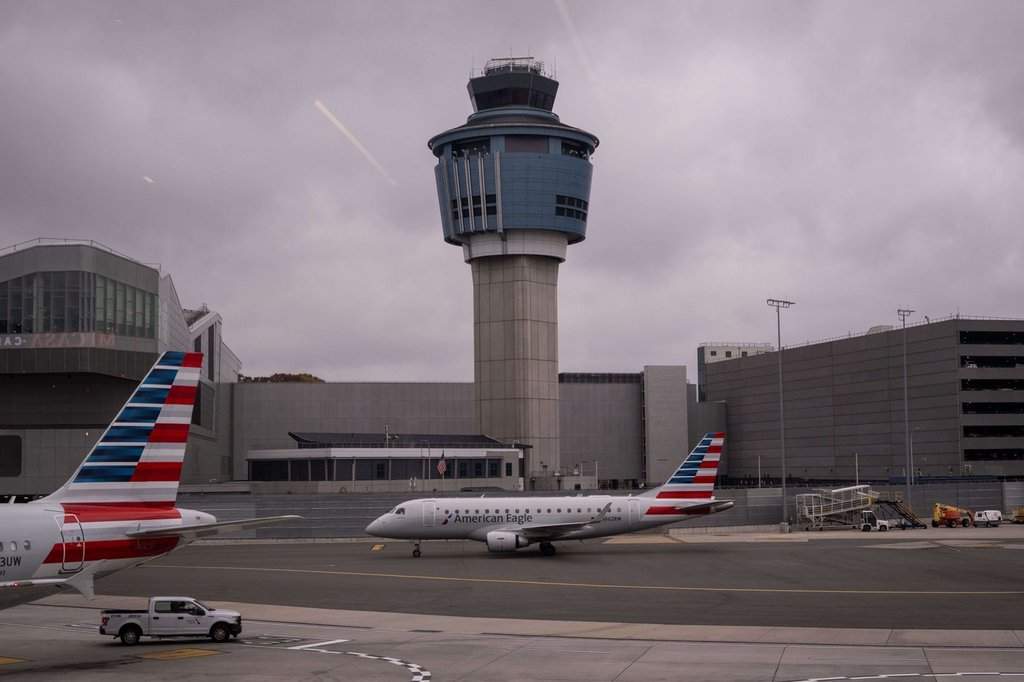
- Cross-sector simultaneous hits. One airline glitch is a vendor problem. When aviation ground stops, payment processors, and telecom networks stumble within days of each other—even for unrelated reasons—the friction compounds because recovery teams rely on the same communication and cloud tools to fix their own systems.
- Extended duration past the 6-hour mark. Pulsetic's monitoring data through November 2026 shows that 90.7% of confirmed outages get resolved within an hour. Across major cloud failures, the median duration sits right around six hours. Anything dragging past 12 to 24 hours usually means corrupted state data or broken hardware.
Why Your Personal Backup Plan Probably Fails
Most prepper advice tells you to buy a giant battery station and hoard canned beans. That's fine for a winter ice storm, and completely useless when your bank's API goes offline while you're standing at a grocery checkout.
Honestly, modern life breaks at the payment and authentication layer long before the power grid collapses.
Think about how many things in your pocket depend on a live cloud handshake right now:
- Tap-to-pay and debit cards. Point-of-sale terminals need an active network path to validate transactions. When a telecom carrier or payment processor drops, your plastic card turns into an expensive bookmark.
- Boarding passes and hotel keys. Apps that require fresh login tokens fail completely if the authentication provider is down, leaving you locked out of reservations you already paid for.
- Two-factor authentication loops. If your SMS carrier has an outage while you're trying to log into an emergency account, you're stuck.
You don't need a bunker. You need to remove single points of failure from your daily routine.
Practical Steps To Outage-Proof Your Week
Stop doomscrolling Downdetector every time an app lags, and spend twenty minutes fixing the spots where a 4-hour outage would genuinely ruin your day.
Keep physical cash in two places. Stash $100 to $200 in small bills ($5s, $10s, and $20s) in your wallet and another small reserve at home. During payment network glitches, cash registers can still make change even when card readers throw error codes.
Screenshot critical confirmations before you travel. Never rely on an airline app, ticket portal, or hotel platform to load at the gate or front desk. Save offline PDFs or screenshots of boarding passes, confirmation codes, and itinerary numbers the night before you leave.
Split your money across two separate institutions. Keep your primary checking account at one bank and a secondary debit or credit card at a completely different institution. If one bank's core processor stalls—like JPMorgan Chase's service hiccup in November 2026—you still have immediate access to funds.
Switch off SMS two-factor authentication. Move your critical email and financial logins to an offline authenticator app (like Google Authenticator, Authy, or 1Password) and print your backup recovery codes. App-based codes generate locally on your phone's clock without needing cell towers or cloud servers.
Enable offline file access on your work machine. If you live inside Google Workspace or Microsoft 365, turn on local offline syncing for your active folders today. When Outlook or cloud drives stall mid-afternoon, you can keep editing documents locally and let them sync once engineers push a fix.
Download offline maps for your home metro area. Both Google Maps and Apple Maps let you save regional maps directly to your device storage. If a regional cellular outage knocks out data while you're driving across town, GPS satellites still pinpoint your location on downloaded maps without an internet connection.
Outages aren't a sign that modern civilization is collapsing. They're the predictable tax we pay for running everything through a handful of giant, hyper-connected cloud pipelines. Build a tiny bit of offline friction into your routine now, and the next time half the internet goes dark, you'll barely notice.