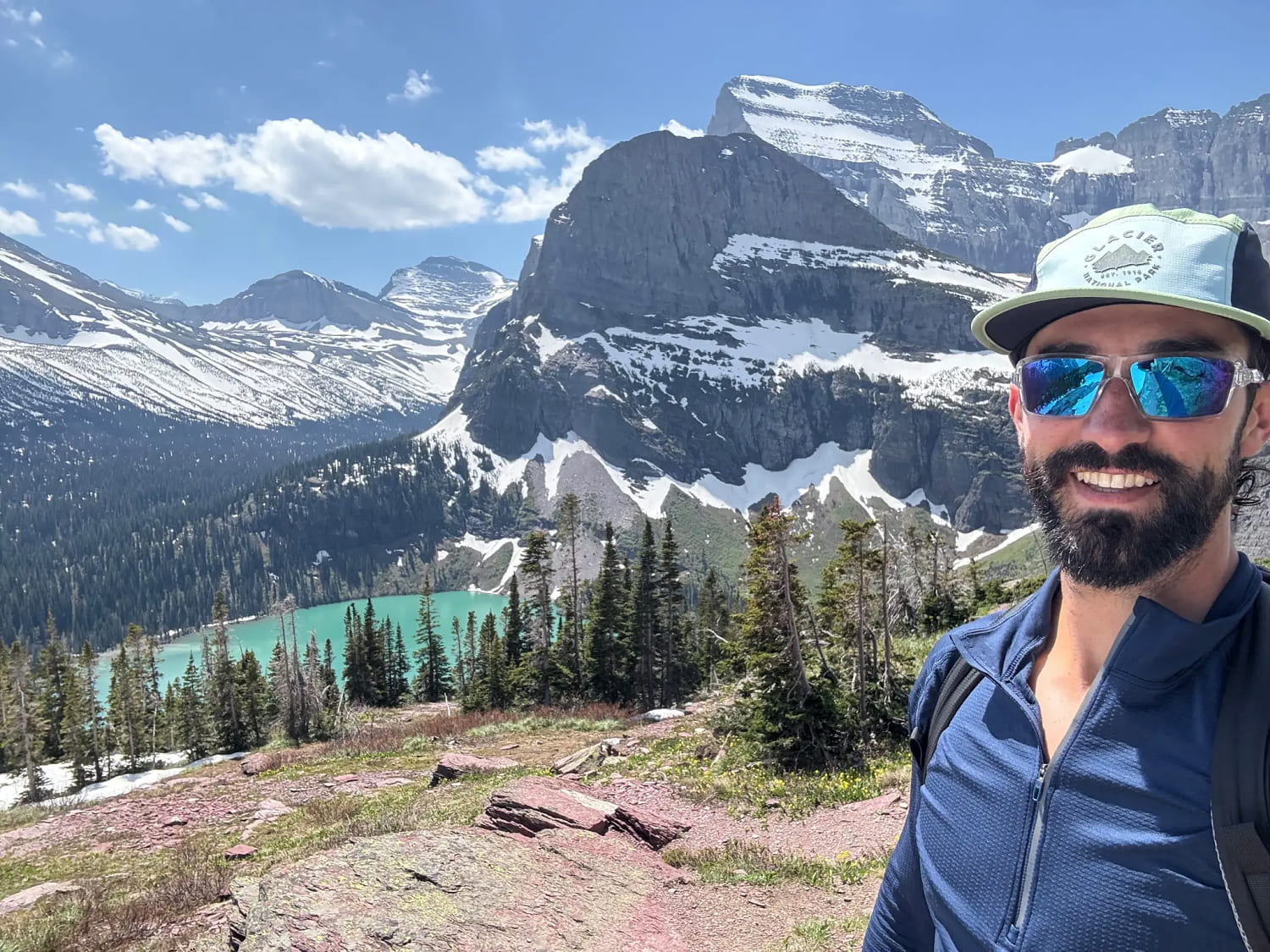
You are walking down a popular national park trail. The sun is shining, your camera is out, and you feel entirely safe. Then, in a split second, you find yourself staring at a grizzly bear just 15 feet away. This isn't a hypothetical horror story. It's exactly what happened to Daniel Crago, a 32-year-old hiker from San Diego, while exploring the Grinnell Glacier Trail in Glacier National Park on May 28, 2026.
Crago did what standard park brochures tell you to do. He made noise to avoid startling the animal. He shouted, "Hey bear!" But instead of backing away, the grizzly charged. It clamped its jaws onto his right arm, crushed the bones in his forearm, and dragged him up to 30 feet down the mountainside.
Most people think survival in bear country is about memorizing a few basic rules. The reality is far more complex. When a wild animal charges, your textbook knowledge vaporizes, and survival comes down to environment, luck, and the immediate actions of the people around you. Understanding why standard advice failed Crago can save your life on your next backcountry trip.
Why the Standard Bear Safety Advice Failed on Grinnell Glacier Trail
When you enter a national park, rangers hand you a pamphlet telling you to make your presence known. The logic is solid. Bears usually don't want to encounter humans, and startling them triggers a defensive attack. Crago spotted a smaller cub first, then noticed a massive adult grizzly on the slope right above him. He yelled to alert the bear.
So, what went wrong?
According to Glacier National Park officials, a critical environmental factor stripped away his advantage: rushing water. The Grinnell Glacier Trail is surrounded by the roar of snowmelt and waterfalls. The loud rushing water made it impossible for the bear to hear Crago until he was already inside its comfort zone. At 15 feet, shouting doesn't say "I'm a human, please ignore me." It says "I am an immediate threat."
The bear acted on pure predatory and protective instinct. When you surprise a grizzly at close range, especially in a loud environment where ambient noise masks your approach, calling out can startle the animal further rather than defusing the situation.
The Anatomy of a Backcountry Rescue
Crago survived because of a series of highly coordinated actions by perfect strangers. After the bear let go and ran down the mountain, Crago was left with a shattered forearm. His hand was dangling. In the remote backcountry, a severe crush injury like that can easily turn fatal due to rapid blood loss or shock.
Luck was on his side. A pediatric emergency room doctor happened to be hiking right behind him. The physician immediately applied a tourniquet to stop the bleeding and stabilized the arm. Another hiker stood guard, making continuous loud noises to ensure the two bears didn't return to the scene. A third bystander used a satellite communication device to ping emergency services, calling in a rescue helicopter.
Crago was airlifted to Logan Hospital in Kalispell, Montana. He has already undergone three intense surgeries to reconstruct his forearm bones, with more operations scheduled. The financial cost of surviving is staggering. Even with insurance, the helicopter transport alone cost him $20,000 out of pocket. He set up a GoFundMe campaign to help cover the crushing medical bills, promising that any extra funds raised will go straight back to the National Park Service.
This Season is Proving Unusually Dangerous
If you think this was an isolated fluke, you're mistaken. The northern Rockies are experiencing an incredibly active and dangerous season for human-bear conflicts.
Just weeks before Crago's attack, a 33-year-old hiker named Anthony Pollio went missing near the Mount Brown Lookout in Glacier National Park. Rescuers later found his body just 50 feet off the trail with injuries completely consistent with a fatal bear mauling. The same week, two brothers were severely mauled by a female grizzly with cubs near Old Faithful in Yellowstone National Park.
Experts like Chuck Neal, a retired ecologist who spent decades studying grizzly habitats, note that Glacier National Park holds some of the highest-quality bear habitats in the lower 48 states. It actually boasts a denser bear population than Yellowstone. Neal points out a common issue: trails are heavily populated by younger, fast-moving hikers who barrel up switchbacks without paying attention to their surroundings.
Early summer is prime time for these encounters. Snowmelt forces bears down into lower elevations to look for food, right where the most popular hiking trails sit.
How to Actually Protect Yourself in Grizzly Territory
You shouldn't let fear keep you indoors. Crago himself stated from his recovery bed that this trauma won't stop him from hiking. But you do need to completely alter how you move through grizzly territory. Forget the basic tips. Here is how you actually survive.
Ditch the Bears Bells and Use Your Voice Constantly
Bear bells are completely useless. They don't carry enough distance and the sound mimics natural noises like birds or trickling water. You need to yell, clap, and call out loudly, especially when you are approaching blind corners, dense brush, or areas with loud rushing water. If you can't hear your own footsteps over a nearby river, assume a bear can't hear you either.
Keep Bear Spray Accessible, Not Packed Away
Crago couldn't deploy his bear spray because the attack happened too fast. If your canister is clipped to the side of your backpack or buried inside a zippered pouch, it's useless. It needs to be on a hip holster or chest harness. You must be able to unholster, flip the safety wedge, and spray in under two seconds. Practice the motion at home until it's muscle memory.
Travel in Dense Groups
Statistics don't lie. The National Park Service notes that the vast majority of bear attacks happen to solo hikers or pairs. Groups of four or more people naturally create more noise, occupy more physical space, and are rarely targeted by grizzlies. Crago had stepped away from his hiking partner to take photos when the encounter occurred. Stay together.
Invest in Satellite Communication
Do not rely on cell service. If you're hiking in places like Glacier, Yellowstone, or the backcountry of the Pacific Northwest, carry a dedicated satellite messenger. Devices like a Garmin inReach or an ACR Bivy Stick allow you to press an SOS button to summon a helicopter immediately, even from the bottom of a canyon. It's the difference between getting care in one hour or bleeding out over ten hours.
Before you set out on your next trip, check the local park website for trail closures. Glacier National Park has already shut down sections of Lincoln Lake, Josephine Lake, and the Grinnell Glacier trail due to extreme bear activity. Pay attention to the warnings, hike defensively, and never assume a trail is safe just because it's popular.