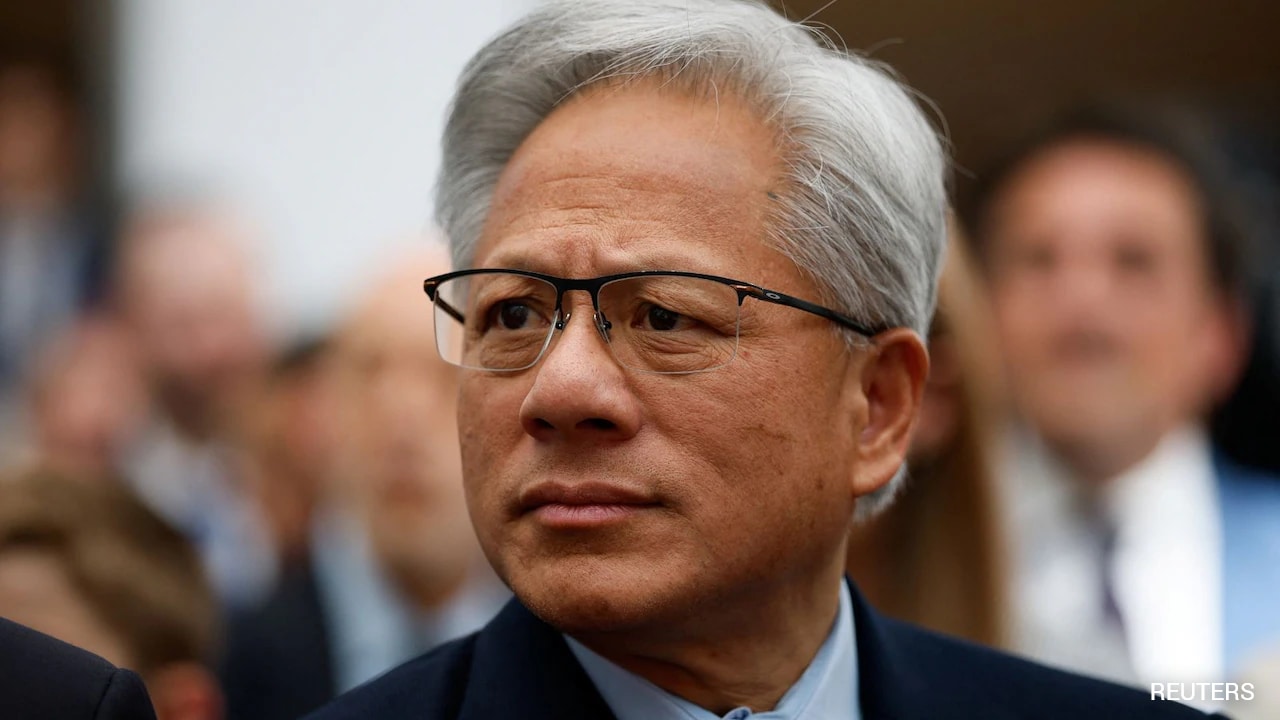
You can't separate Silicon Valley from national security anymore. If you thought the November 2026 chaos surrounding Jensen Huang was just another messy executive affair, you missed the real story.
For eleven days in November, the chip giant's future hung by a thread after Huang resigned over an extramarital relationship with Alice Huang—a former executive at Singapore-based data center operator Megaspeed International whom U.S. intelligence officials suspected of working with Beijing's Ministry of State Security. Then, on November 23, Nvidia's board unanimously reinstated him following direct intervention from President Donald Trump and assurances from senior U.S. officials. Wall Street cheered, sending shares surging over 30% at the open.
Case closed, right? Not even close.
The headlines focused on the soap opera—the secret relationship, the boardroom panic, and the dramatic White House rescue. But if you look at the regulatory mechanics underneath, Nvidia's biggest risk isn't whether its 63-year-old co-founder keeps his job. It's whether the company's entire global distribution model can survive the bipartisan crackdown now bearing down on semiconductor export controls.
Why the Nvidia Spy Plot Is Really About Supply Chain Loopholes
When The New York Times first broke the story in late October 2026 that U.S. intelligence had flagged Jensen Huang's close ties to Alice Huang (who is of no relation to the CEO), Nvidia's initial defense was telling. Company spokesperson John Rizzo stated that meeting with customer executives is simply part of the job and insisted Megaspeed received "ordinary business information" rather than trade secrets.
That framing completely misses how modern tech espionage actually works.
Intelligence agencies aren't always looking for blueprints of the next GPU architecture. Often, they're mapping regulatory blind spots. According to reporting from The New York Times, Megaspeed International purchased more than $4.8 billion worth of Nvidia chips over a two-year span. While Megaspeed operates out of Singapore and has denied illicitly routing hardware into China, U.S. authorities have spent years investigating whether third-party data centers in Southeast Asia act as transshipment hubs to bypass Washington's strict semiconductor sanctions.
Here's the problem with Nvidia's "ordinary customer" excuse:
- Scale creates leverage. A buyer spending nearly $5 billion isn't just another client; they're a tier-one allocation partner in a market starved for compute.
- Access equals insight. Even without classified technical schematics, proximity to a founder-CEO reveals shipping timelines, allocation priorities, and which geopolitical pressure points Washington is leaning on.
- The blacklist verdict speaks louder than press releases. On the exact same day Nvidia reinstated Huang, the U.S. Commerce Department's Bureau of Industry and Security (BIS) added Megaspeed to its trade blacklist, declaring the firm was acting contrary to U.S. national security interests.
You don't add a $4.8 billion customer to the Entity List after a year-long pause in new designations unless federal investigators see serious red flags.
How Eleven Days Exposed Nvidia's Single-Point-of-Failure Problem
I've watched corporate governance crises unfold across tech for years, and boards almost never reverse a CEO ouster in under two weeks unless they realize the alternative is structural collapse.
Between October 29 and November 23, 2026, Nvidia wiped out more than $600 billion in market value at the height of the turmoil. Why did the market react so violently? Because Nvidia isn't governed like Apple or Microsoft, where deep benches of operational lieutenants insulate the stock from leadership shocks.
For 33 years, Jensen Huang has been Nvidia's chief strategist, lead diplomat, and primary commercial closer. He negotiates directly with sovereign wealth funds, hyperscalers, and heads of state. When the board accepted his resignation on November 12—amid revelations of both the Megaspeed relationship and separate internal affairs—interim leadership under CFO Colette Kress immediately faced a brutal reality. Without Huang in the leather jacket, Nvidia's valuation premium evaporated.
Honestly, the board's U-turn proves two uncomfortable truths at once:
- Key-person risk at Nvidia is off the charts. Directors essentially admitted they couldn't run the world's most valuable AI infrastructure provider without him, even after publicly preparing to push him out.
- Governance takes a back seat to geopolitical muscle. Attorney General Todd Blanche told reporters the Justice Department found no criminal wrongdoing by Huang, and President Trump openly boasted to CNBC that he "convinced" the board and "made the deal" to bring him back.
When a public company's C-suite decisions require a green light from the Oval Office to calm Wall Street, you're no longer looking at a normal tech company. You're looking at a quasi-state strategic asset.
Why Washington's Probe Is Just Getting Started
If you're holding Nvidia stock or building AI infrastructure on top of its hardware, don't mistake a White House clearance for regulatory immunity. Executive branch politics shift fast, and Capitol Hill isn't letting this go.
Look at the friction already visible inside Washington:
- Cabinet divisions are out in the open. Reports indicate Treasury Secretary Scott Bessent and other China hawks pushed aggressively against delays in blacklisting Megaspeed, exposing sharp disagreements inside the administration over how tightly to choke off chip flows.
- Congressional subpoenas and hearings are locked in. Three U.S. House committees summoned Huang for a closed-door transcribed interview scheduled for December 1, while Senate Banking Committee leaders Tim Scott and Elizabeth Warren are scrutinizing whether existing export laws are failing to stop advanced chips from reaching Beijing.
- Shareholder lawsuits are piling up. Retail investors, including plaintiff Mark Kistenmacher in California, have already filed suit alleging Nvidia misled shareholders by failing to disclose national security and governance risks tied to the CEO's conduct.
- International regulators are digging in. Singapore's Prime Minister Lawrence Wong confirmed local authorities are running their own independent investigation into Megaspeed's operations.
Even Nvidia's own board knows the old way of operating is dead. Alongside Huang's reinstatement, directors announced a new National Security and Export Control Committee made up solely of independent board members and launched a search for the company's first Chief Compliance Officer. That's not routine housekeeping. That's a company scrambling to build guardrails before Congress builds them for it.
What Investors and Tech Leaders Should Watch Next
Whether the alleged spy plot turns out to be a calculated Beijing intelligence operation or an opportunistic executive taking advantage of personal proximity, the business impact is identical. The era of frictionless global GPU sales through third-party intermediaries is over.
If you're evaluating Nvidia's trajectory—or managing enterprise exposure to AI hardware supply chains—focus on three concrete signals over the coming quarters:
- Track Entity List spillover across Southeast Asia. Megaspeed won't be the last regional data center operator scrutinized for chip diversion. Watch whether BIS expands licensing requirements to other cloud resellers in Malaysia, Singapore, and Hong Kong, which could tighten near-term revenue recognition.
- Audit the new Chief Compliance Officer's authority. Once Nvidia hires its CCO, check whether that executive reports directly to the independent National Security Committee rather than the CEO. True compliance independence will slow down grey-market deal approvals, which hurts short-term sales velocity but protects long-term export licenses.
- Price in permanent political beta. Nvidia's stock no longer trades strictly on Blackwell or Rubin architecture demand. Every Senate Banking hearing, House committee transcript leak, or Commerce Department ruling will trigger sharp intraday swings. Size your position assuming headline volatility is a permanent feature, not a temporary glitch.
Jensen Huang got his corner office back, and Nvidia's silicon moat remains unmatched. Yet the price of admission for staying on top has changed forever—from now on, every chip Nvidia sells carries a geopolitical receipt.