Wall Street loves a clean narrative, especially right after an election. Following the recent Democratic midterm gains, the loudest hot take making the rounds is that the massive wave of US AI data center construction is about to hit a brick wall.
It won't. Not even close.
The panic comes from a basic misunderstanding of how power grids, state permitting, and hyperscale capital actually operate. Sure, a stronger Democratic presence in Congress changes the tone in Washington. You're going to hear a lot more noise about carbon emissions, water usage in drought-prone states, and residential electricity bills spiking because a tech giant moved in next door.
But noise doesn't cancel multi-billion-dollar concrete pours. When you look at where the money is already committed and who actually controls the dirt these facilities sit on, the thesis that a Democratic midterm victory kills the US AI data center boom falls apart pretty quickly.
Why Capitol Hill Doesn't Control the Dirt
If you've ever sat in on a zoning board meeting in Loudoun County, Virginia, or tracked an interconnect queue in Texas, you know a fundamental truth about infrastructure. Federal lawmakers rarely stop local construction.
Data centers live and die at the state and municipal levels. Permitting, property tax abatements, water rights, and local grid hookups are decided by county commissioners, state utility regulators, and regional transmission organizations like PJM Interconnection or ERCOT. A shift in the US House or Senate doesn't suddenly give federal legislators veto power over a substation expansion in Ohio or a land deal in Georgia.
Consider where the biggest AI clusters are actually going up right now. Northern Virginia remains the undisputed heavyweight champion, handling roughly 70 percent of the world's internet traffic, and its local economy runs on data center tax revenue. Texas is booming because ERCOT operates largely outside federal grid jurisdiction, allowing developers to move at a speed that makes regulators in other states dizzy.
Even in blue states, governors aren't exactly eager to turn away the biggest capital expenditure cycle since the interstate highway system. Nobody wants to be the politician who told Microsoft, Google, or Meta to take their $10 billion campus and thousands of union construction jobs across state lines.
The Real Bottleneck Isn't Politics
Let's be honest about what's actually slowing down AI infrastructure. It isn't a Democratic committee chair holding a hearing on algorithmic bias or environmental justice. It's physics and supply chains.
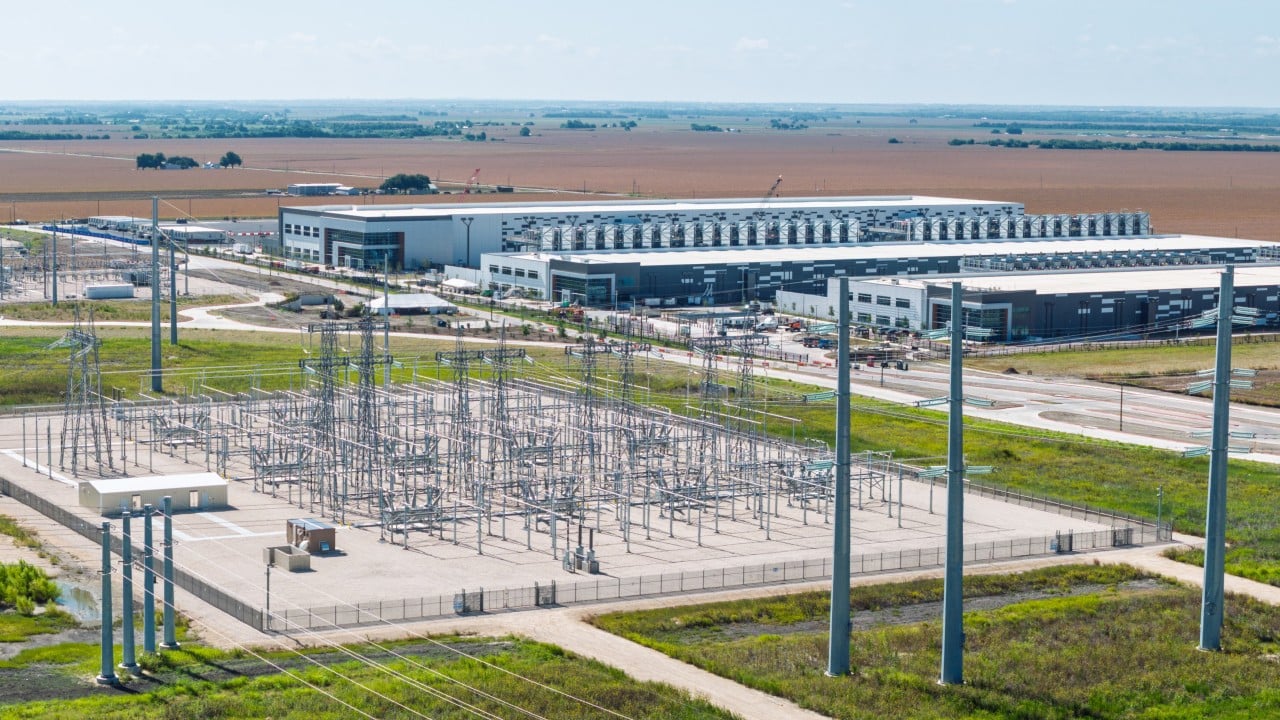
Right now, if you want to build a 100-megawatt AI training facility, your biggest headache is waiting up to three or four years for high-voltage transformers and switchgear. Utilities across the country are drowning in interconnection requests they simply don't have the transmission lines to fulfill. The Lawrence Berkeley National Laboratory has tracked thousands of gigawatts of generation and storage stuck in interconnection queues nationwide, and massive load requests from data centers are running into the exact same physical wall.
Politics didn't create a global shortage of grain-oriented electrical steel. Congress didn't cause the backlog at transformer manufacturing plants.
Whether Republicans or Democrats hold the gavel in Washington, you cannot conjure a 345-kilovolt substation out of thin air. The pace of the AI buildout in 2026 and 2027 is dictated by utility engineers and equipment lead times, not floor speeches on C-SPAN.
How Democratic Priorities Actually Shape the Buildout
Saying the boom won't end doesn't mean nothing changes. If you're developing, financing, or investing in digital infrastructure, ignoring the political shift is a rookie mistake. A stronger Democratic hand in Washington alters the rules of engagement—specifically around power sourcing and cost allocation.
The Death of Easy Behind-the-Meter Gas Deals
Over the past two years, desperate hyperscalers started bypassing sluggish utility queues by co-locating data centers directly next to existing power plants. Some looked at nuclear, which got massive bipartisan support, while others started eyeing natural gas turbines to get compute online fast.
Expect much tougher scrutiny on fossil-fuel-heavy behind-the-meter setups. Environmental regulators and Democratic lawmakers are already pushing hard against moves that keep aging gas or coal plants running past their retirement dates just to feed private AI clusters. The Federal Energy Regulatory Commission (FERC) has already shown skepticism toward co-location deals that shift grid maintenance costs onto everyday ratepayers, famously rejecting an amended interconnection agreement for an Amazon data center campus next to the Susquehanna nuclear plant in Pennsylvania late in 2024.
With Democrats holding more leverage, FERC isn't going to suddenly loosen up. Developers relying on quick-and-dirty fossil fuel workarounds are going to face brutal delays.
Ratepayer Protection Becomes the Main Event
If there is one issue where progressive activists and suburban voters completely agree, it's hatred of higher electric bills.
Utilities have a habit of socializing the cost of new transmission lines across all residential customers. When a single AI campus demands as much power as a mid-sized city, consumer advocates rightfully ask why grandma has to pay an extra $15 a month on her utility bill so a trillion-dollar tech company can train its next foundational model.
Democratic lawmakers are latching onto this aggressively. You should expect new federal pressure, alongside state-level tariff reforms, forcing hyperscalers to pay upfront for their own grid upgrades and sign rigid take-or-pay contracts. For cash-rich giants like Alphabet or Amazon, paying an extra few hundred million dollars for dedicated transmission is an annoyance, not a dealbreaker. For smaller, leveraged developers trying to flip powered land, those upfront capital requirements will squeeze margins hard.
Clean Energy Mandates Get Teeth Again
Under the Inflation Reduction Act, clean energy tax credits triggered a massive wave of wind, solar, and battery storage projects. A Democratic midterm win effectively takes full repeal of those credits off the table.
For AI data centers, this is actually good news disguised as a regulatory hurdle. Tech companies already have strict internal net-zero pledges, and preserving federal clean energy incentives keeps renewable power purchase agreements (PPAs) financially viable. The catch is that lawmakers will likely push for stricter "additionality" rules—meaning data centers can't just buy cheap renewable energy credits from a wind farm built ten years ago in another state. They'll have to fund new clean generation on the exact same regional grid, operating 24/7.
What Hyperscalers Are Doing Right Now
If you want to know how terrified Big Tech actually is about the midterm results, just look at their capital expenditure guidance. Nobody is pulling back.
Microsoft, Alphabet, Meta, and Amazon are collectively pouring hundreds of billions of dollars into data center infrastructure because they view falling behind in AI compute as an existential threat. To them, regulatory friction in Washington is just another line item in the compliance budget.
Smart operators are already adapting to the post-midterm reality in three specific ways:
- Doubling down on nuclear and geothermal. Nuclear power is the rare energy source that satisfies both AI's need for 24/7 baseload power and Democratic demands for zero-carbon electricity. Deals like Constellation Energy's restart of Three Mile Island Unit 1 for Microsoft, alongside Google's investments in enhanced geothermal via Fervo Energy, represent the exact blueprint that survives Washington scrutiny.
- Pre-funding grid upgrades. Instead of fighting consumer advocates in public utility commission hearings, top developers are voluntarily structuring "large load tariffs" that ring-fence their infrastructure costs away from residential ratepayers.
- Shifting secondary workloads to power-rich markets. While latency-sensitive inference needs to sit close to major population centers, massive AI training runs don't care about a 20-millisecond delay. Developers are actively scouting sites in the Midwest and Pacific Northwest where wind, hydro, and spare transmission capacity are far easier to permit than in congested East Coast corridors.
How to Play This Shift Without Getting Burned
If you're making investment, real estate, or operational decisions around the AI infrastructure sector, stop trading on scary political headlines and look at the underlying friction points.
First, audit the power source of any data center project you touch. Projects banking on unregulated natural gas bridge power or contested co-location loopholes carry massive regulatory risk right now. Projects backed by long-term clean energy PPAs, battery storage, or utility-approved green tariffs are infinitely safer.
Second, watch the transformer and cooling supply chains, not Congress. Companies solving physical bottlenecks—like liquid cooling manufacturers, high-voltage grid equipment suppliers, and specialized electrical contractors—have multi-year order backlogs that Washington politics simply cannot touch.
Third, prioritize state-level utility relationships. Before buying into any powered-land pitch, look closely at the local Public Utility Commission's stance on cost allocation. If a developer hasn't already priced dedicated substation and transmission upgrades into their pro forma, walk away.
The US AI data center boom isn't ending because one party had a good election night. The demand for compute is too relentless, the capital is too deep, and the local economic incentives are too addictive for states to turn off the tap. It's just getting more expensive, slightly cleaner, and a whole lot harder for amateurs to navigate.