Most headlines about international tech diplomacy read like sleep aids, and the news that Australia and China agreed to hold annual AI talks to manage risks is no exception. On the surface, it sounds like just another bureaucratic handshake designed to produce glossy press releases and zero actual policy. You might even think Canberra is being naive by sitting down with Beijing to discuss artificial intelligence safety while geopolitical tensions in the Indo-Pacific remain high.
That reaction misses the entire point. You might also find this related story insightful: Inside Washington's Desperate War to Stop China From Getting AI Chips.
When Australia and China agreed to establish an annual dialogue on artificial intelligence governance and risk management, neither side expected to suddenly hold hands and share proprietary source code. Instead, this agreement represents a pragmatic recognition that unregulated frontier models pose shared existential and economic threats that ignore national borders. Having watched tech policy evolve across the Asia-Pacific region for years, I can tell you that talking to your biggest trading partner—and strategic rival—about guardrails isn't weakness. It's basic risk mitigation.
Why Australia and China Decided to Talk Now
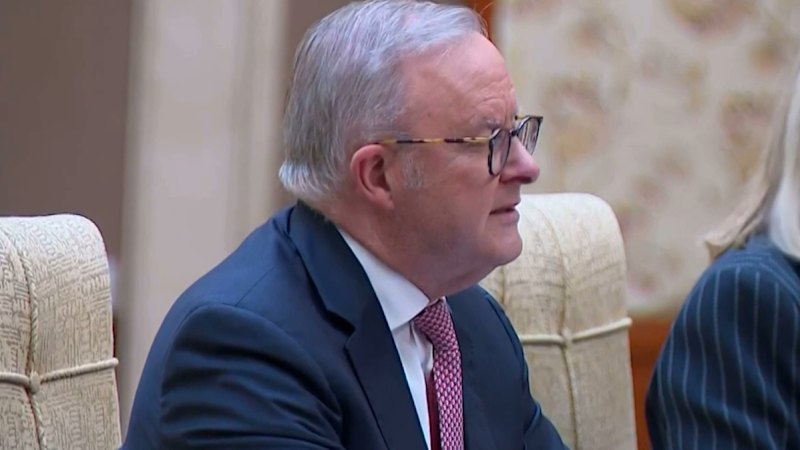
To understand why these annual AI talks happened, you have to look at the broader diplomatic thaw between Canberra and Beijing following years of trade disputes and political frostiness. During high-level bilateral meetings, including discussions involving Australian Prime Minister Anthony Albanese and Chinese Premier Li Qiang, both governments looked for areas where cooperation wouldn't compromise core national security. Artificial intelligence safety landed right at the top of that list. As reported in recent articles by CNET, the implications are worth noting.
Think about the reality on the ground. China is Australia's largest two-way trading partner, with billions of dollars in goods and services flowing between the two nations every year. At the same time, China has rapidly emerged as a global powerhouse in generative AI, open-weight models, and industrial automation, while Australia has positioned itself as a middle-power leader pushing for responsible AI standards.
If an autonomous system goes haywire in global financial markets, or if AI-generated synthetic media triggers a diplomatic crisis in the South China Sea, neither Canberra nor Beijing benefits. Both governments realized that waiting until a crisis hits to exchange phone numbers is a terrible strategy. Similar to the bilateral AI talks the United States held with China in Geneva, Australia is building a dedicated communication channel before an emergency forces their hand.
The Real Meaning Behind Managing AI Risks
When diplomats use phrases like "managing AI risks," they aren't talking about sci-fi killer robots taking over Sydney or Shanghai. They are talking about immediate, messy problems that keep policy officials awake at night.
- Algorithmic bias and cross-border data flows: Businesses operating across both jurisdictions face conflicting compliance rules regarding how models are trained and how consumer data gets processed.
- Deepfakes and election interference: Synthetic audio and video can destabilize public trust within hours, making rapid verification channels between governments essential.
- Biosecurity and cyber vulnerabilities: Advanced models lower the technical barrier for bad actors trying to discover novel pathogens or automate sophisticated cyberattacks against critical infrastructure.
- Supply chain safety: From smart consumer electronics to industrial robotics, AI-enabled hardware moves constantly between Chinese factories and Australian homes and businesses.
If you've ever worked in enterprise risk or regulatory compliance, you know that technical standards dictate market access. Whoever writes the rules for AI auditing, watermarking, and safety testing controls how global commerce operates. By locking in annual talks, Australia ensures it has a seat at the table when regional norms are drafted rather than simply reacting to standards set in Washington, Brussels, or Beijing.
What Critics Get Wrong About Bilateral Tech Diplomacy
Whenever Western democracies engage China on emerging technology, critics immediately sound the alarm about intellectual property theft or legitimizing authoritarian surveillance. Those concerns aren't imaginary. China's domestic approach to artificial intelligence relies heavily on state censorship, social control, and strict adherence to government-approved narratives, which clashes directly with Australia's democratic values and human rights frameworks.
Yet refusing to talk doesn't stop Beijing from building advanced models. It just blinds Canberra to how Chinese regulators view safety thresholds.
In my experience analyzing international tech agreements, people frequently confuse dialogue with alignment. You don't need shared values to agree on technical red lines. During the Cold War, Washington and Moscow maintained strict communication protocols around nuclear weapons despite profound ideological hostility. Artificial intelligence isn't identical to nuclear weaponry, obviously, but the logic of establishing guardrails between strategic competitors remains the same.
Where the Two Countries Actually Agree and Disagree
To see how these annual talks will actually play out behind closed doors, you have to separate the areas of genuine overlap from the non-negotiable red lines.
On the technical side, Chinese AI researchers and regulators care deeply about model stability, preventing uncontrollable autonomous behavior, and stopping domestic fraud fueled by deepfakes. China was actually one of the earliest major economies to pass targeted regulations governing recommendation algorithms, deep synthesis, and generative AI services. Australian officials, meanwhile, have focused heavily on voluntary AI safety standards, mandatory guardrails for high-risk settings, and international frameworks like the Bletchley Declaration, which both Australia and China signed at the UK AI Safety Summit.
Where they hit a brick wall is governance philosophy. Australia emphasizes human-centric design, transparency, privacy protection, and democratic accountability. China prioritizes state security, ideological control, and sovereign oversight of information ecosystems. Expecting these annual talks to bridge that philosophical divide is naive. Expecting them to produce practical agreements on things like technical safety benchmarks, incident reporting, or academic research guidelines is entirely realistic.
How This Impacts Businesses and Developers
If you run a tech company, manage compliance, or invest in the Asia-Pacific region, you shouldn't dismiss these diplomatic summits as irrelevant political theater. Government-to-government dialogues routinely precede concrete regulatory shifts that hit your bottom line.
First, watch for movement on cross-border AI compliance and auditing. Right now, navigating China's Cyberspace Administration regulations alongside Australia's evolving AI guardrails and privacy laws requires expensive, duplicated legal work. While nobody is creating a single unified rulebook overnight, ongoing bilateral talks often lead to mutual recognition of certain technical testing standards or clearer safe harbors for commercial enterprises.
Second, pay attention to research collaboration rules. Australian universities have historically maintained deep research ties with Chinese institutions in computer science and machine learning. Over the past few years, national security crackdowns and foreign interference laws chilled much of that collaboration. An institutionalized annual dialogue helps clarify where the boundaries actually sit, giving researchers and corporate R&D teams a better sense of which joint projects are safe to pursue and which ones will trigger regulatory blockades.
Third, factor in geopolitical supply chain resilience. Even as Australia and China talk about AI safety, Australia remains tightly bound to the United States and the United Kingdom through security partnerships like AUKUS, which includes joint work on defense-related artificial intelligence and autonomous systems. Businesses building dual-use technologies—software that has both commercial and military applications—will continue facing strict export controls regardless of how friendly the annual talks appear.
Navigating the New Reality of AI Governance
The biggest mistake observers make when reading about the Australia and China AI talks is looking for a single grand bargain. International tech policy doesn't work that way anymore. It moves incrementally through working groups, technical committees, and recurring bilateral check-ins that slowly define acceptable behavior.
If you're a business leader, policy analyst, or developer operating in this space, treat this agreement as an early warning system rather than a finished product. Audit where your data, models, and hardware touch both markets, because regulatory scrutiny on cross-border AI deployment is only going to intensify. Follow the official communiqués coming out of Australia's Department of Industry, Science and Resources and the Department of Foreign Affairs and Trade, as those documents reveal the exact technical standards Canberra plans to enforce next. Keep your compliance frameworks flexible enough to adapt to divergent rules in Washington, Canberra, and Beijing, because managing competing AI rulebooks is now the permanent cost of doing business globally.