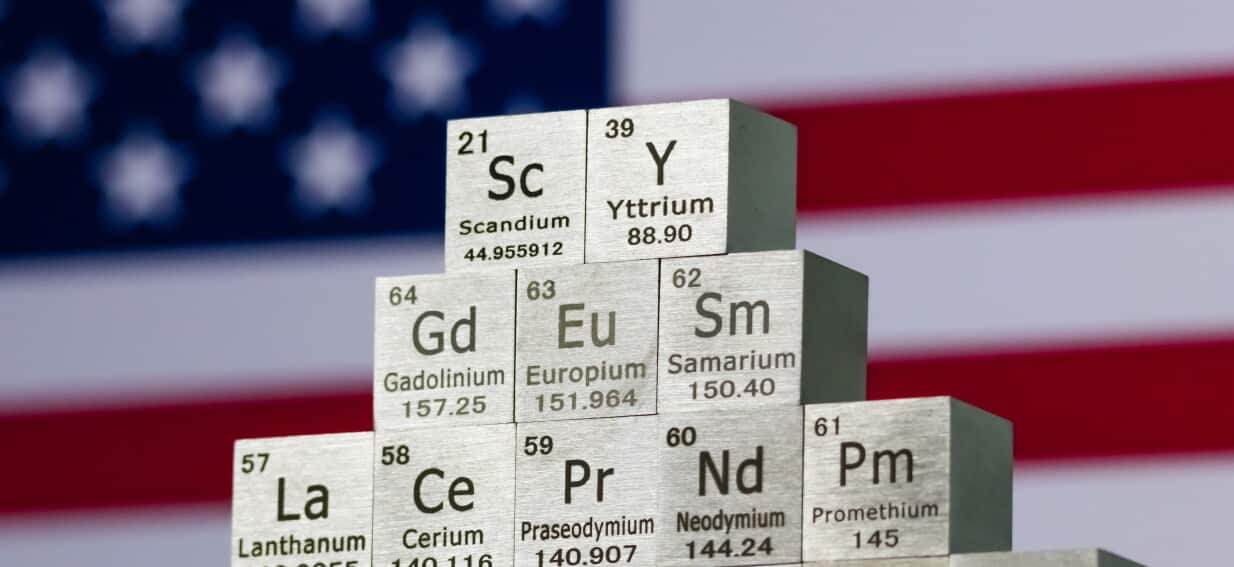
The United States Department of War has committed a conditional loan of US$400 million to Sunrise Energy Metals, an Australian mining developer, targeting a remote New South Wales hamlet called Fifield where roughly 130 people share a single local pub. This massive financial injection aims to establish the Syerston project as the world's first primary source of scandium outside of China. Scandium is an ultra-rare transition metal required to forge lightweight, high-strength aluminum alloys for advanced fifth-generation fighter jets and to power solid oxide fuel cells essential for artificial intelligence data centers. By tracing the contours of this multi-million-dollar move, the underlying reality reveals a high-stakes geopolitical scramble where Western capitals are attempting to claw back industrial sovereignty from Beijing's absolute stranglehold on rare earth supply chains.
The Economics of Scarcity
Scandium has a dirty secret. It is rarely found in concentrations high enough to justify extraction on its own. Historically, global supply has trickled onto the market merely as a byproduct of nickel, iron, or titanium refining. Total global consumption hovered at a paltry 60 tonnes. Recently making waves recently: The Quiet Voices Guarding the Global Seas.
When Beijing slapped sweeping export controls on critical minerals for defense applications, the fragile underpinnings of Western manufacturing stood exposed. Fighter jet manufacturers and aerospace contractors suddenly faced acute shortages and skyrocketing spot prices.
Enter Fifield. The deposits sitting beneath the dry central New South Wales scrub represent the largest and highest-grade known scandium resource on Earth. Unlike every other operational source, this deposit can be mined primarily for scandium itself rather than extracted as an afterthought. If Sunrise Energy Metals hits its target of producing 60 tonnes of high-purity scandium oxide annually by 2028, a single paddock in regional Australia will single-handedly double the current global volume. Additional information on this are covered by The Washington Post.
The Trap of Beijing's Market Leverage
Throwing public capital at a remote mine feels satisfying on a political stage, but the market economics carry brutal structural flaws. A loan is not a subsidy. Sunrise Energy Metals must service this multi-million-dollar debt regardless of commodity price volatility.
China controls the downstream processing ecosystem and commands the economic architecture of critical minerals. Beijing holds a historical weapon in reserve, which is the capacity to selectively lift export controls, flood the international market with cheap supply, and crater global spot prices.
This exact playbook has already battered Western lithium and rare earth ventures over the past decade. When a state-subsidized competitor can drop prices below production cost at will, private lenders retreat and capitalization evaporates. The Pentagon loan acts as an essential shield, yet financial protectionism from Washington does not automatically insulate a remote New South Wales project from the cold reality of global oversupply.
The Structural Reality of Defense Industrial Policy
Strategic necessity often supersedes traditional balance sheet arithmetic. The United States military cannot build advanced tactical aircraft or next-generation missile guidance systems while relying on a strategic rival for raw materials.
Lockheed Martin secured an offtake agreement covering 25 percent of the mine's output for its first five years of operation. This commercial commitment demonstrates that end-users are willing to pay a premium for supply chain certainty. Western defense contractors are transitioning away from just-in-time manufacturing models toward buffered, allied-secure procurement frameworks.
Yet, translating a bureaucratic loan pledge into a functioning, industrial-scale processing facility in the bush remains a monumental engineering hurdle. Water scarcity, environmental approvals, and complex chemical separation processes have historically derailed ambitious Australian mining proposals long before dirt ever moves.
The small population of Fifield watches quietly as geopolitical tremors from Washington and Beijing reshape their backyard into an improbable corporate fortress. Whether this multi-million-dollar bet breaks China's monopoly or becomes an expensive monument to supply chain anxiety depends entirely on whether Western industrial policy can outlast a protracted commodity price war.