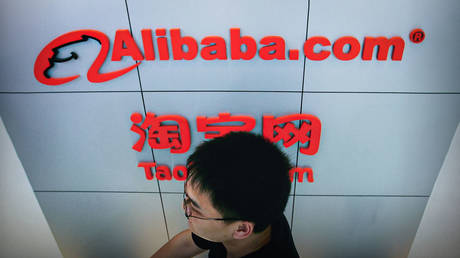
The United States government just escalated its economic confrontation with Beijing, fundamentally shifting how it views commercial enterprise. By expanding the Department of Defense Section 1260H list to 188 entities, the Pentagon explicitly targeted China’s crown jewels of consumer technology. E-commerce giant Alibaba, search and artificial intelligence pioneer Baidu, and electric vehicle titan BYD are now officially designated as Chinese military companies.
This is not a routine update. It is a structural recalibration of Washington’s economic warfare strategy.
For years, American blacklists focused on traditional defense contractors, state-owned shipbuilders, and surveillance firms like Hikvision. This latest action shatters that paradigm. By capturing companies that command massive global consumer markets and deep pools of private capital, the US is declaring that in the modern geopolitical arena, the distinction between a commercial enterprise and a military asset no longer exists.
The immediate fallout shook global markets, sending ripples through New York and Hong Kong exchanges. Alibaba slipped in trading, while pharmaceutical contractor WuXi AppTec tumbled more than five percent. Yet the long-term implications matter far more than temporary stock market jitters. This policy targets China's military-civil fusion, an explicit strategy by Beijing to leverage commercial innovations for national defense.
Inside the Bureaucratic Reversal
The publication of this expanded list exposes deep ideological friction within the American national security apparatus. A version of this list briefly appeared in the Federal Register in February before being abruptly withdrawn within minutes without explanation. That chaotic episode occurred just before diplomatic summits aimed at stabilizing the bilateral commercial relationship.
Senior national security officials reportedly clashed over the timing. Some feared that pulling the list signaled a softening stance toward Beijing. Others worried about the economic blowback on Western supply chains. The months of delay gave corporate lobbyists and defense lawyers a window to mount fierce counter-offensives.
The final republication proves that the hawks won the internal debate. The reinstatement of memory chipmakers like ChangXin Memory Technologies and Yangtze Memory Technologies underscores a determination to ring-fence critical technologies, regardless of the diplomatic calendar or corporate protests.
The Mechanics of Soft Sanctions
Understanding the actual power of a 1260H designation requires looking past the political rhetoric. The listing does not instantly freeze assets or trigger the sweeping economic blockades managed by the Treasury Department. Instead, it operates as an institutional quarantine.
- Federal Contracting Prohibitions: Designated companies are banned from securing US military procurement contracts.
- Research Restrictions: Roster inclusion blocks access to federal research funding and collaborative academic pipelines.
- Capital Market Isolation: The designation serves as an official risk advisory to Western institutional investors, signaling that harsher financial restrictions are likely coming next.
This is a strategy of slow economic strangulation. Congressional leaders have already seized on the update, calling for the immediate delisting of these firms from American stock exchanges.
The Broken Border Between Consumer Tech and Warfare
The defense establishment justifies this expansion by pointing to specific technological overlap. Baidu is a consumer search engine, but it is also China’s leading autonomous driving and industrial artificial intelligence developer. Alibaba manages digital storefronts, but it also controls the massive cloud infrastructure that powers corporate and state computing across Asia. In late 2025, Washington explicitly accused Alibaba of cooperating with Chinese authorities to identify cybersecurity vulnerabilities in Western networks.
The inclusion of electric vehicle giants like BYD and Nio marks another critical frontier. Modern electric vehicles are mobile sensor platforms, capturing vast troves of mapping, environmental, and behavioral data. The Pentagon views these cars not as consumer transport, but as data-collection nodes connected to a foreign adversary’s industrial base.
The defense sector has also taken aim at robotics. Companies like Unitree Robotics, which builds advanced quadrupeds, and LiDAR manufacturer RoboSense were swept into the update. Unitree has previously acknowledged receiving state funding tied to industrial innovation initiatives, a connection the Pentagon interprets as direct military integration.
The Corporate Backlash and the Lobbying War
The targeted firms are fighting back, asserting that Washington is weaponizing national security to protect domestic industries from superior foreign competition. Alibaba and Baidu issued sharp statements denying any connection to a military-civil fusion strategy, calling the designations entirely baseless. BYD stated the determination contradicts basic facts and pledged to use all available legal and administrative channels to challenge the decision.
Corporate advocates point out the logical extremes of the policy. Lobbyists representing companies like Tencent argue that if every commercial company that interacts with a government initiative is classified as a military entity, then major American automotive and tech companies should face identical classifications abroad.
The legal battles will be protracted. Sensor manufacturer Hesai Technology previously used federal lawsuits to challenge its status, illustrating that these designations are vulnerable to judicial review if the government's evidentiary basis is weak.
Global Supply Chain Collateral
The true danger of this policy lies in its unintended economic consequences. WuXi AppTec’s inclusion highlights the extreme vulnerability of the global pharmaceutical industry. The firm is deeply embedded in Western medicine, manufacturing a significant portion of the active ingredients used in blockbuster weight-loss and obesity drugs. Abruptly decoupling from such a critical node could trigger catastrophic medication shortages in American pharmacies.
The chip sector faces a similar dilemma. Reinstating memory manufacturers to the blacklist aims to protect domestic giants, but it risks disrupting global hardware manufacturing lines that depend on diversified component sourcing.
The strategy assumes that the United States can completely isolate China's technological ecosystem without fracturing its own. This assumption will be thoroughly tested in the coming months. Washington is betting that capital market pressure will force global corporations to choose between American investment or Chinese market access. It is a high-stakes gamble that fundamentally rewires global trade, ensuring that corporate boardrooms must now operate exactly like geopolitical battlegrounds.